Nuclear Early Warning Systems and Social Media Storms
What are the risks of social media interacting with the early warning systems of nuclear-armed states? Could the resulting potential changes in the dispensation of leaders actually—and likely inadvertently—lead to war?
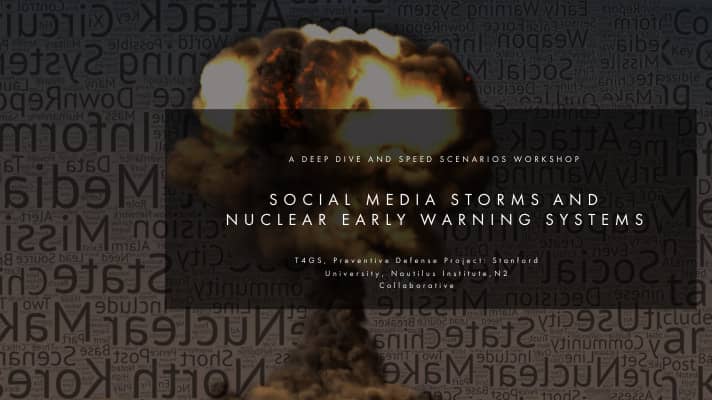
In 2018, IST, the Preventative Defense Project at Stanford University, Nautilus Institute, and N2 Collaborative hosted a workshop on social media storms and early warning systems.
This joint effort addressed cases where social media information cascades led to potential or actual catastrophic outcomes, such as the outbreak of infectious diseases, terrorist recruitment, and mass killings. We addressed two common perceptions: whether early warning systems are redundant and if they are resilient enough to new, distributed, informal, and pervasive forms of information.
This work highlighted the scope and impact that social media has on international strategic stability. We identified a number of areas for further effort—perhaps most importantly, the task of informing those in the command and control infrastructure of nuclear-armed nations about the risks associated with not being more directly connected with the individuals and companies that manage and provide these platforms. One workshop participant who worked for a major Silicon Valley-based social media platform noted that “if something like this were to start happening when it comes to nuclear weapons, we wouldn’t even know who to call.”