FROM THE CEO
Today is Giving Tuesday, a global day of charity, and a powerful opportunity for 501(c)(3) nonprofits like the Institute for Security and Technology (IST) to call attention to our mission: bringing together technology and policy leaders to tackle some of the most pressing security challenges facing our world.
From defending K-12 schools from ransomware, to protecting hospitals and water systems, to reducing the risks posed by rapidly advancing AI, your generosity makes IST’s work possible.
As we reflect on 2025, I hope you will join me in celebrating what our donors helped make happen—and consider supporting us to fuel the work ahead.
Stories of Success
Every day, the work we do at IST makes a difference, from driving Congress to consider new approaches to intractable problems, bringing national security leaders together to ensure they consider the existential risks of integrating AI with nuclear command and control, or leading a table-top exercise in The Hague to equip law enforcement with new tools to disrupt criminal ransomware gangs.
Securing K-12 Schools from Cyber Threats
Ransomware attacks against schools continue to rise. With your support, IST launched the K-12 Cyber Defense Coalition, bringing together 13 national education organizations to tackle sectorwide cybersecurity challenges.
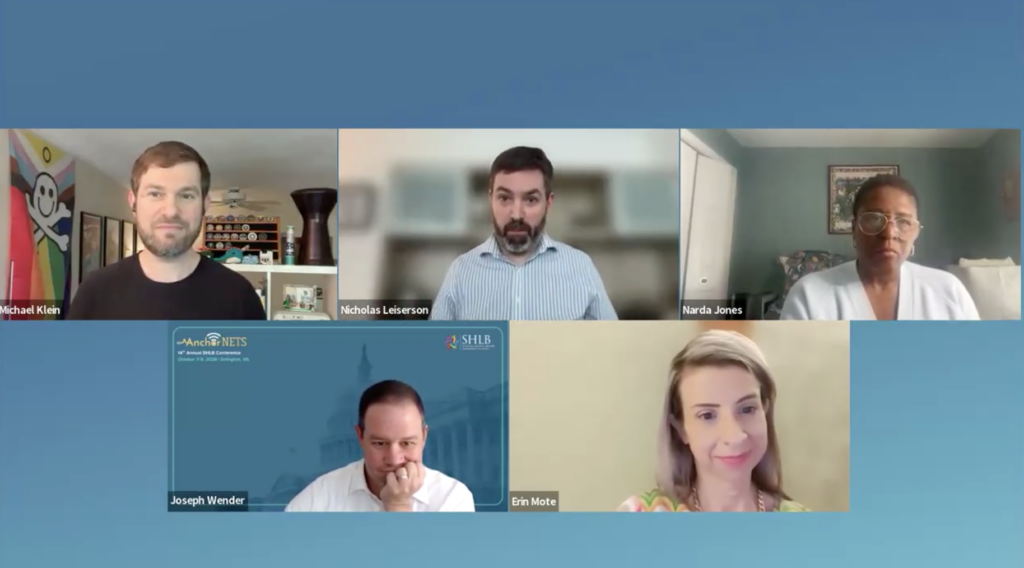
That national platform helped us move quickly when Congress announced it was gearing up to take on reforms to the E-Rate program, which funds school broadband. The FCC just closed a wildly successful, $200 million pilot to fund cybersecurity needs in schools. But there are still billions of dollars in underinvestment. IST experts moved quickly to raise awareness about the issue, frame core considerations for policymakers, and provide technical assistance to a Congressional working group that highlighted the risks our students face from cyber criminals. Along the way, IST education lead Michael Klein stopped by Louisville, KY, to announce federal grant funding and hear directly from folks on the front lines.
The result?
Congress is now actively considering changing the E-Rate statute to incorporate cybersecurity—and unlock potentially billions in new resources for vulnerable students.
Strengthening Critical Infrastructure at the Nexus of Water and Hospitals
No water, no hospitals, no kidding… as early as 2027. We know that the Chinese military Volt Typhoon campaign is targeting water facilities for potential disruptive or destructive attacks. When faced with a military campaign, what can your water facility reasonably do?
UnDisruptable27 is improving the resilience of our lifeline critical infrastructure. In 2025, we focused on building our playbook for helping local leaders defend themselves against nation-state aggressors. To address the cascading failures that can leave hospitals crippled by attacks on our water systems, we hosted 4 training exercises in collaboration with Idaho National Labs to help water owners and operators understand the cyber-informed engineering fixes that can help. And to pressure test our ideas, we hosted a two-day conference with operators, national security experts, and even members of Congress.
The result?
We are now entering into partnerships with a dozen community water facilities across the country to work shoulder-to-shoulder with them and help them engineer away the most dangerous risks that could affect their customers: hospitals and their patients. When we’re done, those communities won’t just be harder targets—they’ll be UnDisruptable.
Reducing the Risks Posed by AI Foundation Models
Powerful AI systems are moving quickly from research labs into the heart of our daily lives–from banking and transportation to healthcare and education. They promise enormous benefits, but also introduce new risks: compliance failures that invite legal and financial fallout, systems that leave humans out of critical decisions, or tools that can be weaponized by authoritarian states to surveil, constrain, and oppress minorities and dissidents. Without carefully designed policies and adequate technical protections, we risk locking in systems that favor speed over safety.
With your support, the AI Risk Reduction Initiative brought together more than 30 leaders from AI labs, government agencies, and research institutions in monthly working groups to translate abstract concerns into practical interventions. That collaboration is shaping global and national policy: we contributed to the Paris Peace Forum’s AI governance blueprint and submitted comments on the NIST AI risk management guidelines and White House AI Action Plan. To test these ideas under pressure, we ran two crisis simulation exercises that prompted policymakers and industry to navigate potential scenarios such as loss of control over an AI model in real-time.
The result?
Our work is already shaping how institutions and nations approach AI risks. Inspired by our work, Anthropic launched a Transparency Hub tracker. The Korea AI Safety Institute is using our work to develop an AI Risk Map. We have successfully armed decision-makers across government and industry with relevant, focused technical interventions and policy mitigations.
This Giving Tuesday, your gift to IST means that you are helping to protect our communities–from the resilience of hospitals and water systems to the safe deployment of advanced AI and the creation of effective defenses against ransomware.
Together, alongside industry partners, worldwide government leaders, and members of civil society, we can build a more resilient, more trusted technological future.
Thank you for your generosity, today and always.
Warmly,

CEO, Institute for Security and Technology