Arms control negotiations have long been considered proof that great powers can cooperate in the nuclear era despite radically different visions for the international world order. In the words of one anonymous expert, they are “agreements you make specifically because you don’t trust your partner.” For 60 years, these agreements have established rules and standards for all parties to address shared concerns since the creation of the Treaty on the Non-Proliferation of Nuclear Weapons in 1968. In 2025, the world faces unprecedented nuclear challenges stemming from a three-way strategic competition between the United States, China, and Russia. In the face of this tripolar nuclear rivalry with emerging technologies such as Artificial Intelligence (AI) threatening stability, it is more important than ever to build trust and agreements on the use of nuclear weapons and emerging and disruptive technologies.
Last year, I was selected to join a cohort of a program to train the next generation of arms control negotiators, where I researched the 2002 Moscow Treaty. This experience affirmed my understanding of treaties as a stabilizing force and demonstrated the historical context surrounding treaties, which often target particular capabilities due to anxieties surrounding them. For example, past treaties have banned anti-ballistic missile systems to equally hold at risk both the United States and the Soviet Union and banned weapon deployments with a range between 500 and 5,500 kilometers to ostensibly spare Europe in the event of a nuclear exchange. It is clear future treaties must consider the myriad threats posed by poor AI integration into nuclear command, control, and communications (NC3), and great powers must find common ground and rally against destabilizing technologies.
About FACE
The inaugural “Future Arms Control Experts” (FACE) fellowship, led by the Center for Strategic and International Studies (CSIS), brings together 20 early- and mid-career leaders and experts, aiming to transfer knowledge from the senior arms control community to the next generation. I had the honor of joining 19 other foreign policy practitioners, academics, and engineers to learn firsthand from these negotiators—ultimately equipping me and my colleagues with the knowledge and expertise to step up to the plate for future arms control negotiations.
The Moscow Treaty
To help us develop our negotiation skills, our FACE cohort was divided into five groups of four members, each assigned an arms control treaty ranging in time from 1968’s Treaty on the NPT to 2011’s New START (Strategic Arms Reduction Treaty signed between the U.S. and Russia with verifiable reductions to both sides’ nuclear stockpiles). I was assigned to the 2002 Moscow Treaty, the original name of the SOR Treaty, as was emphasized by a senior diplomat. Each group was asked to produce a short research paper using as many primary sources as possible and then brief the cohort on it alongside a key figure from the negotiation. To supplement our research, each group was paired with experts on each of the treaties, including the NPT, the Treaty on Conventional Armed Forces in Europe (CFE), the Comprehensive Test Ban Treaty (CTBT), Moscow Treaty, and New START negotiations.
Two key characteristics defined my team’s research methodology. First, given its enactment in 2002, it was relatively more recent than other treaties. Second, in comparison to other treaties such as SALT or START, relatively little has been written about it to date. To collect as much primary source material as possible, my group conducted interviews with experts connected to the negotiation process, many of whom are still active or semi-retired. Interviews, unlike more formal sources, provided us with invaluable context on the actual negotiations and proved to be a more interesting narrative than the treaty itself.
What we learned was that the Moscow Treaty stood apart from other treaties as something of a consolation prize for Russia after the United States’ unilateral withdrawal from the Anti-Ballistic Missile (ABM) treaty following the 9/11 terrorist attacks. At the time, President Bush reasoned that the United States needed to be able to pursue every possible technology in order to prevent future attacks. The U.S. government’s withdrawal from the ABM treaty has long bothered Russia. In fact, the withdrawal played a key role in Russia’s eventual development of hypersonic cruise missiles, which were presented in 2018 with the purpose of countering ABM efficacy. In an effort to allay Russian concerns and provide a diplomatic win for domestic Russian audiences, President Bush unilaterally announced his intent to reduce the total number of deployed warheads. This announcement in turn led to a bilateral effort, which ultimately resulted in the Moscow Treaty.
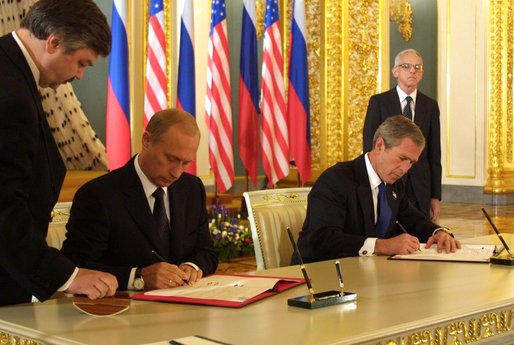
The Moscow Treaty, signed by Presidents Bush and Putin in May, 2002, is a gentleman’s agreement between the United States and Russia limiting the total number of deployed warheads to between 1,700 and 2,200 without verification mechanisms. Originally, the United States and Russia intended to develop verification protocols, but talks stalled, both sides agreed to continue discussing it after signing the treaty, but were unsuccessful due to alternate visions of verification until negotiations leading to New START took place starting in 2006. Russia is wary of verification because of the risks of additional intelligence being gathered through photographic, spectroscopic, and environmental techniques. The treaty was successful in its aim and was eventually superseded by the New START treaty signed in 2011.
Looking Ahead
During the in-person session at the end of the program, one senior official said something that stayed in my head: the Chinese word for “risk” is a combination of the words for “danger” and “opportunity.” By transmuting elements that can easily become dangerous into opportunities, arms control’s fundamental purpose is risk reduction. It is impossible to properly reflect on opportunities in risk reduction without a view towards future-proofing. Easily the most high-impact risk that can be addressed at this time is integrating artificial intelligence (AI) into NC3.
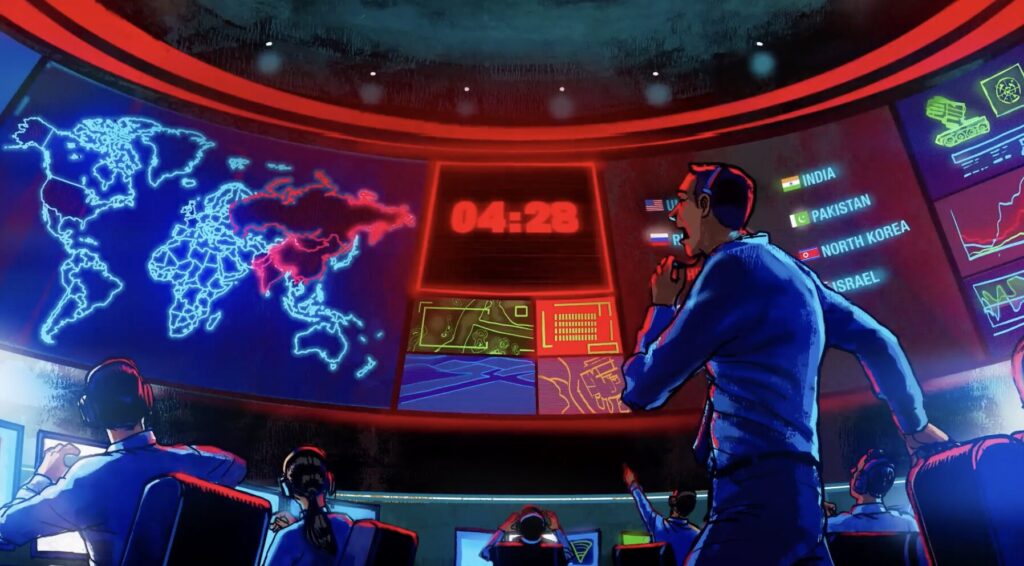
As automation is further integrated into NC3 systems, important questions arise about AI’s technical capacity. The risk of a solar flare disrupting electronics being flagged as an attack on vital systems is not a new risk: it happened in 1967 and nearly led to a nuclear launch. However, trained humans were able to review context and prevent catastrophe. AI, on the other hand, does not have the contextual pool to match a human’s training. Even worse, it can resort to deception against users in the interest of performing its programmed preferences, as demonstrated by Anthropic in late 2024. AI’s integration into NC3 is inevitable and should not be inherently feared, but risks to NC3 systems range from false positives to poor context windows. Though a well-intentioned effort to streamline the decision-making process, the integration of AI and NC3 can cause subtle and unforeseen changes to launch protocols. In a high-stress environment such as a nuclear crisis, we run the risk that humans may simply follow instructions and pull the trigger if AI-led reactions exceed the human capacity to track them, instead of deciding whether or not a situation warrants a launch in the first place.
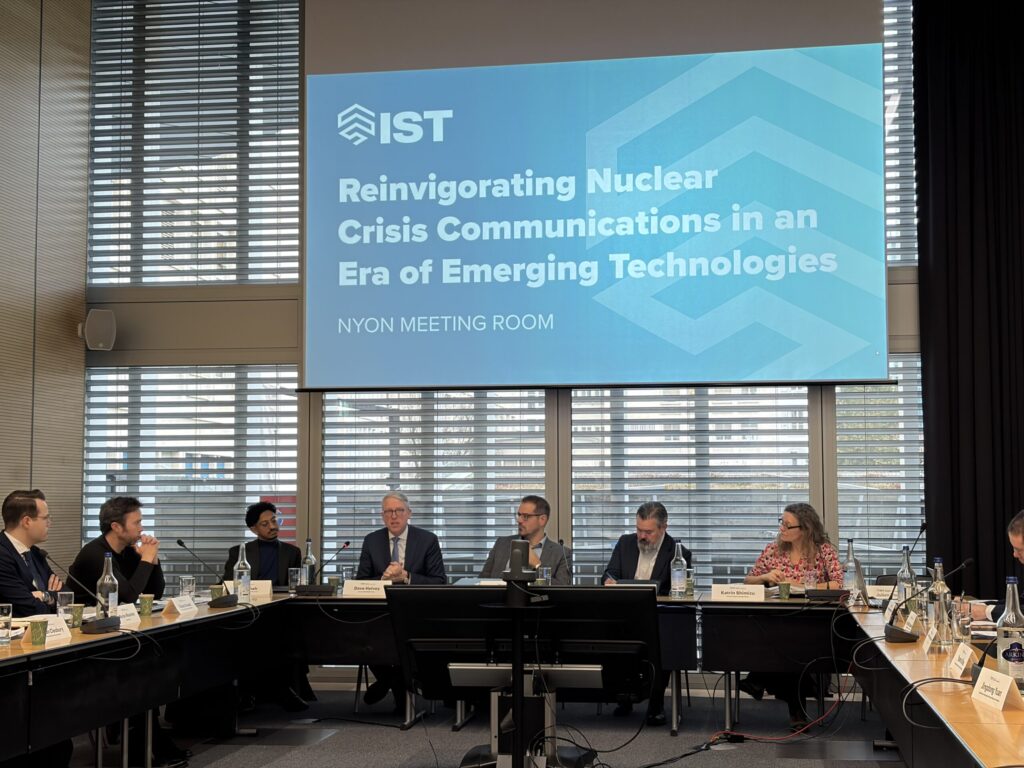
The Institute for Security and Technology is answering the call for risk reduction in AI integration by developing guidelines in collaboration with a working group of technical experts and political scientists. These guidelines aim to build norms for the next great arms control treaty, which would do well to limit emerging technologies from overly hasty implementation into the most complex and vital computing systems in the world.