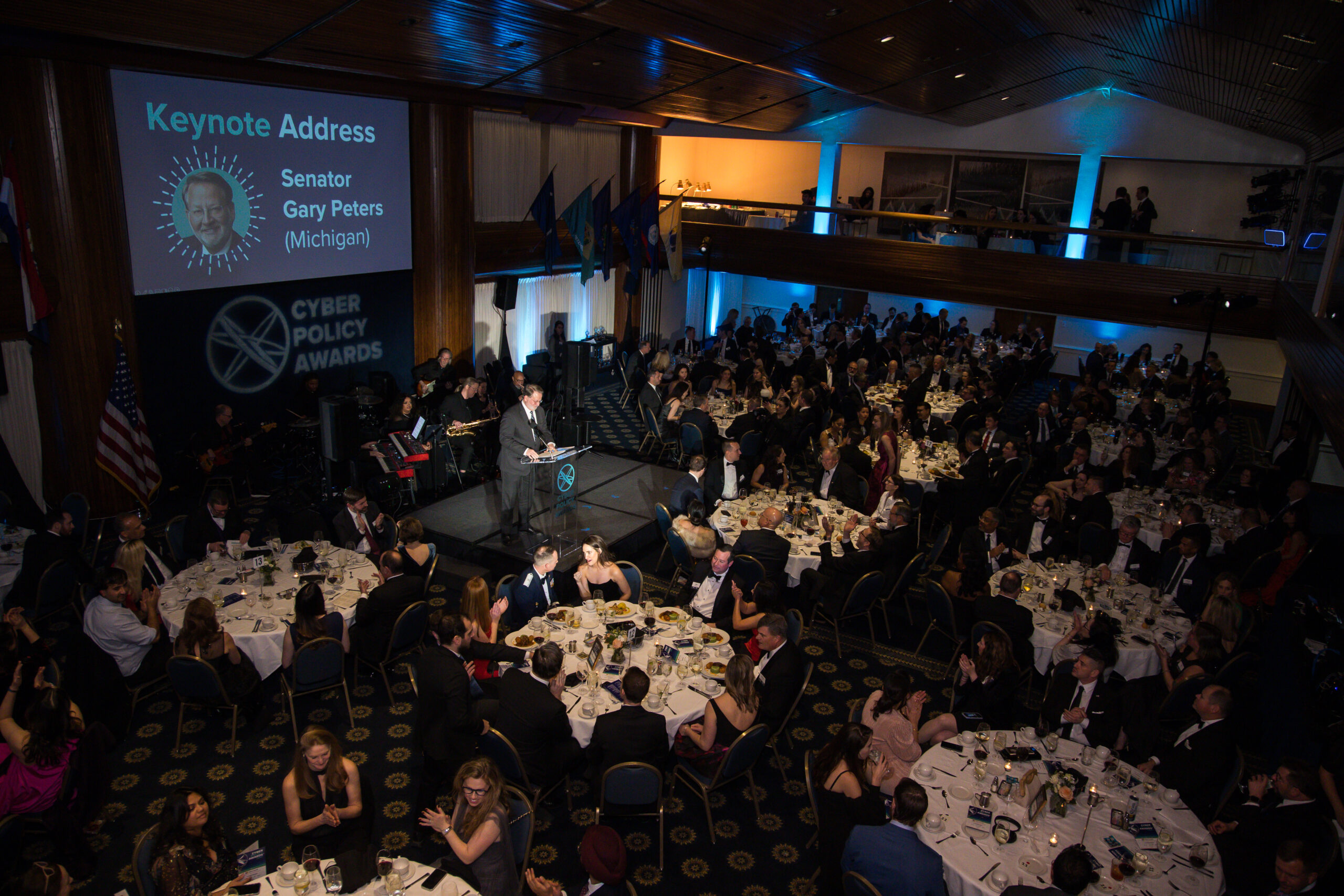
Members of the cyber policy community were honored at the Third Annual Cyber Policy Awards yesterday before a packed house of cyber community veterans, leaders, and industry partners in Washington, D.C.
Hosted by the Institute for Security and Technology (IST) at the National Press Club, the event recognized and celebrated those whose work defined the cybersecurity landscape in 2025. The winners were selected by a panel of independent judges following an open nomination period.

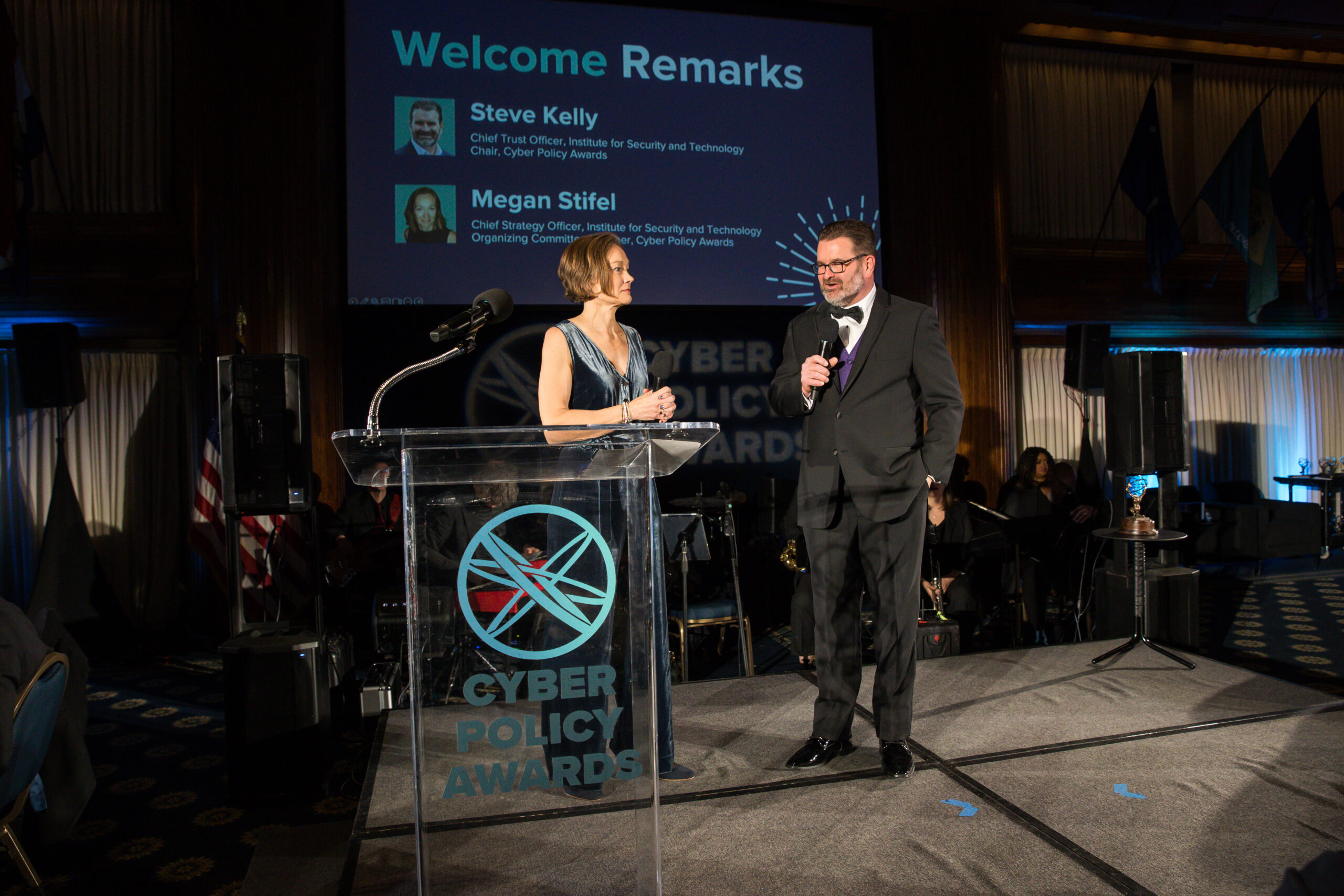
The night’s co-hosts Steve Kelly, Chief Trust Officer at IST and the Chair of the Cyber Policy Awards Organizing Committee, and Megan Stifel, Chief Strategy Officer at IST and Executive Director of the Ransomware Task Force, welcomed everyone to the event.
“It’s a special night, and it’s one that was meant to bring this community together, to reflect on the last year, to celebrate achievements and also to look ahead,” Steve explained.
Megan added, “We all know that the challenges are not easy to accomplish, and that it takes collective action to actually drive change.”

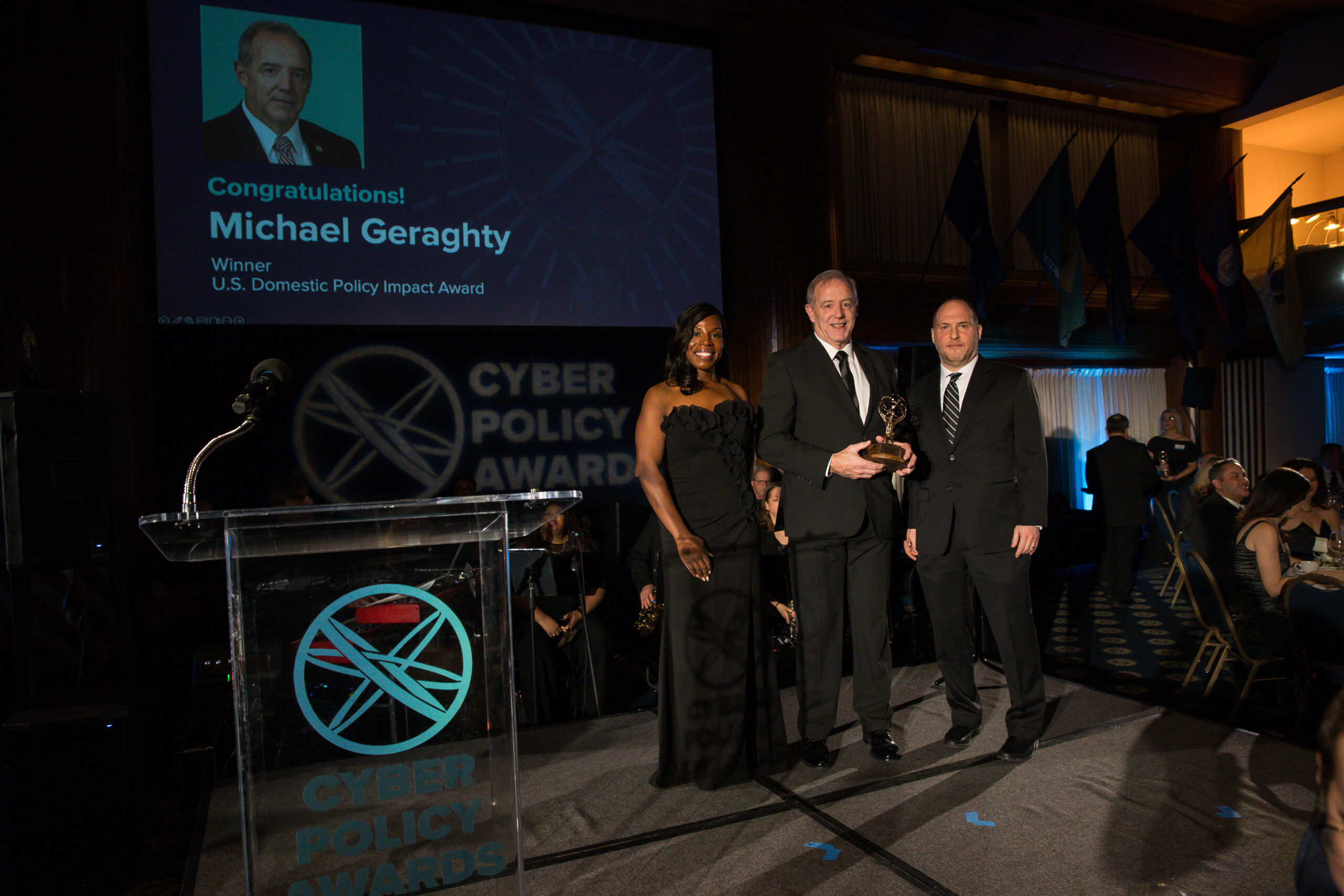
The award for U.S. Domestic Policy Impact – presented by Venable Managing Director for Cybersecurity Services Ari Schwartz and Independent Community Bankers of America Vice President for Operational Risk & Cybersecurity Policy Anjelica Dortch – went to Michael Geraghty for transformation of New Jersey’s cybersecurity posture, delivering measurable economic and security impact.
Accepting the award, Michael expressed his gratitude for the teamwork within New Jersey and beyond that enabled this success.
“We’ve had great support from our legislature and governor, cooperation by CISOs in other states, vendors, and other partners to make this happen. And most importantly the support of my wife and children. This is not my award; it is everyone’s award,” he said.

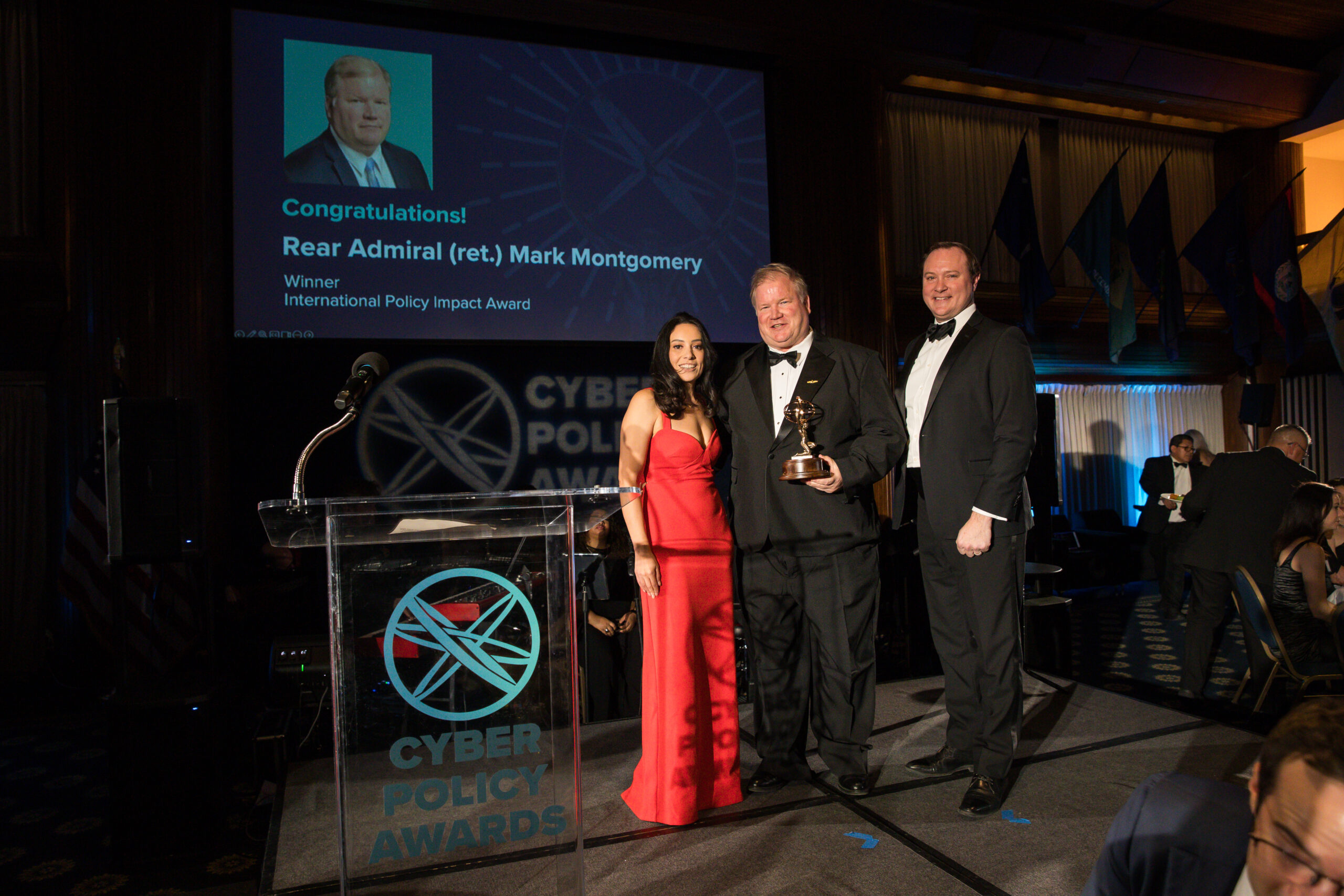
The award for International Policy Impact – presented by Cloudflare Director Vince Voci and Forescout VP of Government Affairs Alison King – went to Rear Admiral (Ret.) Mark Montgomery for cyber leadership in practice, from Ukraine’s frontlines to the Indo-Pacific.

Mark thanked the Cyberspace Solarium Commission staff and the Foundation for Defense of Democracy’s Center on Cyber and Technology Innovation for their support of his work. He concluded by reflecting on the importance of showing up with government and military support for our allies abroad: “Ukraine, the fight we’re in, and Taiwan, the fight we’re going to be in.”

Senator Gary Peters of Michigan—ranking member of the Senate Homeland Security and Governmental Affairs Committee and retiring from Congress at the end of this term— provided a keynote address. Following his remarks, Steve and Megan presented him with the first-ever Congressional Cyber Leadership Award in recognition for his service to the nation and leadership on cyber issues.
“Most members of Congress aren’t thinking about cybersecurity daily. It’s not happening in Congress, but they need to,” Sen. Peters urged. “They need to be thinking about it more than ever. And Congress is going to need guidance and support from each and every one of you in the audience here tonight.”

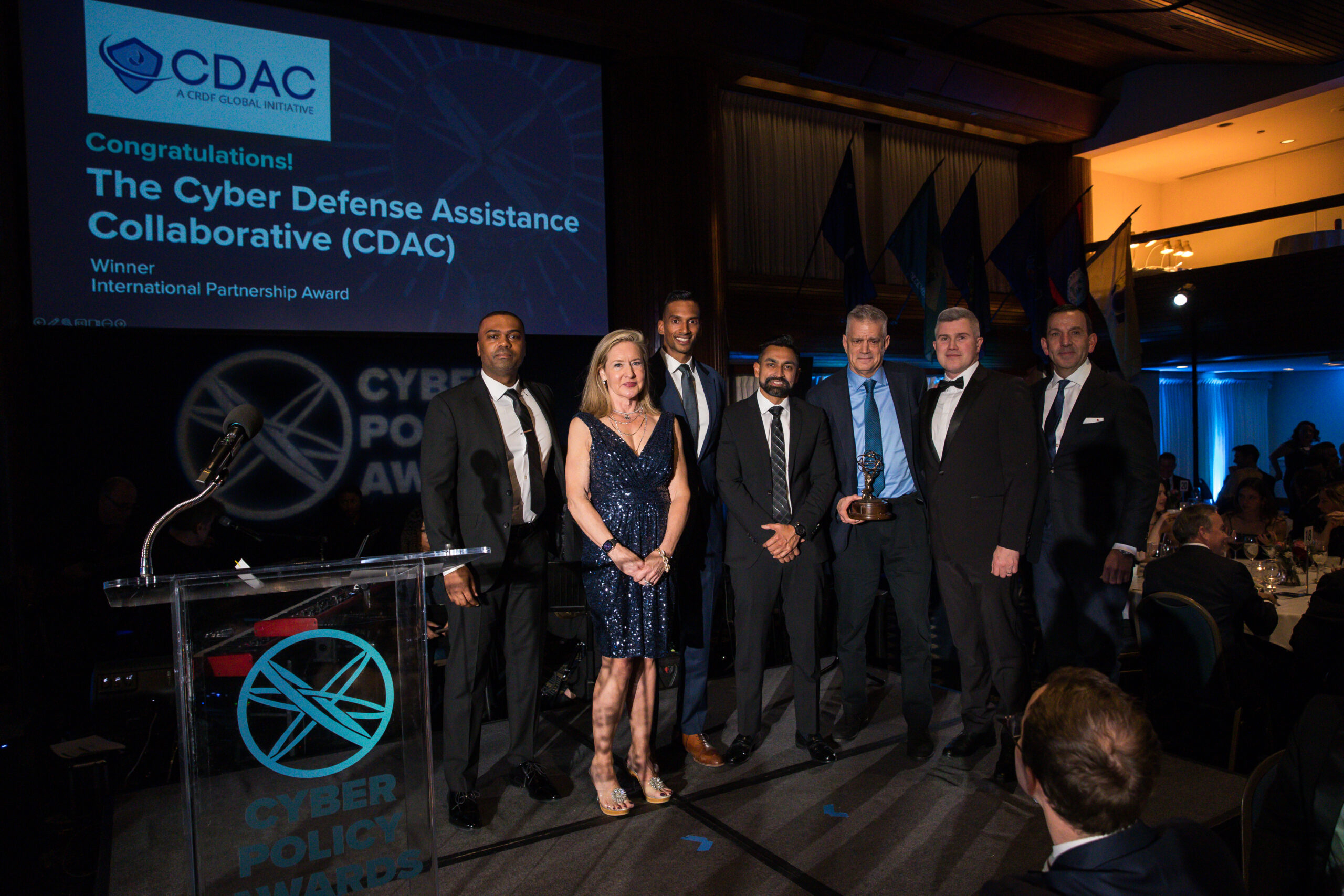
The award for International Partnership – presented by Cape’s Head of APAC Iranga Kahangama and American Enterprise Institute Senior Scholar Shane Tews – went to the Cyber Defense Assistance Collaborative for creative scaling of private sector assistance to Ukraine.
Greg Rattray from the Cyber Defense Assistance Collaborative (CDAC) discussed the genesis of CDAC and its achievements, thanking the volunteer staff and platform CRDF Global, as well as “the representatives of the 20 plus companies that provide private sector-led cyber defense assistance to Ukraine, partners such as the Global Cyber Cooperative Center (GC3) in Ukraine, and early supporters from the U.S. government who validated the work very early as we got started four years ago, when we never expected we’d be in it for four years.” Greg added, “The work continues — everything from situational awareness to tools to training to drawing lessons about how to help in conflicts across the globe.”
Ankur Rawat from CRDF Global said, “This award actually goes to the people of Ukraine who are right now in the front lines. And they are the heroes, they are the civil servants, they are the soldiers that are fighting this cyber war.”
Oleksii Hichko from the Embassy of Ukraine in the United States of America said, “On behalf of Ukraine, I want to say many thanks to the Cyber Defense Assistance Collaborative, CRDF Global, and the many, many partners who have supported us and continue supporting us in this real, major cyber war going on right now in Ukraine.”

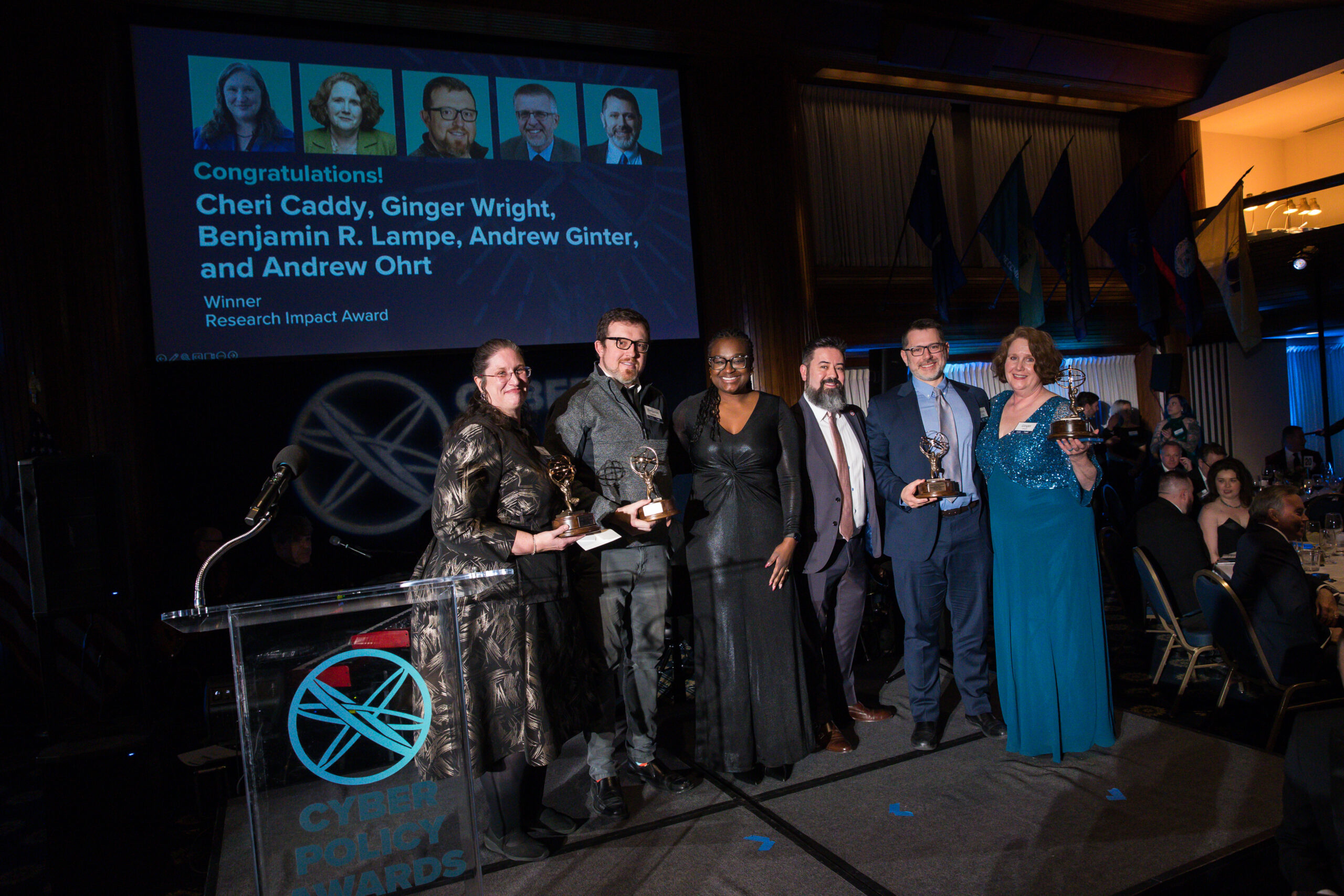
The award for Research Impact – presented by IST Executive in Residence for Public Safety & Resilience Joshua Corman and CEO and Founder at CAS Strategies Camille Stewart-Gloster – went to Cheri Caddy, Ginger Wright, Benjamin R. Lampe, Andrew Ginter, and Andrew Ohrt for advancing cybersecurity for physical systems through Cyber-Informed Engineering.
“We saw a gap in how cyber security is performed today. Because when we have a digital adversary, we call a digital hero to mitigate it, not recognizing that engineering and the laws of physics are things that adversaries can’t break,” said Ginger Wright on behalf of the group. “And if we bring those techniques in and extend our cyber security with those ideas, we will then engineer out the consequences of cyber attack.”

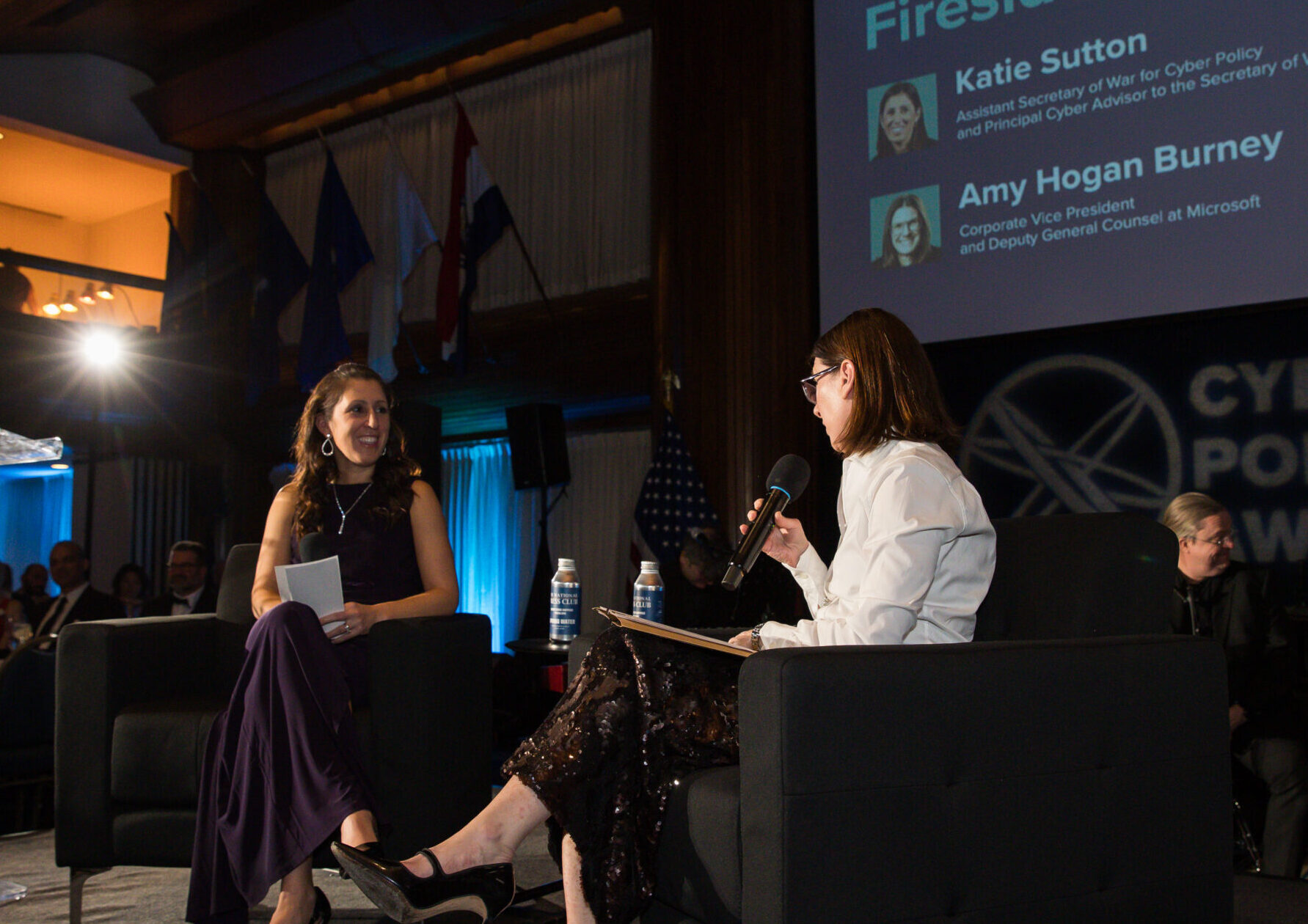
Assistant Secretary of War for Cyber Policy and Principal Cyber Advisor to the Secretary of War Katherine Sutton joined Microsoft Corporate Vice President and Deputy General Counsel Amy Hogan-Burney for a fireside chat.
They reflected on lessons learned and looked to the next generation of cyber policy leadership, speaking directly to the young professionals and students in the NextGen Balconies from across the cyber policy community, including Young Professionals in Foreign Policy, Johns Hopkins SAIS and the Alperovitch Institute, the Aspen Institute’s Cyber Civil Defense Emerging Leaders and the Aspen Cyber Summit Scholars, and The Cyber Guild’s R.I.S.E. Inclusive Mentoring Program.
“This event is very special to me, personally, and to Microsoft. In cyber, we do not celebrate very often. We spend a lot of time working very hard, we spend a lot of time in crisis. And here, we’re taking the time to acknowledge the many individuals and teams whose contributions continue to keep our cyber space safe,” Amy said.
Assistant Secretary Sutton stressed the importance of building and maintaining talent in cyber. “I can tell you unequivocally that mission starts and ends with talent,” she said. “Technology, policy and strategy are all vital, but it is the people that truly make the difference. Our ability to out-think and out-maneuver our adversaries depends entirely on our ability to recruit, retain and empower the next generation of cyber professionals, people like all of you in this room tonight.”

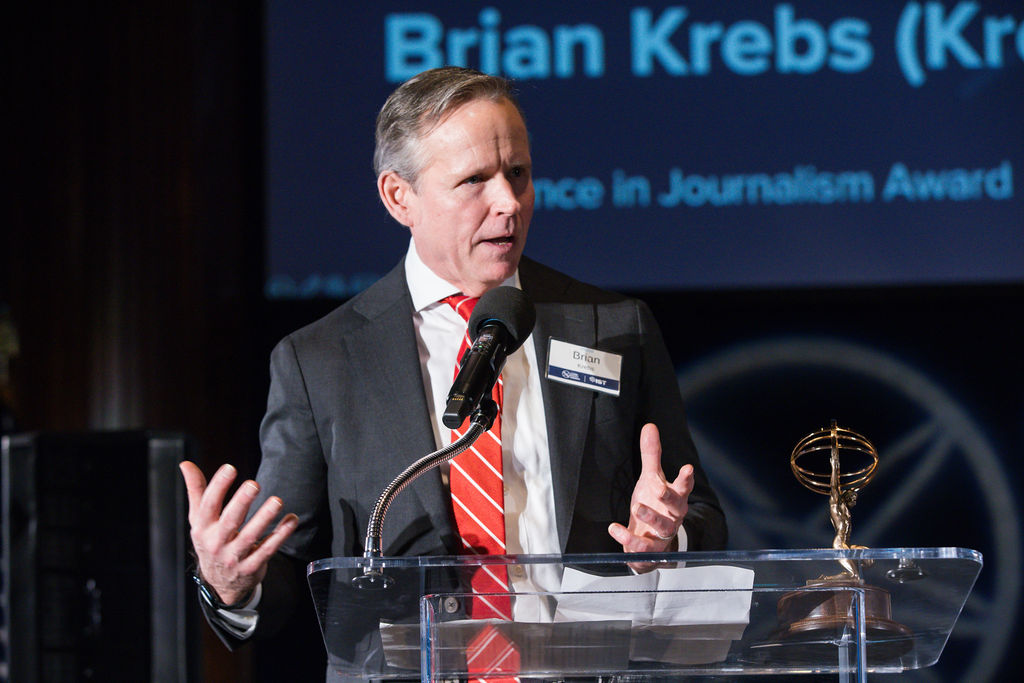
The award for Excellence in Journalism – presented by Silverado Policy Accelerator Chief of Staff Marc Raimondi and McCrary Institute Deputy Director and Chief Communications Officer Victoria Dillon – went to Krebs on Security founder Brian Krebs for significant contributions to the strategic and tactical understanding of cyber criminality.
In his acceptance speech, Brian Krebs reflected on his career path and the importance of people-centered storytelling in cyber journalism. “Over the last few years, I’ve been focusing more on organized cyber crime and the technology services that support that. Most of my work centers less on the technical side of things, and more on the people side: the hackers, the victims, the people in the trenches here tonight,” he said. “That, to me, is the most interesting part of this, and it’s the easiest way I know how to tell a good story that’s also complex to a large audience.”

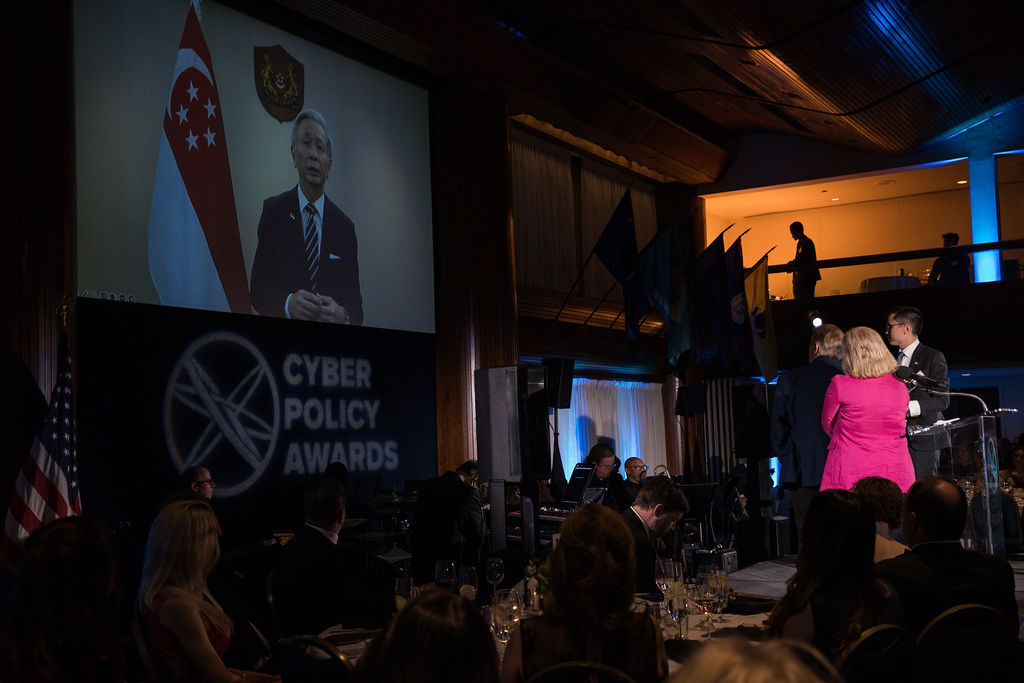
The award for Lifetime Achievement – presented by Cyber Policy Group founding member Chris Painter and Chair of Ukraine Defense Contact Group’s IT Coalition Steering Group and former Estonian Ambassador for Cyber Diplomacy Heli Tiirmaa-Klaar – went to David Koh of the Cyber Security Agency of Singapore for for championing honest and productive dialogue in the international cybersecurity community; leading the charge to uphold a rules-based international order and responsible state behavior in cyberspace; and fundamentally advancing the global conversation on cyber policy over the course of his career.

Though David wasn’t able to be present for the gala, his recorded remarks reflected on the progress the cyber community has made.
“Throughout my career, one conviction has remained constant: that cyberspace is inherently global, and the challenges that we face cannot be addressed by any one country acting alone…The question is not whether challenges will arise, but rather whether we will be able to meet them together. I remain cautiously optimistic. I believe that cooperation is still possible.”

To close out the night, the award for Ecosystem Champion – presented by Cyber Threat Alliance President and CEO Michael Daniel and Monument Advocacy Principal Tatyana Bolton – went to Philip Reitinger for championing the cybersecurity nonprofits ecosystem.

Referencing his work with Nonprofit Cyber and Common Good Cyber, Philip emphasized the need to support the organizations working behind the scenes to keep the internet safe and secure for all. “In case you don’t know, the vast majority of the internet is actually protected by nonprofits,” he explained. “These entities play critical roles, and they do so with very little funding, and sometimes they even go away.”
He concluded by reflecting on the cybersecurity challenges facing the world today. “Cybersecurity is a we problem, it’s not a me problem. It’s only by solving this together as an ecosystem through real collective action that we’re going to make a difference.”
Thank you to the cyber policy community for submitting nominations and supporting the event; to our panel of independent judges for their time and expertise; and to the Cyber Policy Awards organizing committee for their support!
Sponsors
Thank you to our sponsors!
Platinum Level
Gold Level
Silver Level
Bronze Level