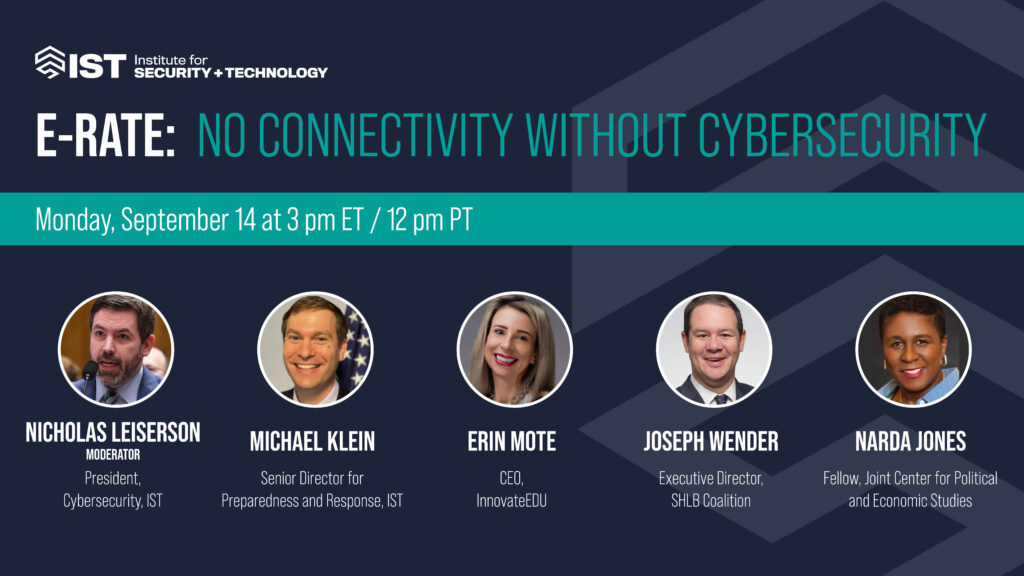
As schools face increasing cyber threats, the Future of Universal Service Fund Reform Task Force has issued recommendations for Congress to consider in the rewriting of the E-Rate Program. IST’s experts hosted this webinar with members of the task force to discuss their recommendations, the FCC’s cybersecurity pilot, and the broader context of E-Rate reform.
The E-Rate program has been a key catalyst in getting every school in the country connected to the Internet. Today, it continues to be a key driver for providing schools with affordable broadband access with dollars from the Federal Communications Commission’s Universal Service Fund (USF).
However, after 30 years, E-Rate is facing a major shakeup. In the wake of a 2025 Supreme Court case upholding the constitutionality of the E-Rate funding mechanism, a bipartisan, bicameral group of members of Congress have asked for feedback on how to reform and refocus the program. And in a move that has caused significant concern among schools, libraries, and broadband equity advocates, the FCC is seeking comments on a Notice of Proposed Rulemaking that could completely upend E-Rate as we know it.
One area where there is increasing consensus is the need to incorporate cybersecurity into connectivity funding. E-Rate currently severely limits the types of cybersecurity technologies that are eligible for program funding, despite the steady drumbeat of cyber incidents affecting school districts.
In August 2026, a blue ribbon task force co-chaired by former FCC Commissioners released a report on the future of E-Rate. Building cybersecurity into the program was one of six key recommendations put forward by the task force.
As part of IST’s continued exploration of policy measures to help under-resourced critical infrastructure address cyber threats, IST’s Cybersecurity President Nicholas Leiserson moderated this panel with members of the Future of Universal Service Fund Reform Task Force to discuss the FCC’s cybersecurity pilot, the task force’s recommendations, and the broader context of E-Rate reform, all with a view toward how the program can help schools defend against nation-state adversaries and cyber criminals.