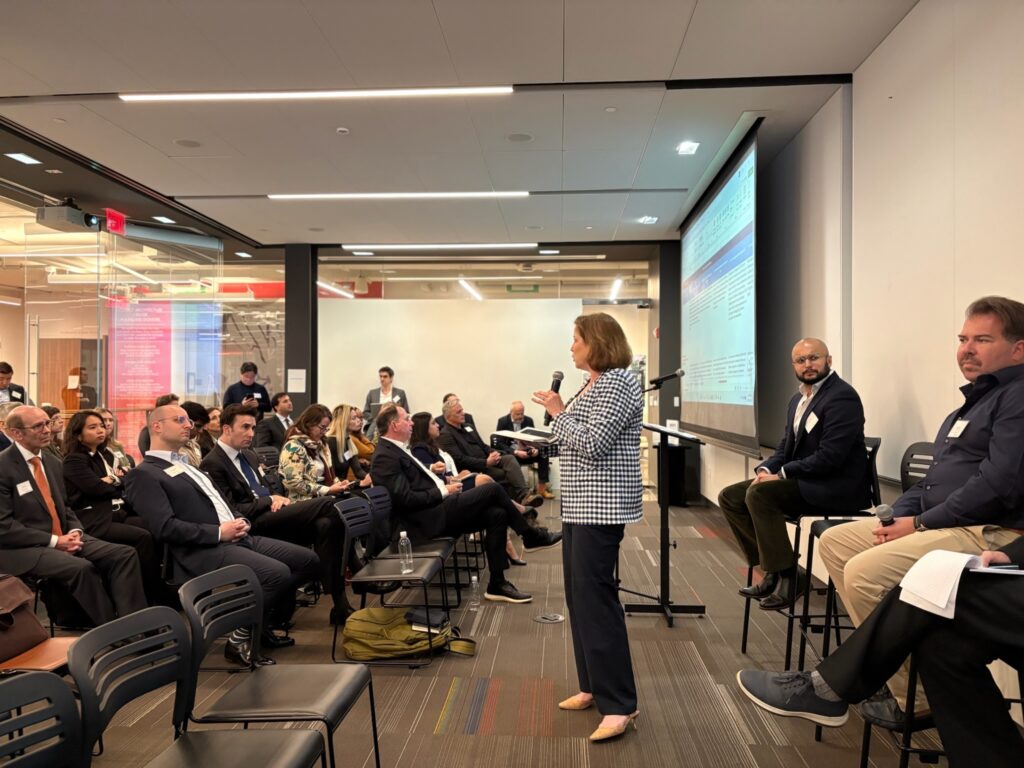
In early August, United States Strategic Command (STRATCOM) hosted its annual Deterrence Symposium in Omaha, Nebraska, under the theme “Peace Through Strength: Turning Defense Strategy into Decisive Deterrence Action.” The conference featured remarks from the Vice Chairman of the Joint Chiefs of Staff, General Christopher Mahoney; Commander of STRATCOM, Admiral Richard Correll; and the Commander of U.S. Special Operations Command (SOCOM), Admiral Frank Bradley.
The Institute for Security and Technology’s (IST) Nuclear Policy team attended the symposium to engage practitioners and discuss emerging findings from IST’s ongoing work on the integration of artificial intelligence (AI) into nuclear command, control, and communications (NC3). To this end, our team met with officials from multiple U.S. government agencies, such as STRATCOM and the Department Of Energy (DOE), to discuss the AI-NC3 project and hear practitioner perspectives on the challenges it examines.
The Deterrence Symposium highlighted three key takeaways on how STRATCOM is approaching the use of AI in its operations.
1. AI in the present, not the future
Throughout the symposium, panelists discussed AI as a present operational and policy challenge rather than an abstract future hypothetical. They shared that it can produce countless new operational advantages, but also introduces myriad risks. At previous Deterrence Symposiums, panelists would reference emerging and disruptive technologies (EDTs) as a future challenge which the next generation would need to grapple with. This year, we saw concrete discussion of AI as a present threat vector that must be addressed and mitigated immediately. There was also more discussion on utilizing AI to operational advantage through faster response times, as discussed by Admiral Correll.
2. Deterrence by denial
Panelists at the symposium emphasized the increasing role of deterrence by denial over deterrence by punishment. The terms “deterrence by denial” and “deterrence by punishment” originated in a 1959 monograph by Glenn Snyder. Deterrence by denial is achieved by convincing an adversary that their efforts will not succeed, such as convincing a hostile nuclear state that a surprise attack will be stopped. Conversely, deterrence by punishment seeks to convince an adversary that any surprise attacks would be met with a severe response. Antiballistic missile systems such as the Golden Dome initiative—which operate using deterrence by denial—are controversial because they could introduce doubt as to whether destruction would truly be mutually assured. This logic can be seen in a broader shift towards denial strategies, such as with the National Security Strategy’s directive to build U.S. military infrastructure in the First Island Chain “…to deny any attempt to seize Taiwan or achieve a balance of forces so unfavorable to us as to make defending that island impossible.” While deterrence by denial is an old concept, this is a very explicitly clear example in a public-facing document.
3. NC3: the “system of systems”
The symposium surfaced the idea that the NC3 enterprise comprises more than 200 subsystems, such as infrared satellites used to detect massive heat signatures from something like a missile launch, underscoring a central challenge for operationalizing AI integration: it cannot occur within a single monolithic system but instead will take place across a large, heterogeneous architecture with different missions, requirements, and vulnerabilities. This is exactly the problem set IST seeks to address across the whole nuclear enterprise through our AI-NC3 work. The project focuses on the integration of artificial intelligence into three subsystems in particular: early warning, adaptive targeting, and decision support.
Nearly every panel included discussion of AI. IST’s AI-NC3 research received particular attention when a panel moderator referenced discussions from a workshop IST hosted in San Francisco in April 2026 on Dr. Kenneth Payne’s seminal paper on AI wargaming and nuclear escalation. The 2026 symposium also reached beyond traditional nuclear deterrence topics, including substantial discussion of competition in the electromagnetic spectrum, constraints facing the defense industrial base, and greater integration and burden sharing with U.S. allies and partners.
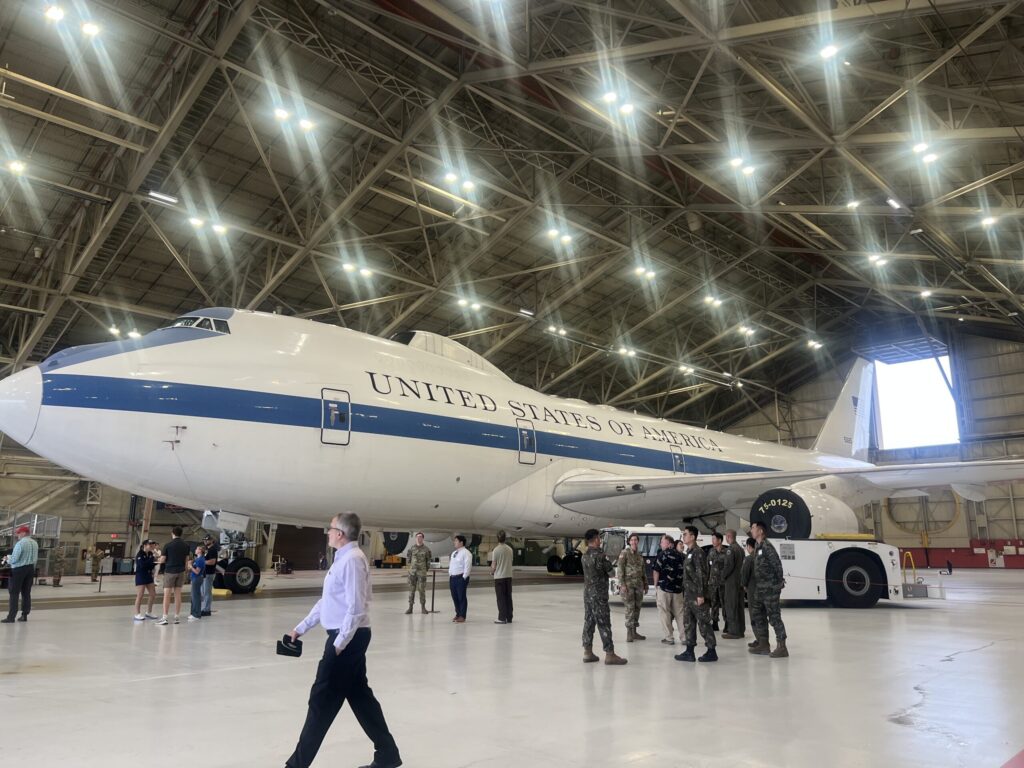
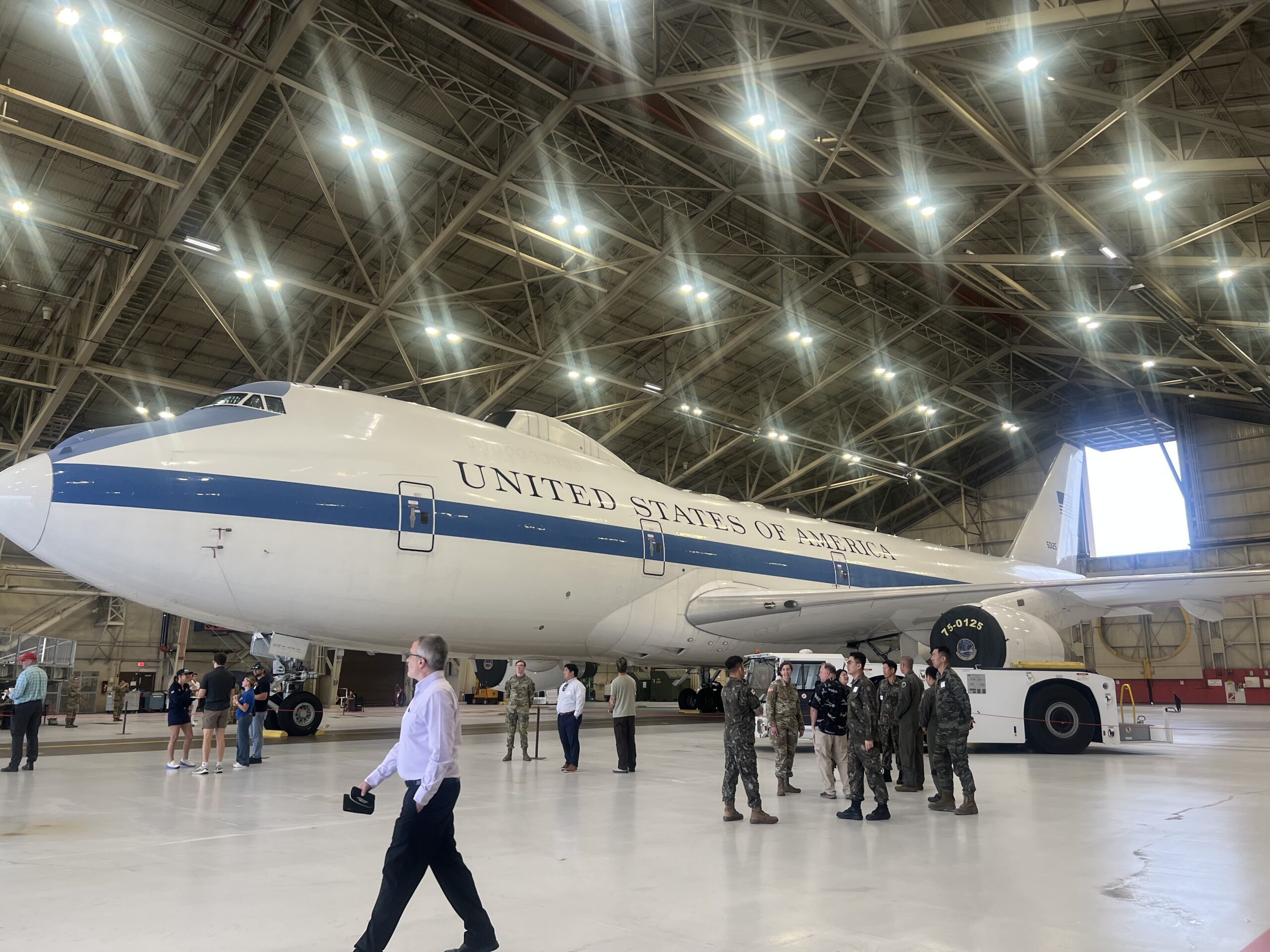
On the third day of the conference, the team was invited to a site visit on Offutt Air Force Base, STRATCOM’s headquarters. We were able to explore static aircraft displays and view the Defenders of Freedom Air & Space Show. Notably, the visit included a tour of the E-4B National Airborne Operations Center, or “Doomsday Plane,” which serves as a survivable airborne command-and-control center for U.S. leadership during a national emergency. We also viewed the E-6B Mercury, which supports strategic communications and can provide airborne command and control for U.S. nuclear forces.
For the IST team, the symposium reinforced that questions surrounding AI and NC3 are moving rapidly from speculative debates toward practical questions of integration, modernization, and strategic stability. The discussions in Omaha will inform the AI-NC3 working groups as we develop our final research and recommendations, which will then be used to advise offices across the nuclear enterprise on optimally safe integration pathways.