Skip to content
Sign Up for Our Newsletter
About
Close About
Open About
About the Institute for Security and Technology
Our Team
Board Of Directors
Careers
Contact Us
Featured Events
Cyber Policy Awards
Critical Effect DC
Projects
Close Projects
Open Projects
AI and NC3
Pioneering action-oriented efforts to explore how advanced AI capabilities will be integrated into nuclear command, control, and communications
AI Antitrust and National Security
Exploring how to more effectively account for national security considerations in AI antitrust cases while respecting precedent, scope, and the core principles of antitrust law
AI Risk Reduction Initiative
Assessing the emerging risks and opportunities of AI foundation models and developing risk reduction strategies
AI Chip Export Control Initiative
Safeguarding U.S. national competitiveness by closing critical compliance and enforcement gaps
AI Risk Barometer
Measuring national security professionals’ perceptions of AI futures through a technically-informed survey
CATALINK
Preventing the onset or escalation of conflict by building a resilient global communications system
Energy FIRST
Powering U.S. and allied security & prosperity through a resilient energy future
Ransomware Task Force (RTF)
Combating the ransomware threat with a cross-sector approach
Religious Voices and Responsible AI
Engaging religious communities on safe and beneficial AI
SL5 Task Force
Strengthening AI security through a multistakeholder approach
UnDisruptable27
Driving more resilient lifeline critical infrastructure for our communities
All Projects
» Explore all of IST's projects, past and current
Focus Areas
Future of Digital Security
Geopolitics of Technology
Innovation and Catastrophic Risk
Events
Insights
Contact
Search
Donate
Archive
risk reduction
Blog
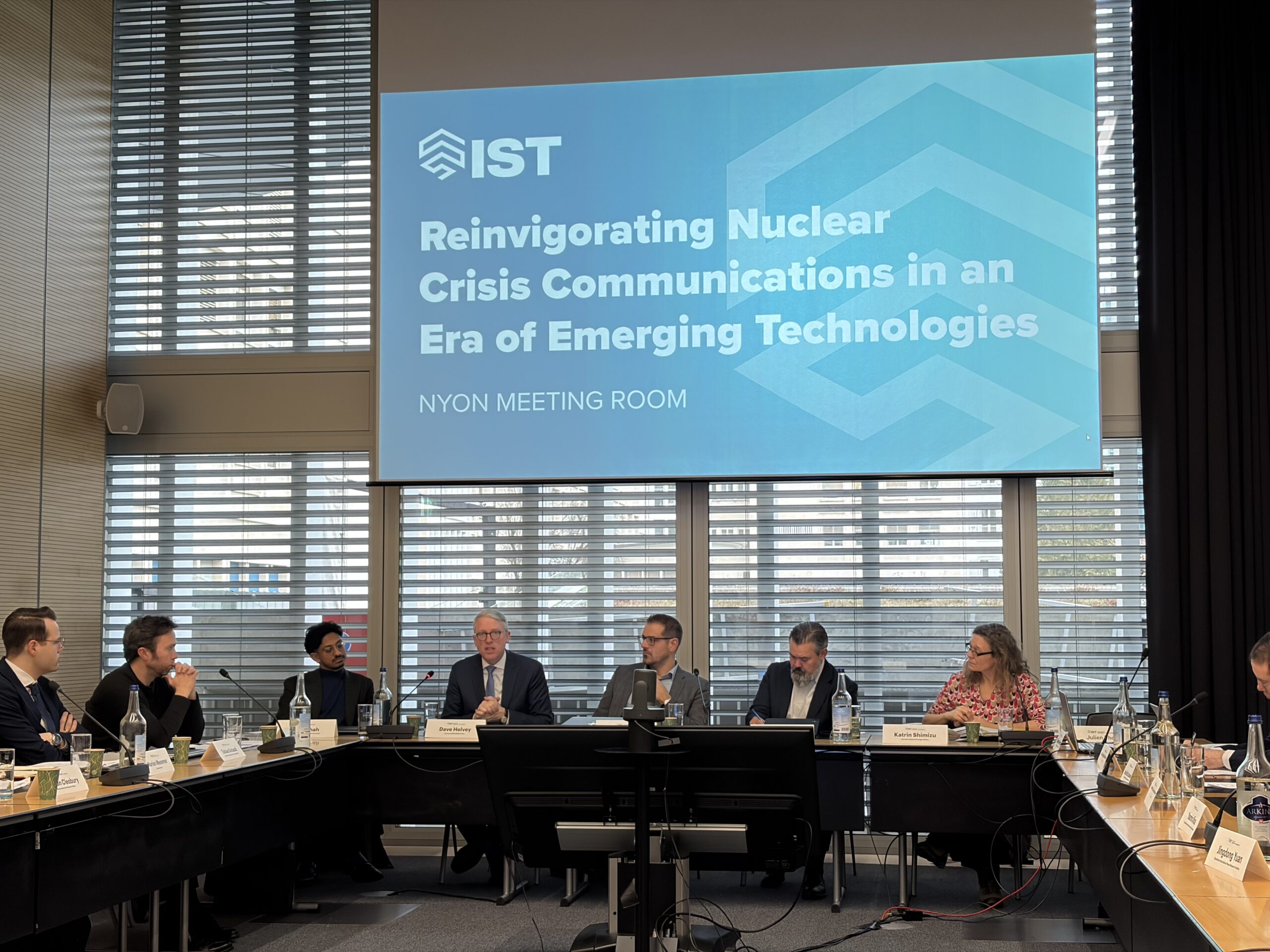
Crossed Wires and Rising Escalations: IST Hosts Workshop on Reinvigorating Nuclear Crisis Communications
On February 18, 2026, the Institute for Security and Technology’s Nuclear Policy team convened for a workshop and scenario-based exercise titled “Reinvigorating Nuclear Crisis Communications in an Era of Emerging Technologies” with leading diplomats, policy experts, and technologists in Geneva, Switzerland.
arms control
,
crisis communications
,
escalation
,
mesh networks
,
New START
,
nuclear
,
risk reduction
March 9, 2026
Blog
Q&A: An AI Loss of Control “Warning Shot”
How might you lose control of a system as complex as a frontier AI model? In this month's newsletter, we speak to the authors of IST's newest report diving into the risk of AI Loss of Control – that is, models diverging from authorized constraints, to the extent that a human operator can no longer prevent or constrain undesired outcomes - and presenting a framework for mitigation.
AI
,
AI Loss of Control
,
artificial intelligence
,
deception
,
model drift
,
risk reduction
,
scheming
February 19, 2026
Blog
Something Mysterious Is Happening
In a blog reflecting on her co-authored report, AI Loss of Control Risks, Mariami Tkeshelashvili writes, "There is a difference between embracing mystery as a driver of discovery and being incurious about risks that are already becoming visible. Monitoring AI behaviours that we cannot fully explain is not pessimism—it is responsibility. It is what keeps us safe."
AI
,
artificial intelligence
,
deception
,
Indications and Warning
,
loss of control
,
manipulation
,
monitoring
,
risk reduction
,
scheming
,
strategic foresight
February 19, 2026
Report
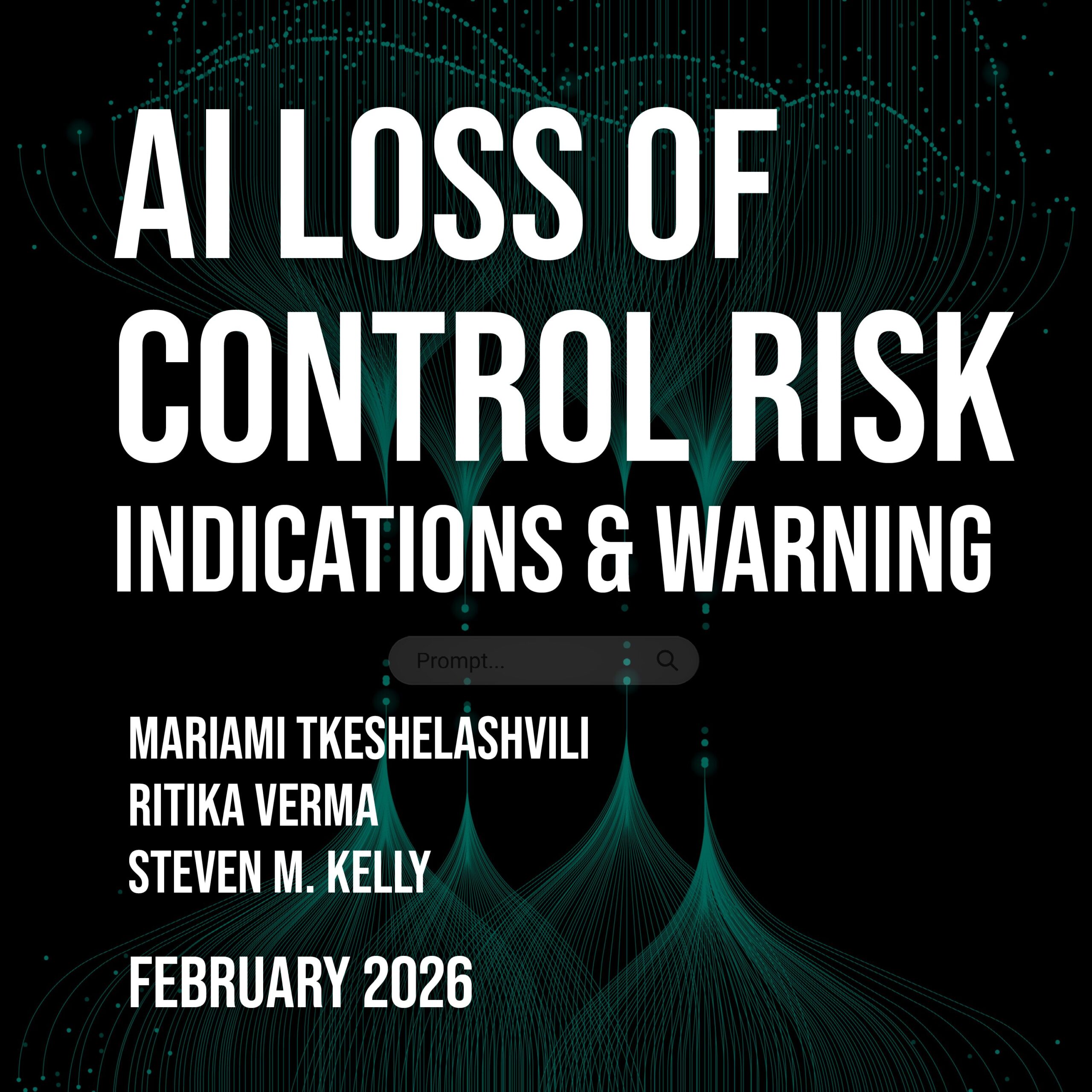
AI Loss of Control Risk: Indications & Warning
Though technologists and policymakers alike are eager to address AI Loss of Control–a state in which an AI system diverges from authorized constraints–there are significant gaps in the ways stakeholders understand, anticipate, and perceive this risk. "AI Loss of Control Risk" proposes applying the Indications & Warning (I&W) methodology used by the intelligence community to monitor this risk.
AI
,
AI Loss of Control
,
artificial intelligence
,
deception
,
model drift
,
risk reduction
,
scheming
February 19, 2026
Blog
New Video Narrated by Rose Gottemoeller Spotlights “CATALINK”: A Critical Blueprint for Secure, Multilateral Crisis Communications
Narrated by Rose Gottemoeller, former NATO Deputy Secretary General and U.S. Undersecretary of State for Arms Control and International Security, a new three-minute animated film live today introduces CATALINK. This groundbreaking initiative is a blueprint for a dedicated, last-resort communication system designed to be the ultimate backstop to prevent or cease nuclear war.
arms race
,
CATALINK
,
crisis communications
,
hotlines
,
mesh network
,
nuclear
,
Puck
,
risk reduction
December 17, 2025
Blog
IST Statement on President Trump’s AI Action Plan and Related Executive Orders
In February, IST submitted comments in response to the Office of Science and Technology Policy’s request for information on the development of an AI Action Plan. We were heartened to see many of the key issues we raised reflected in the Trump Administration’s recent AI executive orders.
AI
,
artificial intelligence
,
chips
,
compute
,
distributed energy
,
energy security
,
export control
,
national security
,
risk reduction
July 25, 2025
Blog
Responding to the Unknown: Simulating AI-Driven Crises
In April, Mariami Tkeshelashvili and Jennifer Tang hosted an AI crisis simulation exercise at the Johns Hopkins SAIS Emerging Technologies Symposium. The hands-on exercise asked participants to explore challenges at the intersection of AI and national security, and used IST’s research to set the stage before diving into immersive crisis scenarios.
AI
,
cyber
,
national security
,
risk reduction
,
risk-mitigation
,
scenarios
,
workshop
May 13, 2025
Report
Navigating AI Compliance, Part 2: Risk Mitigation Strategies for Safeguarding Against Future Failures
"Navigating AI Compliance, Part 2: Risk Mitigation Strategies for Safeguarding Against Future Failures" presents 39 risk mitigation strategies co-created by a multistakeholder working group of experts that aim to avoid institutional, procedural, and performance failures of AI systems.
AI
,
artificial intelligence
,
compliance failure
,
infrastructure protection
,
institutional failures
,
performance failures
,
procedural failures
,
risk reduction
March 20, 2025
Blog
Managing Misuse Risk for Dual-Use Foundation Models: IST Submits Comments to a NIST Request for Information
Last week, Institute for Security and Technology (IST) submitted a response to NIST's Request for Comments on the U.S. Artificial Intelligence Safety Institute's draft guidelines for identifying and mitigating the risks to public safety and national security present across the AI lifecycle.
AI
,
artificial intelligence
,
deployment
,
development
,
malicious use
,
misuse
,
national security
,
NIST
,
risk reduction
March 18, 2025
Blog
Patrick J. McGovern Foundation Renews Commitment to Supporting IST’s AI Risk Reduction Efforts
Over the last two years, with the support of the Patrick J. McGovern Foundation, the Institute for Security and Technology (IST) has been on a mission to assess the risks and opportunities associated with the development and deployment of cutting-edge AI foundation models. IST is again excited to announce renewed support from the Patrick J. McGovern Foundation to further advance this vital work.
AI foundation models
,
artificial intelligence
,
compliance failure
,
malicious use
,
risk reduction
March 18, 2025
Blog
Announcing Continued Support from the Swiss Federal Department of Foreign Affairs and the German Federal Foreign Office for the CATALINK Initiative
The Institute for Security and Technology (IST) is pleased to announce the generous political and financial support from the Swiss Federal Department of Foreign Affairs and the German Federal Foreign Office Germany to continue the CATALINK Initiative through 2027.
CATALINK
,
crisis communications
,
disarmament
,
mesh networks
,
nuclear weapons
,
risk reduction
January 21, 2025
In the News
,
Podcast
Strategic Stability: Sahil Shah on Press the Button
Sahil Shah joined Ploughshare Fund’s flagship podcast Press the Button to discuss strategic stability, transatlantic relations, and the need for reliable communications links in all nuclear contexts.
crisis communications
,
JCPOA
,
nuclear command
,
risk reduction
October 11, 2021
Search
Search
Home
About
CATALINK BRIEF
FAQ
Our Team
Why do we need crisis communications?
Activities
Events
Insights
Podcasts
Press
Get In Touch