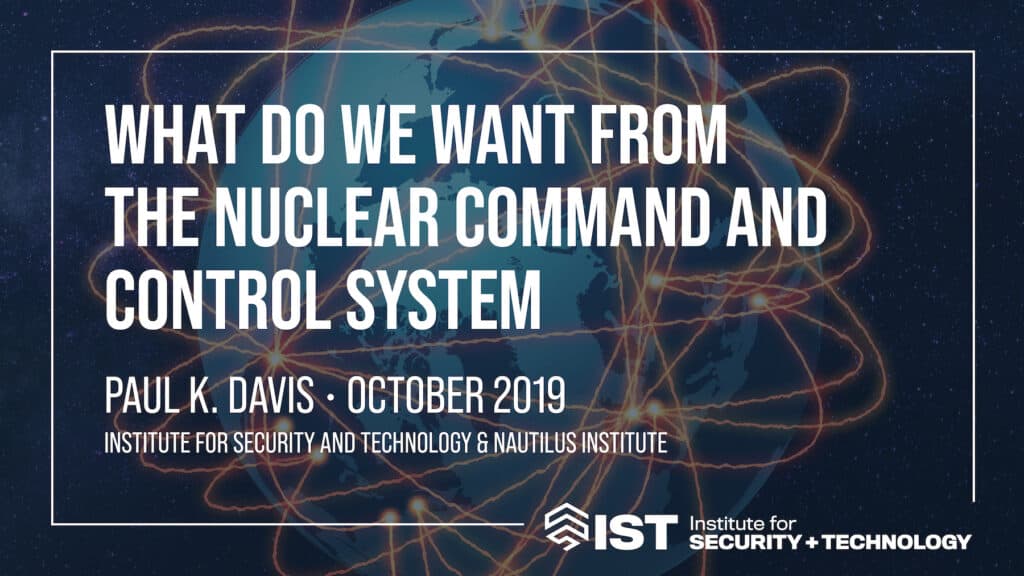
In this essay, Paul Davis suggests that U.S. NC3 modernization “should place increased emphasis on assuring control, avoiding accidents, and avoiding ill-informed or unwise employment of nuclear weapons.”
The report conceptualizes desirable attributes of nuclear command, control, and communications. Much of what is ordinarily front and center in such discussions have been omitted within this report. In particular, Paul does not address the myriad of structural and technical issues associated with modernizing the system’s personnel, procedures, facilities, equipment, and communications. Instead, this report asks what core functionality should be demanded, and how those demands should differ from those of the Cold War. Doing so raises provocative issues of which readers, and practitioners, may disagree, but that point back to critical first-order questions that must be asked at the outset of reconstituting the aging NC3 architecture.
About the author: Paul K. Davis is an adjunct principal researcher at the RAND Corporation and a professor of policy analysis at the Pardee RAND Graduate School. He was a senior executive in the Office of the Secretary of Defense before joining RAND.
This paper is accompanied by a Fourth Leg podcast: Starting From The Beginning.