Skip to content
Sign Up for Our Newsletter
About
Close About
Open About
About the Institute for Security and Technology
Our Team
Board Of Directors
Careers
Contact Us
Featured Events
Cyber Policy Awards
Critical Effect DC
Projects
Close Projects
Open Projects
AI and NC3
Pioneering action-oriented efforts to explore how advanced AI capabilities will be integrated into nuclear command, control, and communications
AI Antitrust and National Security
Exploring how to more effectively account for national security considerations in AI antitrust cases while respecting precedent, scope, and the core principles of antitrust law
AI Risk Reduction Initiative
Assessing the emerging risks and opportunities of AI foundation models and developing risk reduction strategies
AI Chip Export Control Initiative
Safeguarding U.S. national competitiveness by closing critical compliance and enforcement gaps
AI Risk Barometer
Measuring national security professionals’ perceptions of AI futures through a technically-informed survey
CATALINK
Preventing the onset or escalation of conflict by building a resilient global communications system
Energy FIRST
Powering U.S. and allied security & prosperity through a resilient energy future
Ransomware Task Force (RTF)
Combating the ransomware threat with a cross-sector approach
Religious Voices and Responsible AI
Engaging religious communities on safe and beneficial AI
SL5 Task Force
Strengthening AI security through a multistakeholder approach
UnDisruptable27
Driving more resilient lifeline critical infrastructure for our communities
All Projects
» Explore all of IST's projects, past and current
Focus Areas
Future of Digital Security
Geopolitics of Technology
Innovation and Catastrophic Risk
Events
Insights
Contact
Search
Donate
Analysis
Explore our research
Search
Filters
Analysis Type
Pillar / Project
Source
Topics
Author
Year
Op-ed
The Real Value of Artificial Intelligence in Nuclear Command and Control
In an article in War on the Rocks, Philip Reiner and Alexa Wehsener make the case for a nuanced discussion about the integration of artificial intelligence in nuclear command, control, and communication systems.
artificial intelligence
,
machine learning
,
NC3
,
nuclear
,
stability
November 4, 2019
Report
Pay Attention
In a joint CNAS and IST report, Alexa Wehsener analyzes the effect of digital technologies on the monetization of attention.
attention
,
cognition
,
democracy
,
digital cognition
August 19, 2020
Report
Divided Against Itself
In Divided Against Itself, an installment of the ongoing series from IST and the Center for a New American Security examining the elements and potential implications of digital threats to democracy over the next ten years, M. Nina Miller explores how new technologies can amplify divisions and erode trust in public institutions.
democracy
,
identity
,
ideology
,
polarization
July 8, 2020
Report
The AES Project: Any Lessons for NC3?
Thomas Berson details how lessons from the Advanced Encryption Standard Competition can aid the development of international NC3 components and even be mirrored in the creation of a CATALINK community.
advanced encryption standard
,
AES
,
Anagram
,
blockchain
,
CATALINK
,
cryptography
,
encryption
,
NC3
,
NIST
,
standards
June 23, 2020
Report
Hardware that is Less Untrusted: Open Source Down to the Silicon
In an essay out of the workshop "Last Chance: Communicating at the Nuclear Brink," Ron Minnich argues "We can not build on a foundation that is compromised at all levels. There is no visibility into the system's behavior. The existing model assumes perfect software: 'Trust, but don't verify." We need to start anew, from the gates, and work our way up.
CATALINK
,
central processing unit
,
chip
,
computing
,
CPU
,
firmware
,
hardware
,
IO chips
,
memory chip
,
motherboard
,
NC3
,
open-source
,
PC
,
personal computer
,
silicon
,
software
,
supply chain
,
UV
June 9, 2020
Report
Communication Disruption Attacks on NC3
In an essay out of the workshop "Last Chance: Communicating at the Nuclear Brink," Paul Bracken argues, "in a nuclear world we should be careful about attacking enemy communications because doing so leads to greater risks of uncontrolled escalation. The worst possible situation is the one the United States is now in, that is, to not be clear in our own minds about what we are doing when it comes to disrupting communications.”
CATALINK
,
communication
,
communication attacks
,
electromagnetic pulse
,
electronic warfare
,
escalation
,
military
,
NC3
,
nuclear
,
red line
,
retaliation
,
strike
,
target
,
targeting
,
United States
,
vulnerability
May 28, 2020
Previous
Page
1
…
Page
20
Page
21
Page
22
Page
23
Page
24
…
Page
30
Next
Report
To the Point of Failure: Identifying Failure Points for Crisis Communications Systems
Crisis communication systems can fail in a variety of ways. To shed light on the many different failures that degrade and undermine such systems, this report identifies four categories of pathways to failure: operational failures, adversarial failures, accidental failures and institutional failures. Each category is made up of specific types of failures, investigated in further detail in the following sections of this report.
NC3
,
nuclear risk reduction
,
nuclear crisis communications
,
points of failure
Report
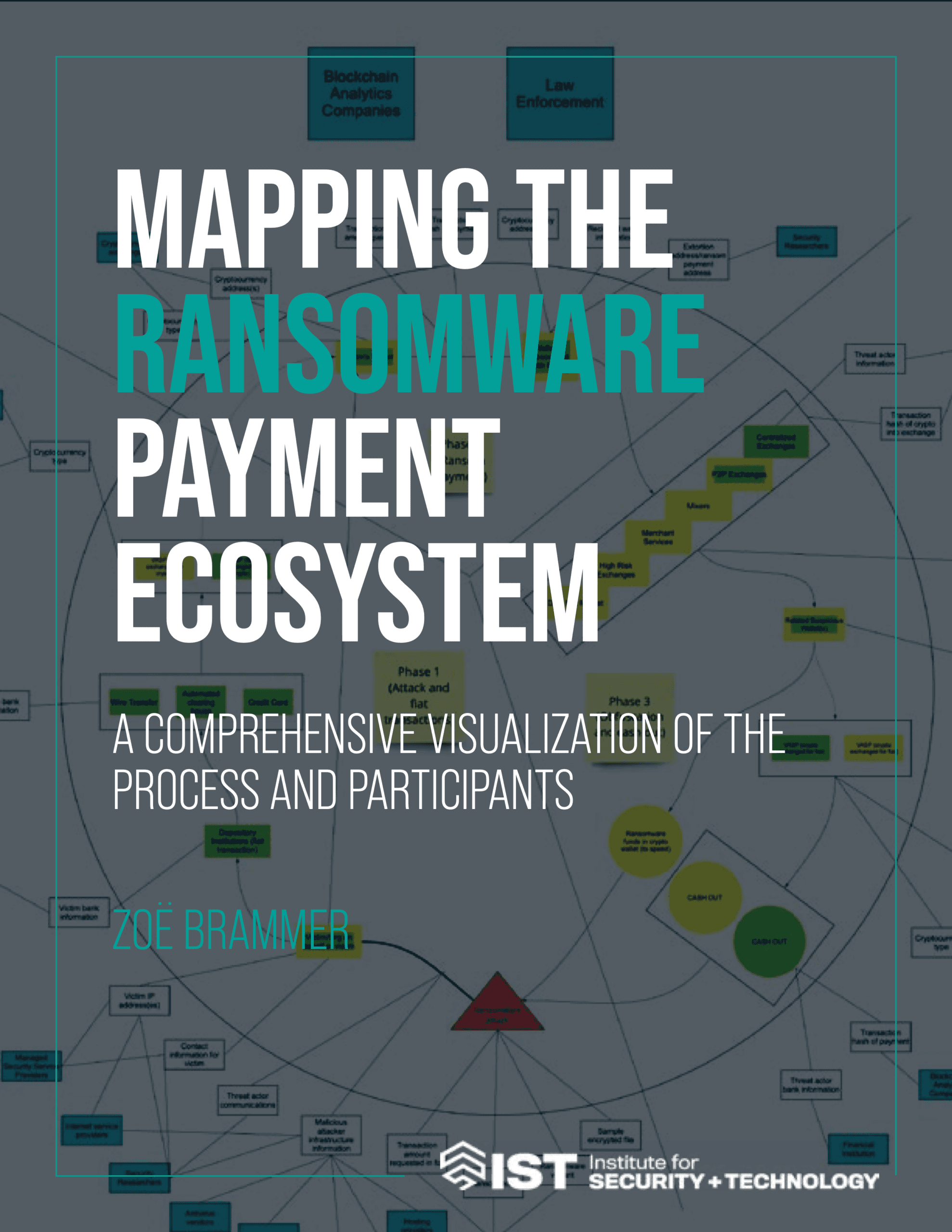
Mapping the Ransomware Payment Ecosystem: A Comprehensive Visualization of the Process and Participants
Central to our ability to mitigate the threat of ransomware is the development of a common understanding of the actors, stakeholders, processes, and information, both required for and produced during the ransomware payment process. Yet, when we began this work, such a picture did not exist. We undertook this effort to fill that gap.
Ransomware
,
ransom payments
,
mapping
,
visualization
Report
Plan maestro de defensa contra los programas de secuestro
En respuesta a la acción 3.1.1 del Informe del Grupo de Trabajo sobre Programas de Secuestro, en la cual se exhorta a las organizaciones de ciberseguridad a establecer un marco claro y accionable para la mitigación, la respuesta y la recuperación ante programas de secuestro, el Grupo de Trabajo encargado de elaborar un plan de defensa contra los programas de secuestro formuló un plan maestro que abarca un subconjunto de salvaguardias esenciales de ciberhigiene seleccionadas de los controles críticos de seguridad del Centro para la Seguridad de Internet (CIS Controls®) v8.
Ransomware
,
Future of Digital Security
,
RTF
,
cyber attacks
,
Blueprint for Ransomware Defense
,
defense
In the News
,
Op-ed
Democracy Gone Digital: The Election Season Online
In an op-ed for Tech Policy Press, Zoë Brammer and Philip Reiner sound the alarm based on our Digital Cognition and Democracy Initiative (DCDI) research. We need to help voters grapple with information overload and unnaturally immersive experience provoked by digital tools, they urge.
democracy
,
DCDI
,
digital cognition
,
election manipulation
Search
Search
MENU
HOME PAGE
About CATALINK
CATALINK Frequently Asked Questions
The CATALINK Brief
Insights
Events
Analysis
Podcasts
Why crisis communications?
Our Team
GET IN TOUCH
Email:
[email protected]
Send us a message:
Contact
JOIN THE CATALINK MAILING LIST
First Name
Last Name
Organization
Email
Subscribe