Skip to content
Sign Up for Our Newsletter
About
Close About
Open About
About the Institute for Security and Technology
Our Team
Board Of Directors
Careers
Contact Us
Featured Events
Cyber Policy Awards
Critical Effect DC
Projects
Close Projects
Open Projects
AI and NC3
Pioneering action-oriented efforts to explore how advanced AI capabilities will be integrated into nuclear command, control, and communications
AI Antitrust and National Security
Exploring how to more effectively account for national security considerations in AI antitrust cases while respecting precedent, scope, and the core principles of antitrust law
AI Risk Reduction Initiative
Assessing the emerging risks and opportunities of AI foundation models and developing risk reduction strategies
AI Chip Export Control Initiative
Safeguarding U.S. national competitiveness by closing critical compliance and enforcement gaps
AI Risk Barometer
Measuring national security professionals’ perceptions of AI futures through a technically-informed survey
CATALINK
Preventing the onset or escalation of conflict by building a resilient global communications system
Energy FIRST
Powering U.S. and allied security & prosperity through a resilient energy future
Ransomware Task Force (RTF)
Combating the ransomware threat with a cross-sector approach
Religious Voices and Responsible AI
Engaging religious communities on safe and beneficial AI
SL5 Task Force
Strengthening AI security through a multistakeholder approach
UnDisruptable27
Driving more resilient lifeline critical infrastructure for our communities
All Projects
» Explore all of IST's projects, past and current
Focus Areas
Future of Digital Security
Geopolitics of Technology
Innovation and Catastrophic Risk
Events
Insights
Contact
Search
Donate
Archive
nuclear crisis communications
Event
April 30, 2025 12:15 pm
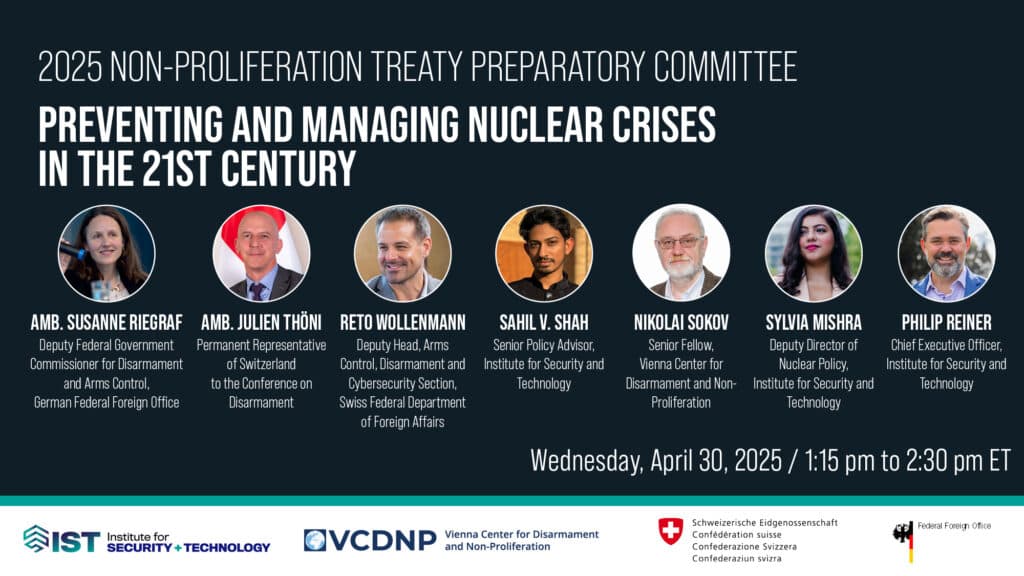
Preventing and Managing Nuclear Crises in the 21st Century
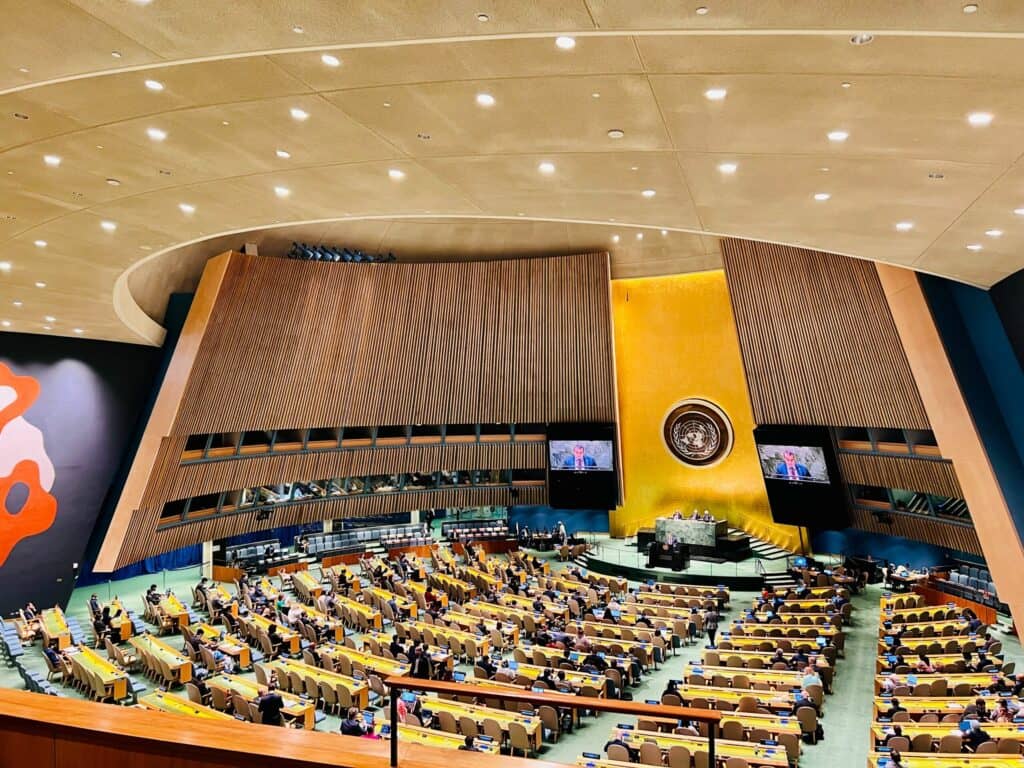
In a side event at the 2025 Non-Proliferation Treaty PrepCom at the United Nations, IST and the VCDNP co-hosted a panel discussion to investigate how states can more readily reduce the risks of and ultimately prevent nuclear crises and conflicts in the 21st century.
Germany
,
Non-Proliferation
,
nuclear
,
nuclear crisis communications
,
Switzerland
,
United Nations
April 30, 2025
Blog
The CATALINK Initiative hosts webinar with the authors of “Improving Nuclear Hotlines”
On Thursday, July 19, the Institute for Security and Technology (IST)’s CATALINK Initiative held a virtual event with the authors of their latest report series, Improving Nuclear Hotlines: Relevance and Use Cases, to discuss the state of crisis communications in India, Pakistan, Russia, and the United States, United Kingdom, and France.
event
,
India
,
nuclear crisis communications
,
Pakistan
,
Russia
July 23, 2024
Report
The Phone-a-Friend Option: Use Cases for a U.S.-U.K.-French Crisis Communication Channel
This brief outlines the case for a multilateral crisis communication channel between the heads of state of the United States, the United Kingdom, and France.
France
,
nuclear crisis communications
,
United Kingdom
,
United States
June 26, 2024
Report
China: Nuclear Crisis Communications and Risk Reduction
In this brief, IST's Sylvia Mishra interviewed Dr. Tong Zhao for his insights on China’s approach to crisis communications and nuclear risk reduction.
China
,
nuclear crisis communications
,
nuclear risk reduction
June 26, 2024
Report
Use-Cases of Resilient Nuclear Crisis Communications: A View from Russia
This report delves into resilient nuclear crisis communications from the Russian perspective, examines several documents and actions taken by Russia political leadership on both nuclear and non-nuclear instances of crisis communications, and concludes by stressing the importance of cooperation between leaders in Moscow and Washington:
nuclear crisis communications
,
nuclear risk reduction
,
Russia
June 26, 2024
Report
Pakistan: Mitigating Nuclear Risks Through Crisis Communications
This brief explores the history of crisis communications from the perspective of Pakistan, unpacks the history of nuclear crisis communications between Pakistan and India, and calls for a multilateral crisis communication mechanism in South Asia to enhance regional stability and security, noting the necessity for neutral party engagement.
nuclear crisis communications
,
nuclear risk reduction
,
Pakistan
,
South Asia
June 26, 2024
Report
Resilient Nuclear Crisis Communications: India’s Experience
This short paper examines the manner in which the existing hotlines have been used in the India-Pakistan dyad. It also identifies some challenges posed to these channels and how these need to be overcome.
India
,
nuclear crisis communications
,
nuclear risk reduction
,
Pakistan
June 26, 2024
Primer
Effects of Electromagnetic Pulses on Communication Infrastructure: An IST Primer
It is important to acknowledge that the blast effects of a nuclear detonation are horrific and, in such a scenario, it is right that emergency response (including communications) go first to support those people who are affected. IST’s Innovation and Catastrophic Risk team is focused on one aspect of crisis prevention and, in the worst case, response: the international prevention and de-escalation of catastrophic nuclear risk through additive communications solutions.
electromagnetic pulse
,
nuclear crisis communications
,
nuclear risk reduction
January 16, 2024
Blog
IST Launches New Crisis Communications Resilience Working Group
The Institute for Security and Technology (IST) is pleased to announce the establishment of the Crisis Communications Resilience Working Group, a new effort to augment nuclear risk reduction efforts and promote effective, secure, multilateral crisis communications among nuclear-armed states. The Working Group (WG) consists of scholars, academics, practitioners, and technical experts from across Europe, Asia, and North America.
emerging technologies
,
hotlines
,
NC3
,
nuclear crisis communications
October 11, 2023
Blog
Frequently Asked Questions about the CATALINK initiative
What is CATALINK? What are the CATALINK components? Why is it needed? Answers to commonly asked questions about the CATALINK initiative.
hotlines
,
mesh network
,
nuclear
,
nuclear crisis communications
,
nuclear weapons
,
security
,
strategic stability
May 22, 2023
Report
To the Point of Failure: Identifying Failure Points for Crisis Communications Systems
Crisis communication systems can fail in a variety of ways. To shed light on the many different failures that degrade and undermine such systems, this report identifies four categories of pathways to failure: operational failures, adversarial failures, accidental failures and institutional failures. Each category is made up of specific types of failures, investigated in further detail in the following sections of this report.
NC3
,
nuclear crisis communications
,
nuclear risk reduction
,
points of failure
November 30, 2022
Event
November 16, 2022 10:00 am
Averting Catastrophe: Walking the Talk on Nuclear Risk Reduction and Crisis Communications
How can states build greater transparency and predictability to prevent or manage crises when prevention fails? On November 16, 2022, IST hosted a conversation with experts to share Chinese and Russian perspectives on nuclear risks.
China
,
nuclear crisis communications
,
nuclear risk reduction
,
Russia
November 16, 2022
Blog
IST at the 2022 NPT Review Conference
During the long-delayed Review Conference on the Non-Proliferation Treaty (NPT RevCon) in New York this past month, the Institute for Security and Technology (IST) contributed to international efforts to reduce the risk of nuclear conflict.
CATALINK
,
NPT
,
nuclear crisis communications
,
nuclear risk reduction
August 31, 2022
Podcast
Wake-Up Call
In the first episode of The Fourth Leg's season 2, we discuss the need for a better communication system between nuclear powers with Philip Reiner, Peter Hayes, Eric Grosse, Rear Admiral John Gower, and Subrata Banik.
communication
,
complexity
,
crisis communications
,
nuclear communications
,
nuclear crisis communications
May 13, 2020
Search
Search
MENU
HOME PAGE
About
FAQ
The CATALINK Brief
Insights
Events
Analysis
Podcasts
Why crisis communications?
Our Team
GET IN TOUCH
Email:
[email protected]
Send us a message:
Contact
JOIN THE CATALINK MAILING LIST
First Name
Last Name
Organization
Email
Subscribe