Technology is now our entire environment, with world-changing implications, but what good does it do if the technologies that underpin our daily lives and permeate the systems we live in are not safe and secure? At the Institute for Security and Technology, we are policy engineers who approach the increasingly complex national security challenges facing our world with concrete tools and actionable solutions. In our 2025 Annual Report, we reflect on the impact of our work to expand opportunity and mitigate risk, share stories of success from the last year, and give thanks to the supporters who supercharged our efforts.
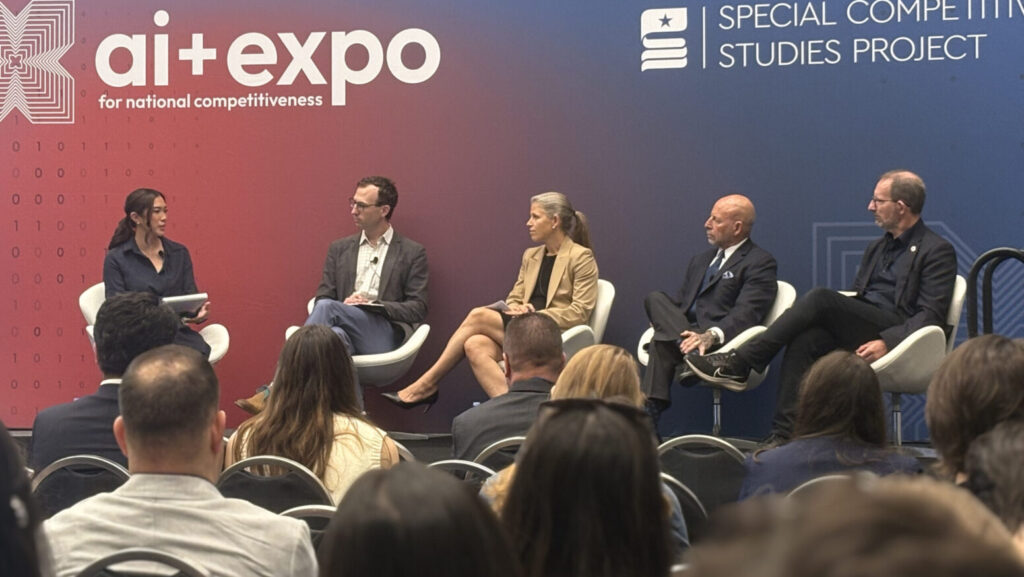
At the SCSP AI Expo in June 2025, Gabrielle Tran moderated a panel unpacking AI’s weaponization for psychological and influence operations and ways to build resilience across society.

The second annual Cyber Policy Awards™ in February 2025, hosted by IST in partnership with the Chamber of Commerce and presented by Microsoft, celebrated progress in cyber policy.
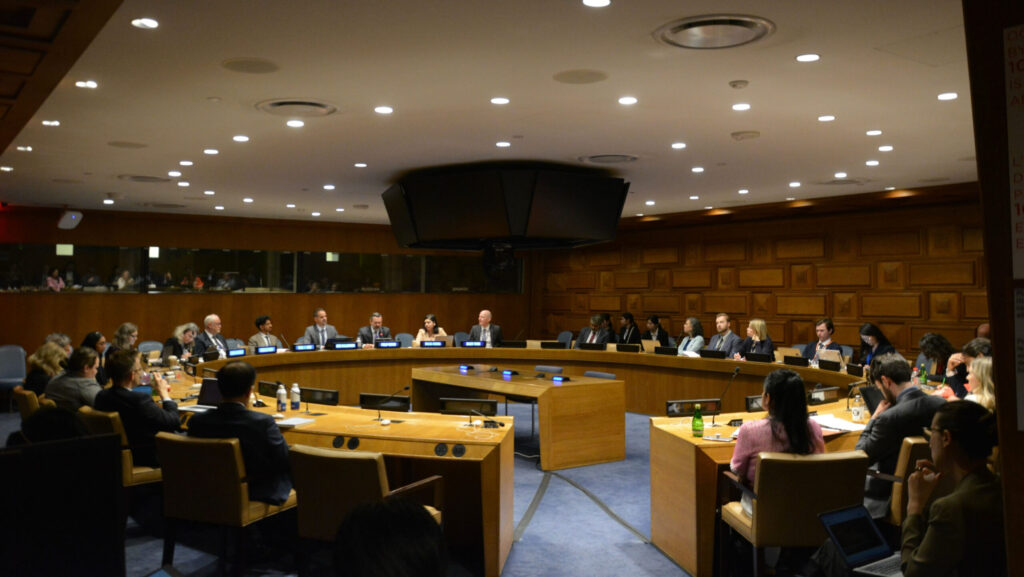
In May 2025 at the United Nations headquarters in New York, IST co-hosted a dialogue on preventing and managing nuclear crises at the third session of the Treaty on the Non-Proliferation of Nuclear Weapons Preparatory Committee.
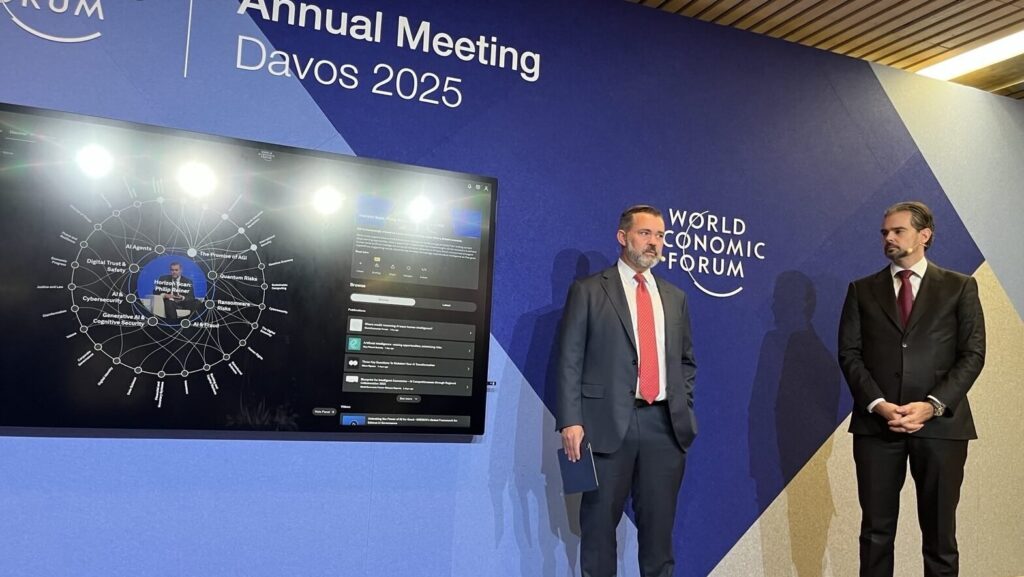
Philip Reiner joined INTERPOL Secretary General Valdecy Urquiza in January 2025 to discuss the intersection of AI, cyber, and ransomware in “Horizon Scan: Scams and Deep Fakes.”
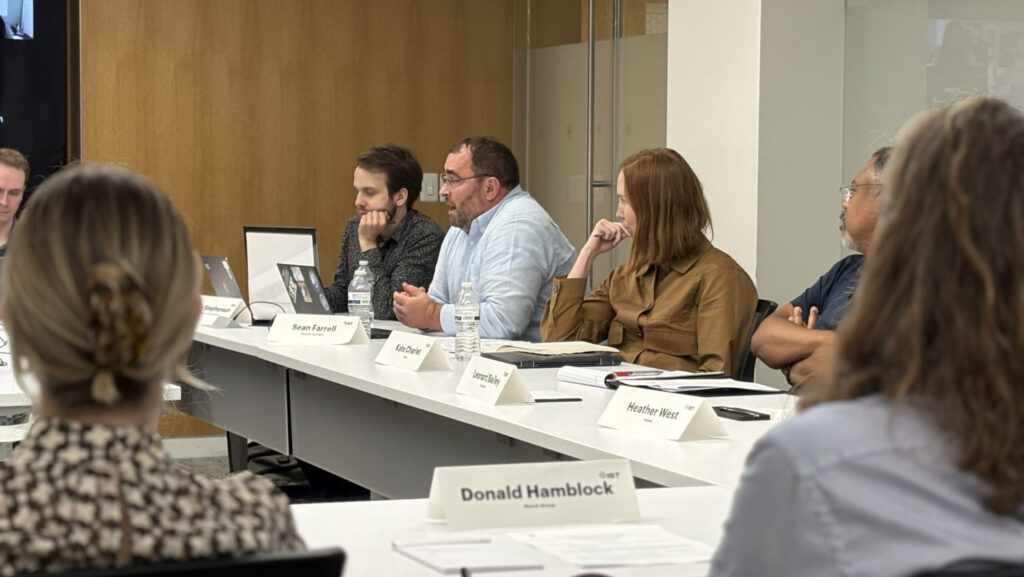
As AI agents shape how decisions are made, how systems behave, and how humans navigate the digital world, IST in September 2025 hosted a workshop to explore the effects of AI agents on human agency.

IST Chief Strategy Officer Megan Stifel delivered a keynote at CyberNextDC in October 2025 looking at cyber policy ‘through the looking glass’ of the Ransomware Task Force.

IST joined the Counter Ransomware Initiative for the fourth year in a row in October 2025 in Singapore to deliver findings on public-private partnerships to combat cybercrime.
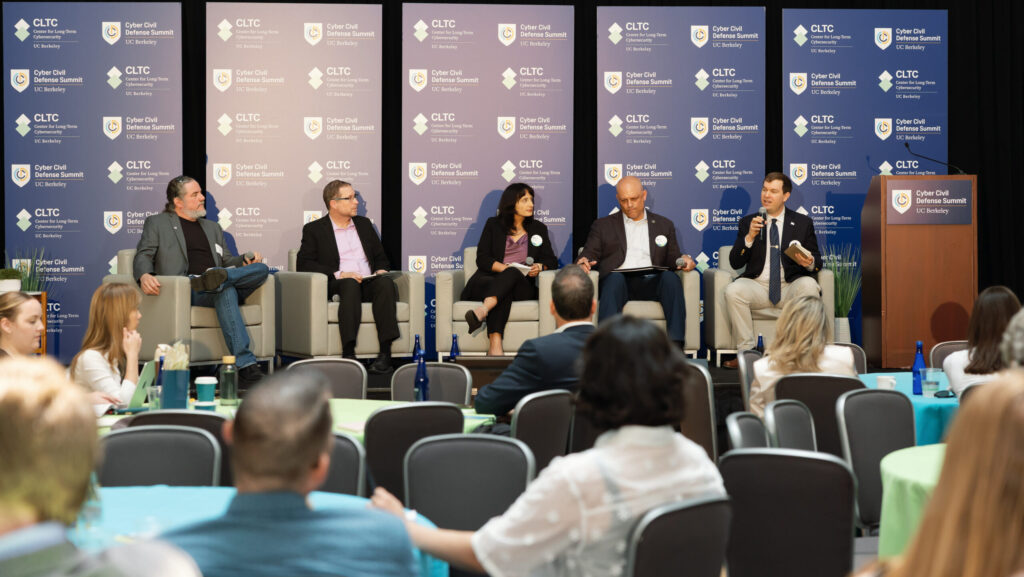
In June 2025, IST Senior Director Michael Klein spoke on a panel at UC Berkeley’s Center for Long Term Cybersecurity #CyberCivilDefense Summit addressing shared responsibility of regional cyber resilience. [Photo from CLTC Berkeley]
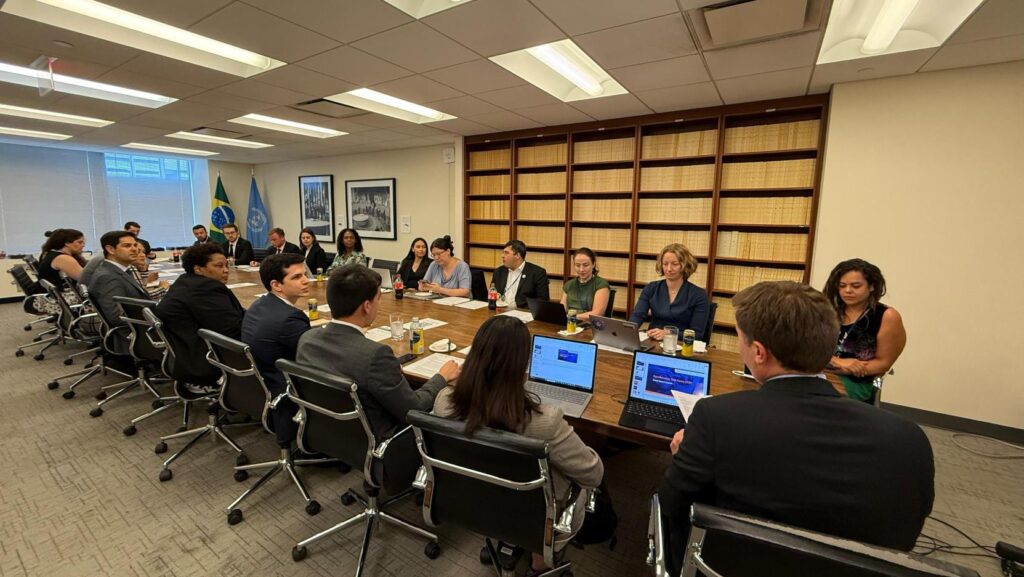
IST joined the eleventh and final substantive session of the Open-Ended Working Group on Security of and in the Use of Information and Communications Technologies this week at the UN. While there, Elizabeth Vish and Gigi Flores Bustamante participated in a side event on the Brazil Ransomware Task Force.
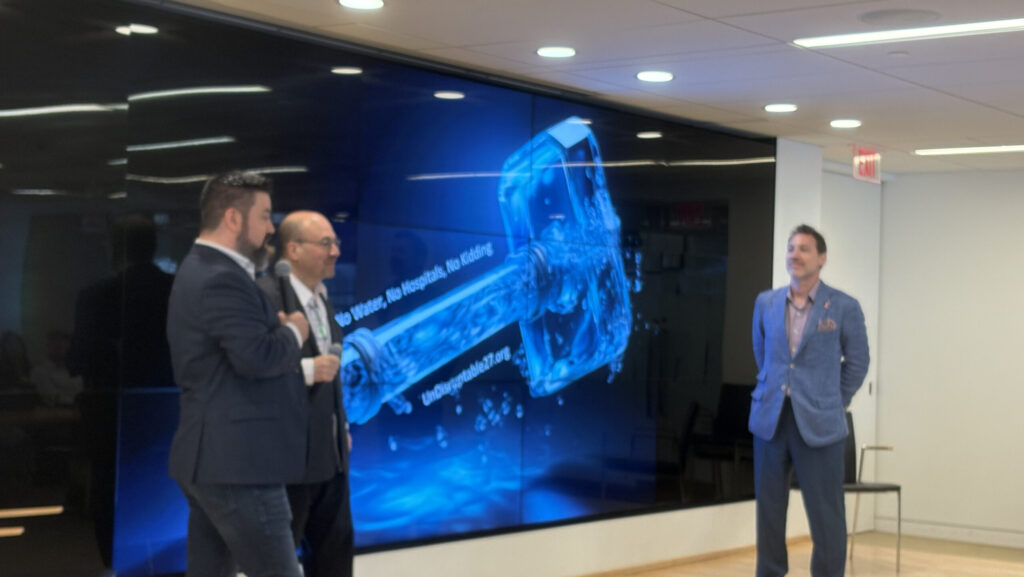
In June 2025, IST partnered with ICS Village to host Critical Effect DC, which featured three tracks that connected policymakers, members of civil society and academia, and OT/ICS stakeholders. At the event, Craig Newmark announced $3.2 million over two years to accelerate UnDisruptable27.
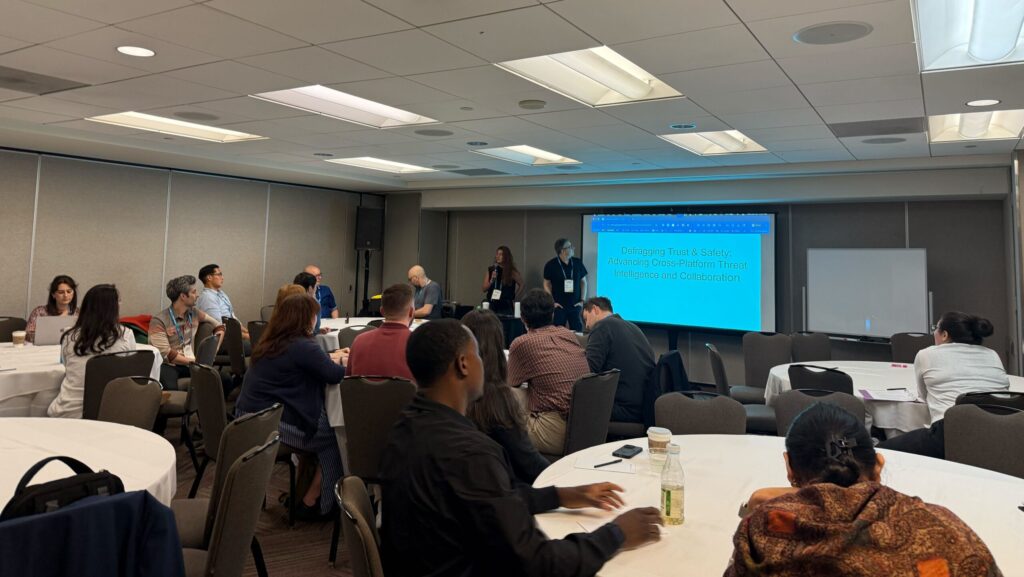
At TrustCon in July 2025, IST and Twitch co-hosted a roundtable discussion on how to defrag trust & safety and enable cross-platform information sharing and response coordination.
The juxtaposition was jarring. Outside, July in the Rockies was as beautiful as ever. Birds sang, we breathed the rarefied mountain air, and sunlight dappled the aspens. Inside, we were discussing the unraveling of the world as we know it.
Leaders from AI labs sat across conference tables from former senior government officials, with senior civil society leaders beside each. We were conducting an exercise, and it was not going well. As the IST team layered on new complications and pushed AI tools deeper into the decision making, the confusion intensified—but not in the intended ways. Industry participants kept looking to the government folks to understand and use powerful AI tools to move decisively. Government participants shot back that it was industry who were the experts, and that the tools were out of sync, untrustworthy…unfamiliar. We knew the truth. As one senior participant said afterwards: “we can’t plan iteratively while technology moves asymptotically; [our national security leaders] need to see the full scope of preparation and strategic thinking required to meet the moment ahead.”
In our after-action analysis, we wondered: had we blown our chance? Our mission at IST is to build bridges between technologists and policymakers, but now those bridges seemed to be crumbling. But then the feedback started rolling in. A long-time leader from a frontier AI lab told me the convening “had a profound influence on the direction of our research.” A former Defense official highlighted that these kinds of insights were impossible to find in typical military wargames, precisely because private sector participants aren’t routinely at the table. For me, the exercise solidified my conviction that technology’s pace of change has outrun the playbooks we’ve long relied on, and that IST can and should play a role in rewriting new ones.
I think about that day in July a lot. It crystallized for me the monumental year that was 2025. In Silicon Valley and other tech centers around the world, 2025 was the year when questions surrounding AI flipped from “will it work?” to “how far will it go?” We saw decades of promise in machine learning realized in an exponential explosion of capability. If 2022 was the year AI entered the public consciousness, 2025 was the year it arrived.
At the same time, in Washington DC and other global capitals, 2025 marked the end of the post-war consensus. The rules-based international order, its decline heralded by Russia’s invasion of Ukraine, collapsed. We don’t yet know what will replace it—or if it will be replaced at all—but there’s no going back.
At a time when tec[h]tonic shifts in the global order are an everyday occurrence, despite massive changes in the defense tech space and innovation ecosystem, the gap between California and Washington seems starker than ever. But we are policy engineers at IST who approach the increasingly complex national security challenges facing our world with concrete tools and actionable solutions to span that chasm.
The urgency of our mission was exemplified in 2025 by the SL5 Task Force. We incubated this initiative to develop immediate solutions to an existential problem: how to secure model weights, cutting edge algorithms, and treasured architectures against manipulation or seizure by the most capable nation-state actors while preventing loss of control. With participation from major AI lab decision-makers, national security leaders, data center operators, and chip providers, we are building the roadmap that makes Security Level 5 achievable. When an AI lab CISO encourages us to keep pushing back on the status quo to raise the bar for security, you know what you’re doing must be helping.
Perhaps no domain better illustrates the divide between technology and policy than nuclear. Visiting the UN last April was surreal — I arrived just weeks after the international trade landscape was permanently upended by new tariffs. Yet sitting in IST’s roundtable on crisis communications, I was struck by how much civil society still matters to global stability. Whether in bilateral meetings or at the dinner we hosted with UN Under-Secretary-General Izumi Nakamitsu and heads of delegation from nuclear and non-nuclear states, our voice carried weight. As Ambassador Thomas Pickering and I agreed: at a time when empathy is scarce, dialogue is simultaneously at its hardest and its most important.
Thank you, as always, to the IST team who execute on our mission day in and out; the adjuncts, working group members, and participants who contribute their time and expertise to the tackling the national security, strategic stability, and human life-threatening challenges we take on; and the donors and supporters who supercharge our work’s reach and impact. This 2025 Annual Report features a small selection of the many projects and initiatives we led–it was hard to choose just a few!
2025 saw tec[h]tonic shifts in the landscape. We are making a meaningful impact as we engineer solutions that expand opportunity and mitigate risk. As a team, we always come back to the same thesis: technology is now our entire environment, with world-changing implications, but what good does it do if the technologies that underpin our daily lives and permeate the systems we live in are not safe and secure?
What gives me hope is that the challenges we’re working on, the convenings we’re organizing, and the concrete, actionable solutions we’re developing are not just of the moment. Together with you, they meet the moment.
Sincerely,
CEO, Institute for Security and Technology
The Institute for Security and Technology (IST) is the 501(c)(3) critical action think tank, uniting policymakers, technology experts, and industry leaders to identify and translate discourse into impact. We take collaborative action to advance national security and global stability through technology built on trust, guiding businesses and governments with hands-on expertise, in-depth analysis, and a global network.
Our Mission
IST unites technology and policy leaders to create actionable solutions to emerging security challenges.
Our Vision
A democratic world secured and empowered by technology built on trust.
Our Values
As a 501(c)(3) organization, IST relies on the generous support of foundations, corporations, government entities, and individuals. Thank you to the following organizations and individuals who contributed to our efforts in 2025. We also extend our appreciation to our donors who chose to remain anonymous.
Adean and Ben Golub Philanthropic Fund
AWS
Banco Santander
Bockus Brown Family Foundation
Coalition, Inc.
Coefficient Giving (previously OpenPhilanthropy)
Community Foundation of Santa Cruz County
Craig Newmark Philanthropies
Edge Institute
Eric Grosse & Brenda Baker Donor Fund
Founders Pledge
Future of Life Institute
German Federal Foreign Office
Hellman Family Fund
William and Flora Hewlett Foundation
Loewenstern Fund
Longview Philanthropy
Mastercard
Meta
Microsoft
Organization of American States
Patrick J. McGovern Foundation
Silicon Valley Community Foundation
The Special Competitive Studies Project
Swiss Federal Department of Foreign Affairs
The Policy Development Contribution Program (PDCP) of Canada
Zscaler
Interested in supporting our work? Get in touch with Emma Hollingsworth, Senior Director of Development and Partnerships, to learn more.
What does it take to train a frontier AI model? A lot. Beyond the hundreds of millions of dollars in computing resources, there are research and development costs, infrastructure build-outs, and even untold efforts to collect and store the data that will be used for training runs.
What does it take to secure that investment from highly resourced nation state adversaries, in particular the model weights, algorithms, and unique architectures that drive how it processes inputs and generates outputs? And as these systems grow more capable and threaten to outpace human understanding and control, what is being done to ensure the security of the most powerful AI systems of the future, including those that may be designing and building their successors? Until recently, there has not been a clear answer. Despite the billions pouring into AI development and the ever-increasing applications of AI systems to every field imaginable, including the military, efforts to secure them have consistently struggled to keep pace with the technology itself.
In late 2024, RAND published a study that considered the threats facing model weights in particular—from business competitors to advanced intelligence services—and mapped how feasible it would be to exploit specific parts of the AI ecosystem. They concluded that AI secrets need to be treated like national security secrets, able to withstand attacks by the most capable nation-state threat actors. RAND proposed five security levels for protecting model weights, each calibrated to an increasingly capable adversary—from amateur hackers at Level 1 to top-priority nation-state operations at Level 5. No organization has achieved SL5, and RAND concluded it isn’t yet possible with today’s tools and practices. But with AI capabilities advancing rapidly, the window to build that capacity is narrowing.
Enter IST. With support from Coefficient Giving, we incubated the SL5 Task Force to translate these high-level directives into practical standards. Through simultaneous executive and technical tracks, we brought together over 100 participants, including security engineers from frontier AI labs, government security specialists, and data center providers, to translate the SL5 framing into practical steps to protect the core of a new technological era.
The SL5 Task Force moved with the urgency needed for this unique moment in the history of technology. By the end of 2025, we finished the SL5 Standard for AI Security (v0.1), a NIST SP 800-53 overlay with 43 controls across 10 families, covering the long-lead-time investments that must begin now to preserve SL5 optionality by 2028/2029. The standard addresses five security streams: network, physical, machine, personnel, and supply chain. The task force also proposed industry-adaptable clearance levels for artificial intelligence labs, among other novel solutions to meet the SL5 need.
To lower the barrier to adoption, SL5 released open source tools, including an interactive IL6 control catalog for organizations to explore the DoD security control overlays that serve as a baseline for SL5. And beyond standard-setting, the Task Force’s work has already informed policy engagement: IST drew on SL5 research in its formal response to NIST’s AI Safety Institute request for information on mitigating risks across the AI lifecycle.
Beyond protecting against external threats, SL5 also provides a foundation for containing increasingly autonomous AI systems, an equally critical challenge as capabilities advance. The stakes could not be higher. The future of our economy, our national security, and humanity itself are now inexorably tied to artificial intelligence—and IST is leading the way, working directly with industry leaders to ensure the systems and intellectual property undergirding this revolution are secure.
Powerful AI systems are embedded in the decisions that shape our daily lives: approving loans, determining social media algorithms, diagnosing disease, and transforming national security functions and missions. The promise is extraordinary, but so is the peril. The development and proliferation of AI technologies pose a variety of risks, including compliance failure, malicious use, and AI loss of control.
The window to seize the opportunities while guarding against the risks is narrow, and the technical complexity of the problem is outpacing the policy community’s ability to meaningfully engage.
IST’s AI Risk Reduction Initiative is closing that gap. In 2025, the initiative brought together more than 30 leaders from AI labs, government agencies, and research institutions in working groups to translate abstract concerns into practical, actionable interventions.
"IST’s work on Loss of Control risks is exceptional because it doesn’t stop at the theoretical level—it translates these insights into carefully refined operational standards for monitoring LOC in the real world, adapting assessment frameworks first developed and field-tested by the intelligence community. In doing so, their work sets a new standard for what rigorous and grounded research on existential risk could look like."
Broderick McDonald, University of Oxford & The Alan Turing Institute
That collaboration is now playing a major role in real-world policy processes. IST contributed to the Paris Peace Forum’s AI governance blueprint and submitted comments on the NIST AI risk management guidelines and White House AI Action Plan, bringing technical, expert-informed depth and insight to processes that can often leave those considerations out. To test these ideas under pressure, IST ran two crisis simulation exercises that placed policymakers and industry representatives in scenarios—such as potential loss of control over an AI model–and prompted them to make decisions under pressure in a hypothetical environment before they need to be made for real.
The results are already visible in the institutions and people shaping AI’s trajectory. Inspired by IST’s work, Anthropic launched a Transparency Hub tracker. The Korea AI Safety Institute is drawing on IST’s frameworks to develop an AI Risk Map. Decision-makers across government and industry are walking away from IST engagements with focused, immediately actionable technical interventions and policy mitigations.
AI governance is one of the defining policy challenges of our time. The decisions being made now will set the groundwork for decades to come. At IST, we’re not waiting for the consensus to emerge on its own—we’re building the intellectual infrastructure to act now.
How long can a hospital go without water? Four hours. When the power goes out, hospitals have generators. When communications go dark, they can use paper and pencil. But without water, the clock starts ticking. And unless pressure is restored quickly, the facility ceases to function. Given that in medical emergencies, seconds count—time is brain—the closure of a hospital can mean the difference between life and death.
Yet water utilities are increasingly on the front lines of cyber conflict. Chinese military units have been found “pre-positioning” on U.S. water systems, gaining access and conducting reconnaissance in order to conduct devastating cyber strikes in the case of conflict. Utilities are in the crosshairs, but the hospitals who depend on them are potentially collateral damage.
IST’s UnDisruptable27 (U27) project is working to build societal resilience in the run up to 2027, the year Chinese leadership has targeted for its military to be prepared to invade Taiwan. Led by hacker and policy entrepreneur Josh Corman, the U27 team is intent on co-creating engineering-first solutions that can help communities across the country turn knockout punches in cyberspace into glancing blows.
“With great connectivity comes great responsibility. And while we’re struggling to protect credit cards or websites or data, we continue to add software and connectivity to lifeline infrastructure like water and power and hospitals. We were always prey.”
Executive in Residence for Public Safety & Resilience Josh Corman sat down with The Verge for a Q&A on what sectors are at risk, the consequences of a cyber attack, and UnDisruptable27’s plan to increase community resilience.
In 2025, with the foundational support of Craig Newmark Philanthropies, U27 focused on developing its novel methodology. While water has long been regarded as a weak link in critical infrastructure cybersecurity, aging systems and underfunding have made shoring up its cyber defenses incredibly challenging. Drawing on engineering guidance from the National Laboratories, U27 explored techniques to make small changes in system design—like the installation of water pressure “circuit breakers”—that effectively immunize utilities no matter their cyber maturity.
In 2026, the team is taking their program on the road to iterate on the approach side-by-side with utility owners and operators while simultaneously building the network they’ll need to scale it to the 6,000 hospital communities across the country. Leading with empathy. Tackling tough, urgent problems. Designing solutions with scaling in mind. That’s the IST way.
Ransomware attacks against K-12 schools have become, in many ways, a national crisis. For too long, the burden of defending against nation-state and transnational criminal actors has fallen on individual districts, who have few resources and no back-up. In 2025, IST set out to change that.
The first step was gathering stakeholders. IST launched the K-12 Cyber Defense Coalition, a collective of 13 national education organizations to pool the knowledge and expertise needed to combat the threat. The Coalition quickly established IST as the go-to convener for K-12 cybersecurity policy, creating the national platform needed to act when the moment arrived.
“We don’t expect every town to stand up their own army to protect themselves against China or Russia. In the same way, I don’t think we should expect every school district to stand up their own cyber-defense army to protect themselves against ransomware attacks from major criminal groups.”
Michael Klein, Senior Director for Preparedness and Response, spoke with The Hechinger Report about the risks facing K-12 schools on June 1, 2025.
That moment came when Congress began signaling its intent to reform the E-Rate program, the federal fund that finances school broadband. The FCC had just closed a wildly successful (and wildly oversubscribed) $200 million pilot to bring cybersecurity resources into schools–proof that the need was urgent and the supply did not match the demand. But with the pilot coming to an end, no permanent funding was available to take its place. IST recognized the opportunity.
IST experts moved quickly, publishing op-eds, hosting events, and distilling the policy landscape into a focused memo that gave policymakers a clear framework for action. In September 2025, IST submitted formal comments to the Congressional Universal Service Fund Working Group to offer technical assistance and concrete recommendations for modernizing the Fund to address the cyber threats facing our students.
The result speaks for itself. Congress is now actively considering amending the E-Rate statute to incorporate cybersecurity—a change that could unlock potentially billions in new resources for the nation’s most vulnerable students.
In April 2025, the cybersecurity world awoke to shocking news. The Common Vulnerabilities and Exposures (CVE) Program, the canonical database for all known software defects, would shut down within days due to contract problems with the Department of Homeland Security.
The reaction was immediate: companies, researchers, and governments decried the loss of this critical resource that enables cyber defenders the world over to communicate unambiguously about flaws in computer code. While the funding was quickly restored, the ecosystem was shaken. Could CVE be relied upon anymore? Would new naming schemes spring up, fracturing the vulnerability landscape in a cybersecurity Tower of Babel moment?
The number of vulnerabilities published in the Common Vulnerabilities and Exposures Program database in 2025—the most on record
IST met the moment. Quickly recognizing the potential for calamitous disharmony, the team began designing a policy framework to reform the CVE Program and put it on firmer footing. The resulting report put forward actionable recommendations for the development of a Global Vulnerability Catalog, supported by national vulnerability management programs. It called for substantial reforms to the program’s governance, including empowering a multistakeholder board of directors and diversifying funding beyond simply the U.S. government. It also unpacked common vulnerability management programs into their constituent functions to help policymakers understand what needs to be universal and what can differ from country to country or region to region.
Through engagements with policymakers across the globe, the IST team helped create space for dialogue to preserve the program, including a call for U.S. leadership to bring in other government partners and act quickly to prevent fragmentation. Leaders in Congress have looked to the report as they draft legislation codifying a vulnerability catalog. IST’s work on CVE continues to provide industry and government partners with a clear articulation of a way forward for the program.
Vulnerability management as we know it could not exist without CVE. But at IST, we’re not just focused on trying to reverse history or restore the program to its former self—we’re laying out a forward-looking vision for another quarter century of progress in producing trusted technology.
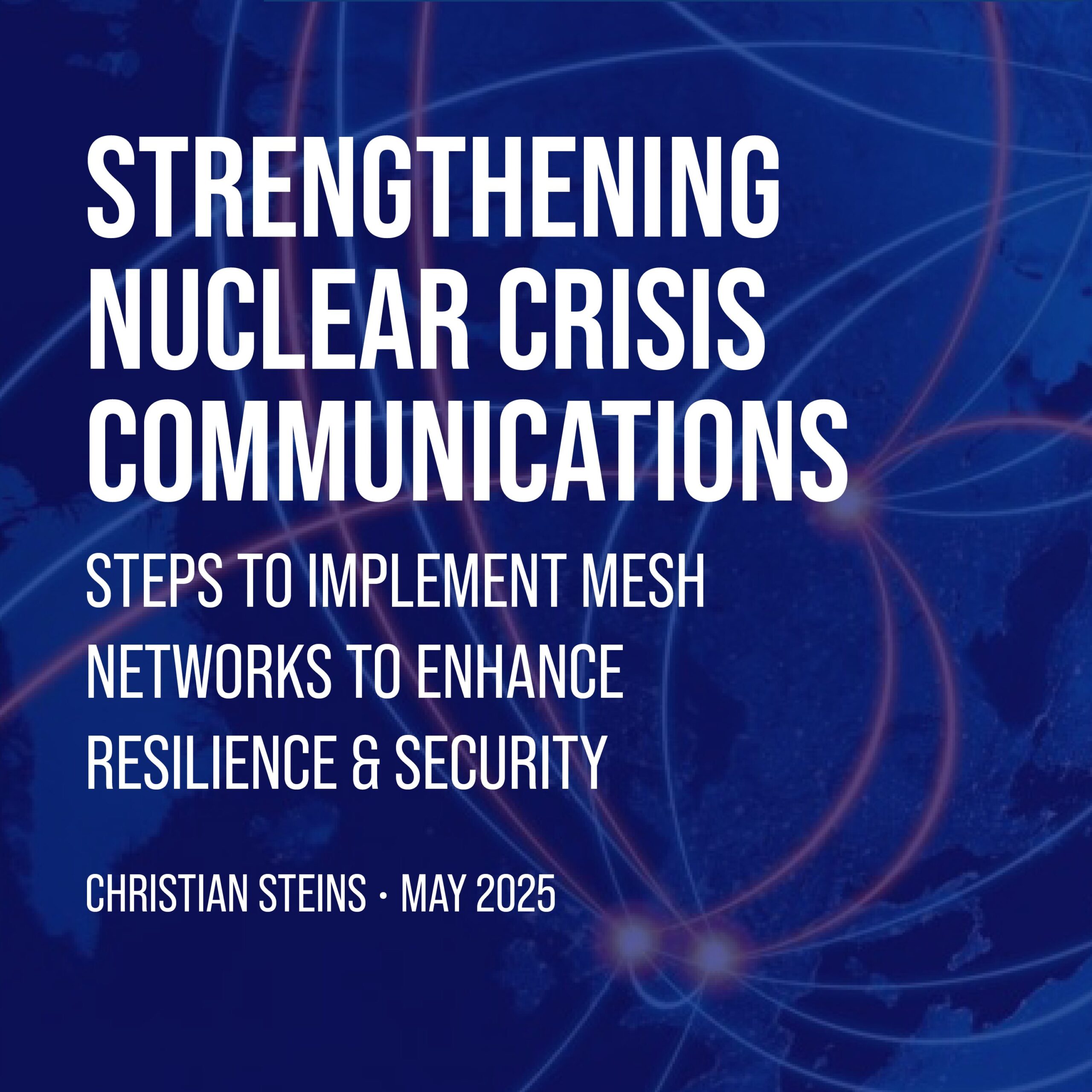
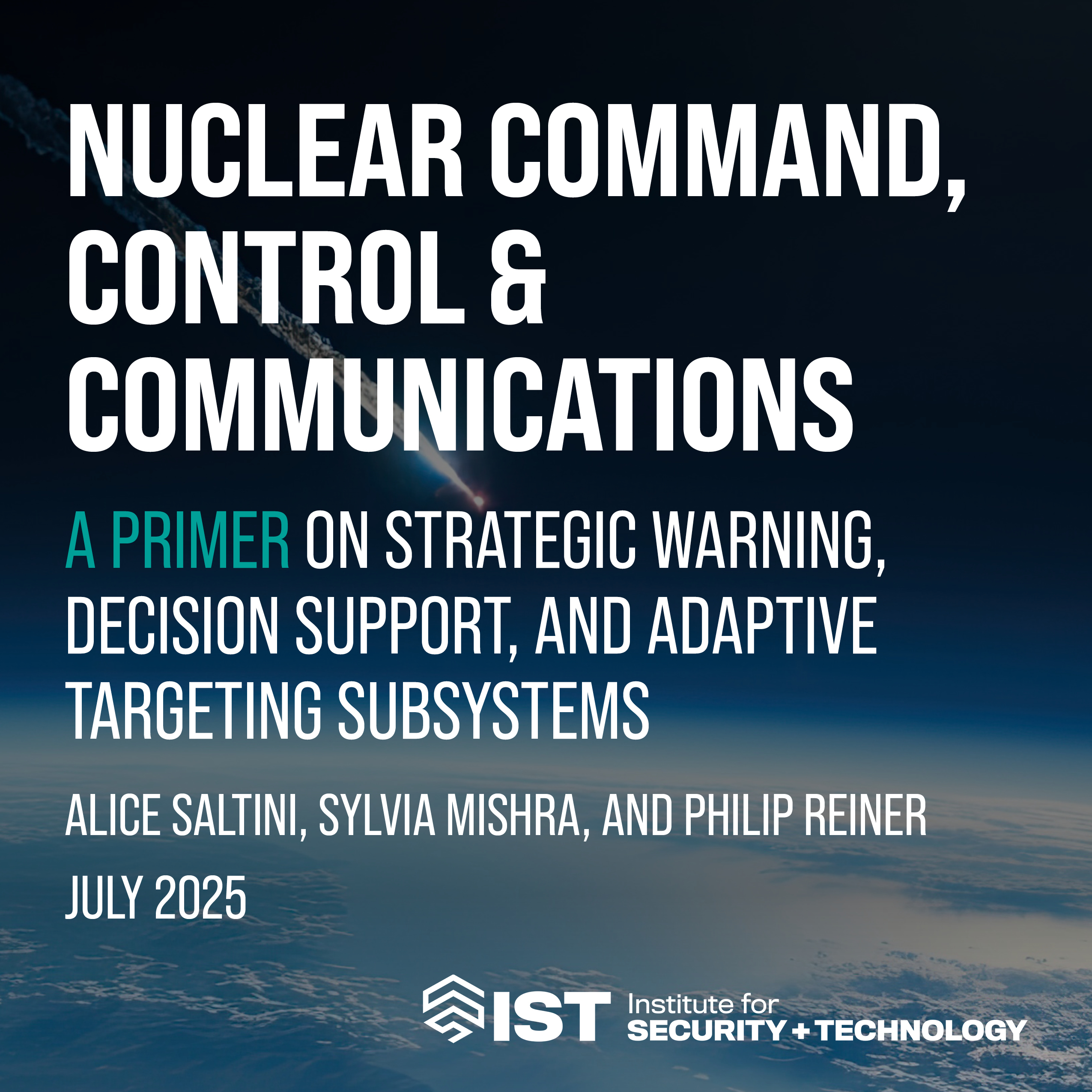
Nuclear command, control, and communications systems (NC3)–the architecture that connects nuclear weapons to the humans authorized to use them—were designed for a different era. Though some level of automation has been a part of NC3 systems for decades, nuclear-armed states are increasingly looking to modernize their nuclear infrastructures and architectures —and several nuclear-armed states are considering tying in more general-purpose AI systems with their military platforms. For example, they may look to use AI to augment their strategic warning systems, provide decision support, or adapt targeting as new intelligence becomes available or battlefield conditions change.
As AI capabilities advance and the pressure to incorporate new use cases into military infrastructure grows, how can we ensure that this integration is carried out safely and securely? It’s increasingly essential to bring together the industry experts from frontier AI laboratories who understand what these models do with the nuclear strategists who understand what’s at stake.
“The AI-NC3 project is a singular body of work, at the exact right time, helmed by a truly world class cadre of leaders. The team's expertise is simply unparalleled: the rare combination of frontier AI knowledge with decades of Nuclear Command and Control operations could not be more perfectly aligned to the challenge at hand. And that challenge - defining the safest and most effective ways to employ AI in NC3 - sits right at the nexus of the world’s hardest problems. IST went straight to the heart of our national security imperatives and chose the most intractable one. But never has a team been more prepared to solve it."
- Geoffrey M Schaefer | VP, AI Strategy and Governance, Leidos
“The intersection of artificial intelligence and nuclear command, control, and communications is one of the most consequential and perhaps least understood strategic issues of our time. IST is playing a vital role by bringing together a diverse group of policy, technical, and operational experts to examine the risks, opportunities, and necessary safeguards from multiple perspectives. I’m honored to be part of this critical effort.”
- Lt. Gen. Jack Shanahan (USAF, Ret.) | Inaugural Director, Joint Artificial Intelligence Center at U.S. Department of Defense
“IST is tackling a crucial subject for the future of DOD AI adoption: how to preserve responsible and accountable human control over the use of nuclear weapons. I am heartened to see the team tackling some of the hardest and most complex aspects of this challenge–the role of AI in nuclear adjacent systems such as dual use delivery systems, advanced monitoring and warning, and decision support systems that sit along the conventional-nuclear interface. These are areas where AI adoption will turn into AI creep without careful and disciplined approaches alongside the system-wide test and evaluation protocols needed to guide successful adoption.”
- Rebecca Hersman | Senior Research Scholar, GovAI
"IST's value is translational. It acts as a bridge and Rosetta Stone between the AI world and the Nuclear Policy world: two groups in different places with different languages: now united. In convening these otherwise disparate groups of experts; it combines the best of both to drive uncommon clarity on some of the most pressing questions of our time."
- Ramsay Brown | CEO, Mission Control AI
In April 2025, IST did just that: the Nuclear Policy team brought both worlds together for a rare workshop that surfaced specific challenges and opportunities in AI-NC3 integration, like the technical reliability, testing and evaluation, and security of AI systems, governance frameworks that balance transparency with operational security and the evolution of military doctrine in an AI-enhanced nuclear context. To continue and capitalize on the workshop’s momentum, IST established working groups with participants including the CEOs of technical companies and globally-recognized scholars, as well as a former Commander of U.S. Strategic Command, a former Deputy Secretary General of NATO, and a former Director of the Defense Threat Reduction Agency.
Public findings from this work have reached audiences at SIPRI’s Stockholm Security Conference, Scale.AI, AI+ Expo, Outrider Foundation, and other international fora. Through technical primers, policy explainers, and carefully orchestrated convenings, IST is building the shared norms, codes of conduct, testing and evaluation standards, and nuclear risk reduction and mitigation measures needed to ensure that the integration of AI and NC3 does not result in catastrophic consequences.
Dan De Luce, Courtney Kube, Carol E. Lee and Kevin Collier, NBC, March 6, 2025
ROOST Reminds Us Why Open Source Tools Matter
Fatima Faisal Khan, Tech Policy Press, March 17, 2025
“Just as open source helped software development to evolve into a field characterized by collaboration and rapid innovation, the trust and safety field has the potential to redefine itself through open source.”
- Fatima Faisal Khan, Senior Associate for Ecosystem Trust and Safety
Inside a romance scam compound—and how people get tricked into being there
Peter Guest, Emily Fishbein, MIT Technology Review, March 27, 2025
Joseph Menn, Washington Post, May 23, 2025
“This is no time to pull defenders from the resilience and continuity of operations of lifeline human needs like water, power and access to emergency care. The coming storms need more help and better help. The risks are nonpartisan and affect all communities.”
- Joshua Corman, Executive in Residence for Public Safety and Resilience
Justine Calma, The Verge, June 27, 2025
The Economist, July 29, 2025
“There still remains a huge gap in our understanding as to how and how far China has moved to use DeepSeek [for military and intelligence gaps]. They probably don’t have similar guardrails like we have on the models themselves and so they’re possibly going to be able to get more powerful insights, faster.”
- Philip Reiner, Chief Executive Officer
Dana Nickel, POLITICO, September 4, 2025
Sahil Shah, Foreign Policy, October 30, 2025
“History shows that ambiguity about nuclear intent is destabilizing. A phrase such as ‘resume nuclear testing’ can be interpreted in different ways: a political flourish to show resolve; an order to increase testing of nuclear-capable delivery systems; an instruction to expand simulations and subcritical experiments; or, worst of all, authorization of explosive nuclear warhead detonations.”
- Sahil V. Shah, Senior Adjunct Advisor for Nuclear Policy
When it comes to nukes and AI, people are worried about the wrong thing
Joshua Keating, Vox, November 20, 2025
Megan Stifel, Claroty Nexus, December 2, 2025
unique active users visited our newly-updated
website, up 22% from 2024
in major media outlets mentioned IST’s experts and work
people reached on Linkedin, engaging with our updates, announcements, and events
published by IST’s experts in 2025 analyzed recent policy proposals, unpacked findings from working group sessions and public events, and announced new lines of effort
subscribers receive IST’s monthly newsletter, The TechnologIST, in their inboxes each month. Subscribe here. Most-read editions:
Total: $9,681,574
Total: $5,684,776