Skip to content
Sign Up for Our Newsletter
About
Close About
Open About
About the Institute for Security and Technology
Our Team
Board Of Directors
Careers
Contact Us
Featured Events
Cyber Policy Awards
Critical Effect DC
Projects
Close Projects
Open Projects
AI and NC3
Pioneering action-oriented efforts to explore how advanced AI capabilities will be integrated into nuclear command, control, and communications
AI Antitrust and National Security
Exploring how to more effectively account for national security considerations in AI antitrust cases while respecting precedent, scope, and the core principles of antitrust law
AI Risk Reduction Initiative
Assessing the emerging risks and opportunities of AI foundation models and developing risk reduction strategies
AI Chip Export Control Initiative
Safeguarding U.S. national competitiveness by closing critical compliance and enforcement gaps
AI Risk Barometer
Measuring national security professionals’ perceptions of AI futures through a technically-informed survey
CATALINK
Preventing the onset or escalation of conflict by building a resilient global communications system
Energy FIRST
Powering U.S. and allied security & prosperity through a resilient energy future
Ransomware Task Force (RTF)
Combating the ransomware threat with a cross-sector approach
Religious Voices and Responsible AI
Engaging religious communities on safe and beneficial AI
SL5 Task Force
Strengthening AI security through a multistakeholder approach
UnDisruptable27
Driving more resilient lifeline critical infrastructure for our communities
All Projects
» Explore all of IST's projects, past and current
Focus Areas
Future of Digital Security
Geopolitics of Technology
Innovation and Catastrophic Risk
Events
Insights
Contact
Search
Donate
Archive
cold war
Report
Securing the Signal: Mitigation Strategies to Strengthen Crisis Communication Channels
As global norms are challenged and emerging technologies accelerate, crisis communication systems between nuclear-armed states face urgent new threats. This report identifies four critical scenarios and outlines a matched set of mitigation strategies designed to reinforce the reliability of crisis communications in high-stakes environments.
CATALINK
,
cold war
,
crisis communications
,
electromagnetic pulse
,
EMP
,
escalation
,
miscalculation
,
nuclear
May 28, 2025
Blog
To Trinity Test Site: Reconciling with the Past, Taking Action for the Future
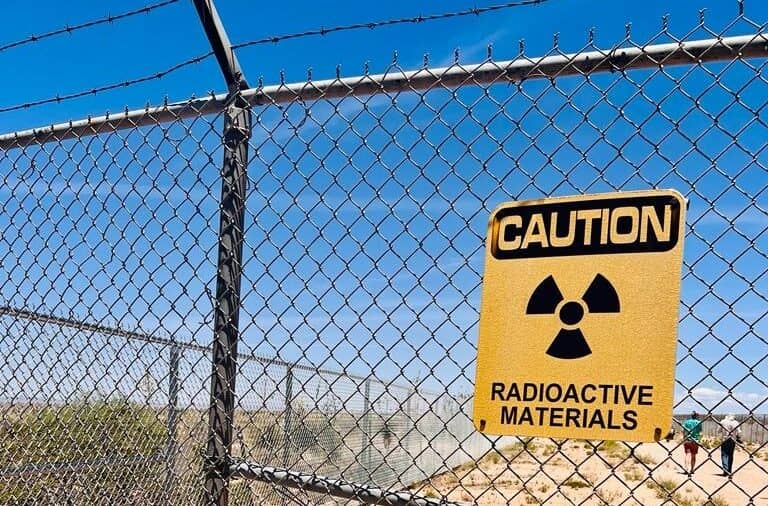
No amount of reading or watching documentaries really prepares one for the real experience—a walk through history into the birthplace of the single most deadliest weapon of mass destruction. IST's Sylvia Mishra was given the rare opportunity to visit the Trinity Site.
atomic bomb
,
cold war
,
crisis communications
,
nuclear risk reduction
July 16, 2023
Blog
Nuclear Risk Reduction: In Search of A Common Denominator
As global nuclear dangers rise, risk reduction efforts through effective crisis communications are more important than ever. Yet differences in constituencies, priorities, and strategic cultures of nuclear weapons states generate disagreement as to which measures genuinely reduce risk.
CATALINK
,
cold war
,
crisis communications
,
nuclear risk reduction
December 1, 2022
Podcast
Communication Over Escalation
In this episode of The Fourth Leg, Philip Reiner and Peter Hayes are joined by nuclear weapons and conflict resolution expert, Steven E. Miller, to discuss the historical significance and evolution of nuclear communications.
cold war
,
crisis communications
,
deescalation
,
hotlines
,
nuclear communications
October 27, 2020
Podcast
Starting from the Beginning
In this episode of The Fourth Leg, Paul Davis joins Philip Reiner and Peter Hayes to discuss how to approach NC3 modernization. Rather than looking at the myriad of structural and technical issues associated with modernizing NC3, he instead argues that modernization should go back to the basics: what core functionality should be demanded, and how should those demands should differ from those of the Cold War?
cold war
,
NC3
,
NC3 modernization
,
nuclear accidents
,
nuclear control
,
nuclear weapons
,
technical
October 24, 2019
Podcast
The System Can’t Be Perfect
In this podcast, Philip Reiner and Peter Hayes sit down with Dr. John Harvey, who asserts that the US NC3 system "must seek vastly improved senior leader conferencing capabilities to support decisions that go beyond what some of us call the Cold War’s “multiple choice test”—that is, which major attack option to execute."
cold war
,
conferencing
,
crisis communications
,
NC3
,
nuclear communication
May 24, 2019
AAR
,
Report
NC3 Systems and Strategic Stability: A Global Overview
In a conventional conflict between the United States and China or Russia, each belligerent might attack the other's command, control, communication, and intelligence (C3I) capabilities to gain a war-fighting advantage. However, because a number of...
cold war
,
command
,
communication
,
control
,
emerging technologies
,
NC3
,
NPT
,
nuclear
,
PALS
,
permissive action link
,
stability
,
strategic
May 6, 2019
Report
NC3 in a Multipolar Nuclear World: Big Structures and Large Processes
In this essay, Paul Bracken analyzes the big structures and large processes of nuclear multipolarity. A framework for analyzing this global system is developed, one made up of national command and control plus the "system dynamics" of their interlinked behavior. The paper underscores how advanced technologies — cyberwar, drones, and anti-satellite weapons (ASAT) — affects NC3.
anti-satellite
,
cold war
,
command
,
communication
,
control
,
cyberwar
,
drones
,
Europe
,
missile defense
,
NATO
,
NC3
,
Non-Proliferation
,
nuclear
,
stability
,
strategic
,
Strategy
,
weapon
May 14, 2019
Report
U.S. Nuclear Command and Control for the 21st Century
Dr. John Harvey calls for fixing the legacy NC2 system, including the so-called “thin line” architecture, to address Cold War-era nuclear scenarios which have not yet gone away, developing an NC2 concept and associated architecture to address “modern” nuclear conflict, and generating a plan to field it over the next 10-15 years.
21st century
,
alert posture
,
cold war
,
command
,
communication
,
conflict
,
control
,
deterrence
,
NC2
,
NC3
,
nuclear
,
resilience
,
stability
,
strategic
,
Strategy
,
sustainment
May 23, 2019
Report
Turkey and Nuclear Command, Control, and Communications
Can Kasapoğlu argues that in contrast to the other four NATO nuclear delivery states, Turkey no longer appears to have an active nuclear weapons delivery mission using bombers and its NC3 system is likely dormant. "Yet," he concludes, "in a hypothetical TNW scenario, the Turkish Air Force would manage the Incirlik base and air traffic for the US air wing, and would probably provide the strike package with fighter escort. In fact, the strong separation between active combat (the US) and support roles (Turkey) could be a complicating factor for the NC3 in real warfighting...
air base
,
Ankara
,
C4ISR
,
cold war
,
Middle East
,
missile
,
NATO
,
NC3
,
nuclear
,
nuclear delivery state
,
squadron
,
stability
,
Turkey
,
United States
June 27, 2019
Report
The Non-State Dimensions of Nuclear Command, Control, Communications
Dr. Gary Ackerman introduces how violent non-state actors (VSNAs) may approach the command and control of nuclear weapons and suggests that understanding the complexity presented by VNSA NC3 entails considering traditional concepts of state NC3 and dynamics that are unique to non-state actors driven by a variety of goals and confronting a different set of constraints from those of states.
biological
,
casualties
,
casualty
,
chemical
,
cold war
,
conventional
,
detection
,
fail deadly
,
fail impotent
,
fissile
,
leadership
,
NC3
,
non-state actor
,
nuclear
,
organization
,
psychology
,
Russia
,
scenario
,
Secretary of Defense
,
stability
,
strategic
,
terrorism
,
terrorist
,
United States
August 29, 2019
Report
NC3 Decision Making: Individual Versus Group Process
Dr. Alex Wallerstein sketches a framework for thinking about how concentrated nuclear use authority should be at the top. While he discusses specific U.S. proposals for reform in response to recent domestic debates, the scope of his analysis is uniquely global and includes a comparative analysis of the approach of all nine nuclear weapons states.
civil-military
,
cold war
,
congress
,
Constitution
,
deterrence
,
enrichment
,
migration
,
NC3
,
nuclear codes
,
Senate
,
stability
,
status quo
,
STRATCOM
,
Strategy
,
UK
August 8, 2019
Report
NC3 and Crisis Instability: Growing Dangers in the 21st Century
Daryl Press focuses on the growing threats to nuclear command and control and communication (NC3) systems around the world and the links between vulnerable NC3 and strategic instability due to the risky steps that nuclear weapons states may adopt to protect their arsenals during crises or wars.
accident
,
accuracy revolution
,
air defense
,
alert level
,
arms race
,
artificial intelligence
,
cold war
,
conventional weapon
,
crisis instability
,
data
,
decision-making
,
deterrence
,
escalation
,
force planning
,
modernization
,
NATO
,
NC3
,
nuclear
,
preemptive strike
,
stability
,
survivability
October 17, 2019
Search
Search
MENU
HOME PAGE
About
FAQ
The CATALINK Brief
Insights
Events
Analysis
Podcasts
Why crisis communications?
Our Team
GET IN TOUCH
Email:
[email protected]
Send us a message:
Contact
JOIN THE CATALINK MAILING LIST
First Name
Last Name
Organization
Email
Subscribe