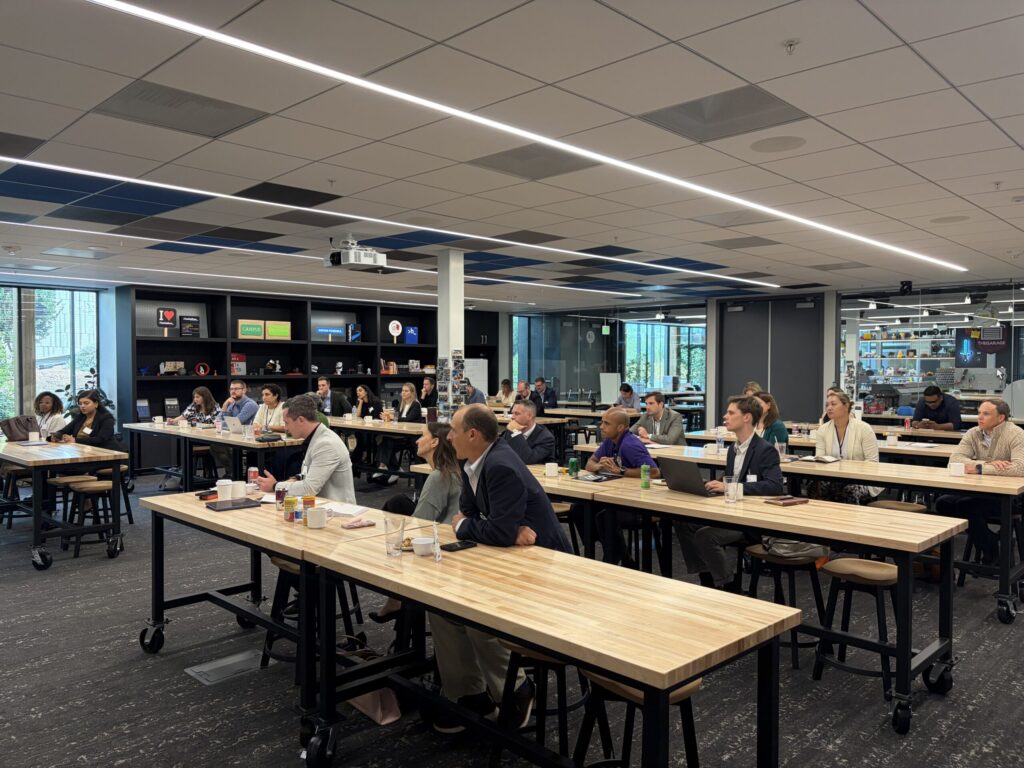
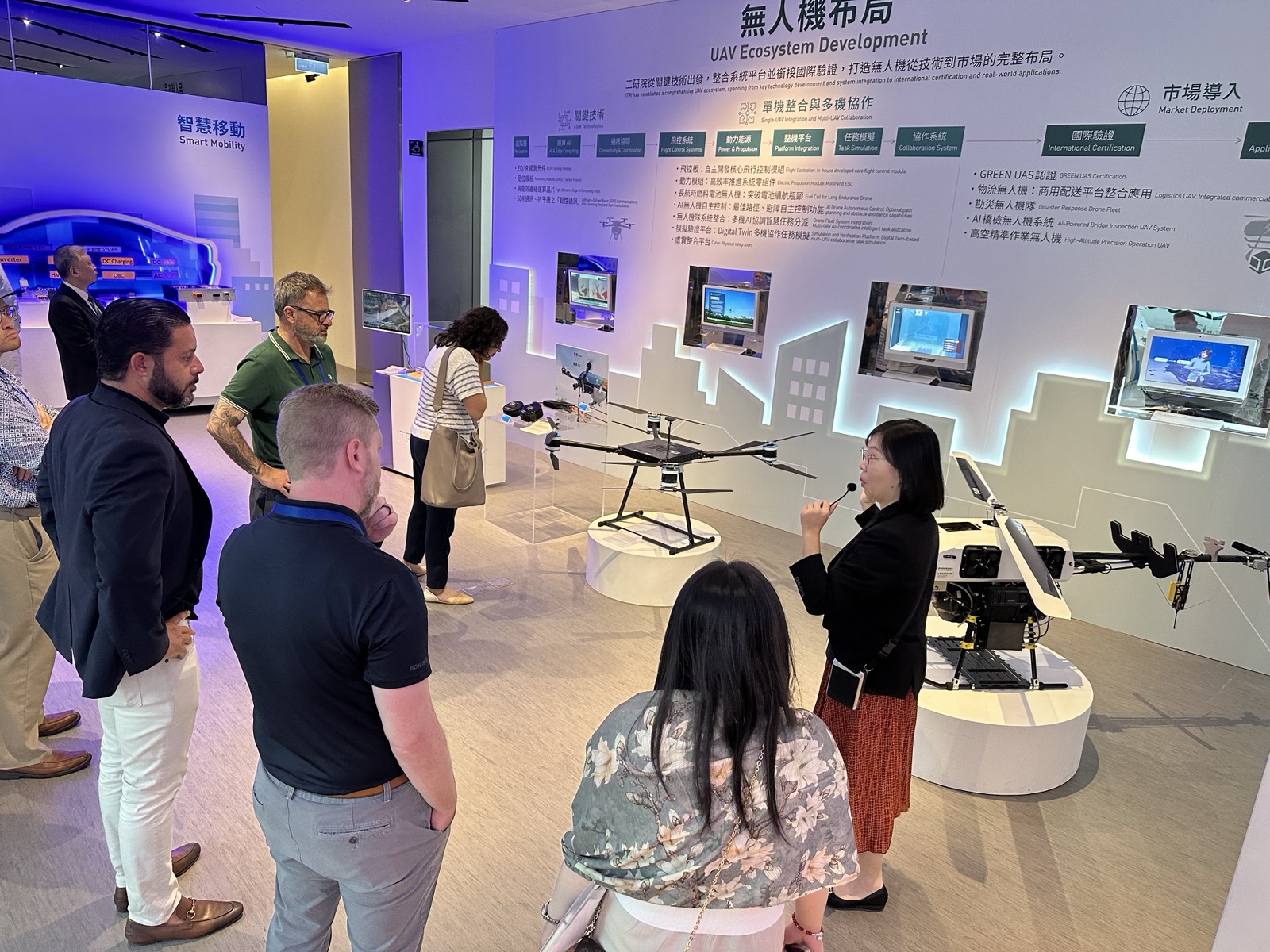
In July, the Institute for Security and Technology convened the inaugural cohort of the Andrew Carnegie AI-Nuclear Accelerator in San Francisco for a five-day immersive experience at the intersection of artificial intelligence and nuclear security. The gathering brought together a diverse group of nuclear and national security professionals to build technical fluency, sharpen critical judgment, and forge relationships that will shape how this community engages with AI in the years ahead.
A Full Spectrum of Perspectives
As IST CEO Philip Reiner framed it in his opening remarks to the cohort, the week was built to guide participants through “the full spectrum of what is shaping this field from the infrastructure layer, to the frontier labs, to the safety researchers pressure-testing it all.” Rather than presenting a single narrative about AI’s trajectory, the program was deliberately designed to expose the cohort to builders, skeptics, and everyone in between, so each participant could form their own judgment about where the real risks, opportunities, and safeguards lie.
Over the course of the week, the cohort visited seven organizations at the center of frontier AI development: NVIDIA, Microsoft, Rhombus Power, OpenAI, Scale AI, Constellation Institute, and FAR.AI, with perspectives from AI safety researchers, including the Machine Intelligence Research Institute (MIRI), Redwood Research, and Epoch AI woven throughout.
Setting the Technical Foundation
The week opened with a session on AI Foundational Concepts and Applications to Nuclear Policy, moderated by myself and featuring Evan Miyazono, Founder and CEO of Atlas Computing, and Devabhaktuni “Sri” Srikrishna, Chair of the Control and Mitigation Session for the 2026 annual conference of the American Association for Aerosol Research, and founder of Patientknowhow.com. The two speakers were paired to bridge two complementary lenses: Evan’s work on institutional design and governance of society-scale risks, and Sri’s applied engineering perspective on dual-use risk and emerging vulnerabilities.
The conversation set the technical vocabulary the cohort would draw on for the rest of the week. Evan pushed the group to think past whether an AI system merely behaves safely, toward whether it can be engineered to demonstrably prove that its outputs hold certain safety properties, a distinction with direct implications for how the policy community approaches human oversight in defense applications. Sri brought a grounded, applied-risk perspective, highlighting the tension between AI as an increasingly indispensable tool for scientific and technical research and the safeguards meant to prevent Chemical, Biological, Radiological, and Nuclear (CBRN) misuse. Sri cautioned that the two goals are not always fully compatible, as capabilities that make AI useful for scientific purposes are the same ones that can be dual-use and be misused for nefarious purposes. By grounding the Accelerator cohort in these concepts early, the session ensured that when the cohort sat down later in the week with technical teams at NVIDIA, Microsoft, OpenAI, and other AI companies and labs, they were equipped to ask sharper, more substantive questions.
Key Engagements
The week began with a site visit to NVIDIA’s headquarters in Santa Clara, which opened the program with a look at the infrastructure and compute powering the AI revolution. The visit included a hardware tour and a briefing on the competitive landscape with China, grounding the cohort in the physical and geopolitical realities underpinning frontier AI development.
At Microsoft and OpenAI, the cohort engaged directly with the teams building and evaluating frontier models, exposing them firsthand to agentic risk and the safety frameworks designed to govern increasingly autonomous systems, issues that are directly relevant to nuclear command and control.
Our visit to Rhombus Power offered a window into how AI-generated intelligence is already being applied to real-world defense and deterrence problems.
Scale AI brought a practical, applied lens to the conversation, illustrating what effective AI deployment looks like in a government and mission-relevant context. The cohort heard from Dr. Chris Kirchhoff, author of Unit X: How the Pentagon and Silicon Valley Are Transforming the Future of War, whose presentation to the group, “AI Hot Spot: Europe, China,” examined lessons from the Second Industrial Revolution for AI and state power, and from Max Fenkell, Global Head of Policy and Government Relations at Scale AI, on the Thunderforge Initiative and how Scale AI has partnered across industry and government on the safety and assurance of deploying reliable AI.
Finally, our time at Constellation Institute and FAR.AI shifted the focus from builders to auditors, presenting the cohort with a real-time loss-of-control tabletop exercise and direct engagement with researchers studying AI deception and reliability. These sessions generated some of the week’s most substantive discussion. Throughout, MIRI’s perspective—including a provocation drawn from Eliezer Yudkowsky and Nate Soares’ If Anyone Builds It, Everyone Dies that the inevitable outcome of building superhuman AI is losing control of it—pushed the cohort to grapple directly with the hardest open questions in the field, including whether the world should wait for an accident or a catastrophic event before taking action to reduce risks from building and applying frontier AI.
What the Accelerators Took Away
Feedback from the cohort affirmed the strength of the program’s design. Participants described the week as a rare opportunity to move past marketing and jargon and see, firsthand, how frontier labs and technology companies are actually thinking about risk, capability, and governance. Accelerators consistently cited these sessions among the most valuable of the week, praising presenters’ ability to translate deeply technical material into clear, policy-relevant insight. Several noted that the week sharpened their thinking on where and how they might responsibly integrate AI into their own institutional workflows, while remaining clear-eyed about the security and governance obstacles ahead. Accelerators also highlighted the value of the relationships built across the week with expert speakers and with each other as one of the program’s most significant outcomes.
Looking Ahead
The inaugural cohort’s convening marks the beginning of a larger initiative. IST will continue to build a community of nuclear and national security leaders equipped to engage critically and knowledgeably with AI systems increasingly shaping global security. In doing so, IST will both help to shape the field and give professionals the tools to navigate the policy challenges the nuclear community must adapt to and prepare for. The Andrew Carnegie AI-Nuclear Policy Accelerator fills a gap no other fellowship program currently addresses, and offers a template for meeting the demands of the current moment.
IST is deeply grateful to the Andrew Carnegie Foundation for the generous support that made this program possible, and to NVIDIA, Microsoft, Rhombus Power, OpenAI, Scale AI, Constellation Institute, FAR.AI, and MIRI for their time and partnership throughout the week.