In July, Nobel laureates, AI experts, and nuclear policymakers convened in Italy to sign a declaration highlighting the risks of integrating AI into nuclear weapons systems. Meanwhile, in the United States, AI is being integrated into military and nuclear systems under White House directives. Despite ongoing debates, there is a lasting disconnect between those building AI and those who may use AI tools in a nuclear context. After observing 25 mid-career nuclear policy professionals interact with AI innovators and researchers in the San Francisco Bay Area, it is evident that AI and nuclear literacy across both communities must be reevaluated and reinforced.
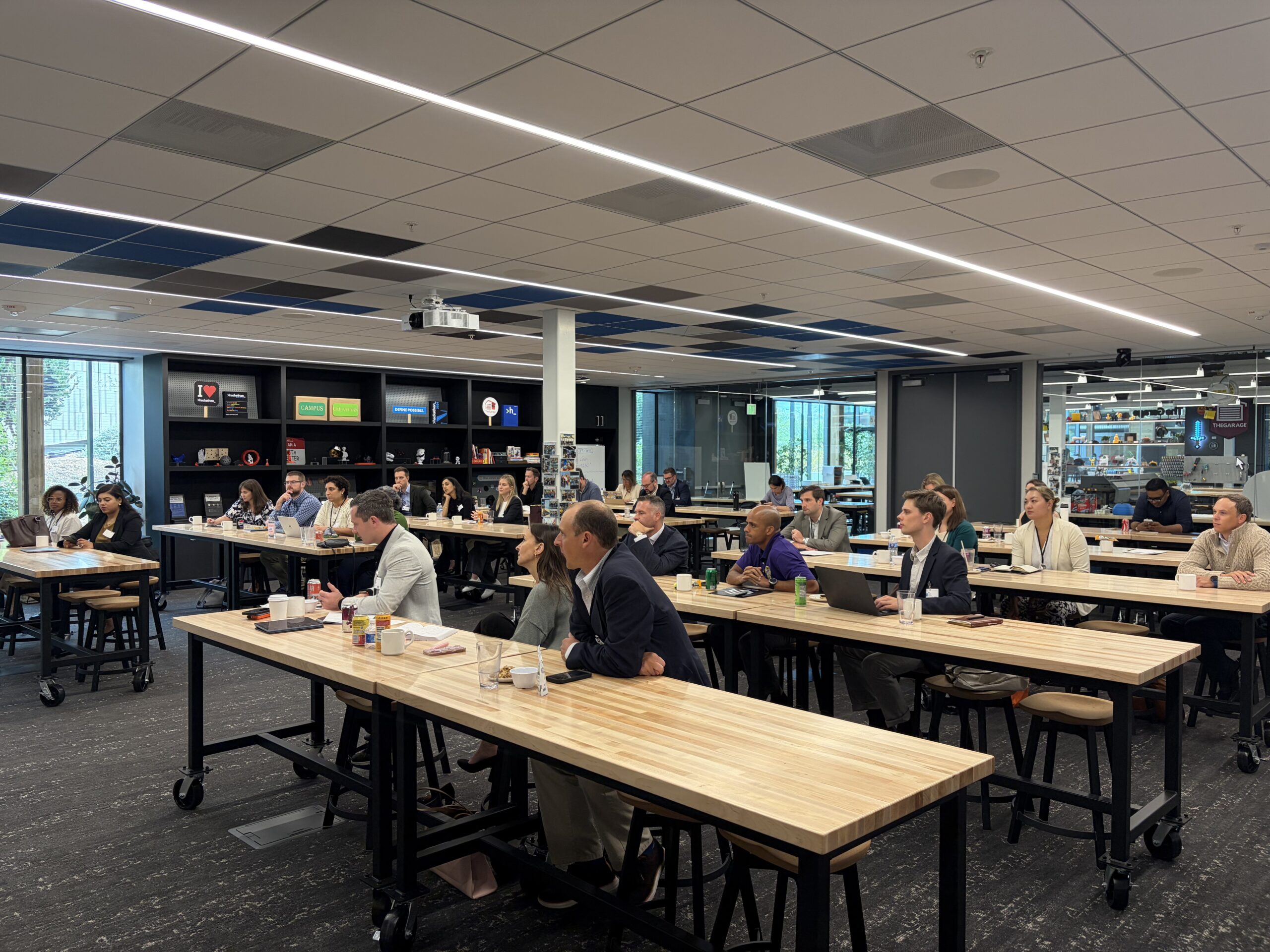
IST’s Andrew Carnegie AI-Nuclear Policy Accelerator convened nuclear policy practitioners and academics to gain hands-on exposure to the world’s most advanced AI capabilities. The program’s aim is to generate a global network of practitioners capable of translating AI developments into concrete policy insights that strengthen decisionmaking at the intersection of AI and nuclear weapons. The cohort visited leading AI companies such as OpenAI, Nvidia, Microsoft, ScaleAI, and Constellation Institute, among others. Through these interactions and conversations with those directly building AI models, deploying AI into relevant contexts, and developing guardrails and governance frameworks, three prominent observations arose.
The Enduring Nuclear Weapons AI Analogy Is Not Enduring
Experts have long compared AI to nuclear weapons, and this analogy has been well established by drawing comparisons of their development and risks. AI and nuclear weapons are both technologies that pose an unequivocal risk to humanity: few states possess these exquisite capabilities, both spur concerning arms-race dynamics, and both require strong guardrails and governance structures. AI safety researchers and the frontier labs themselves frequently cite nuclear arms control as evidence that humanity is capable of constraining dangerous and complex technologies. Some have even drafted international treaties to prevent the development of artificial superintelligence based on the Nuclear Nonproliferation Treaty (NPT).
However, the differences between AI and nuclear weapons pose a new set of norms and governance questions that have yet to be answered. AI’s technical origin comes solely from private industry: it is notoriously difficult to identify capability thresholds and scale for harm, and the technology is widely accessible to the public. Conversely, the dual-use nature of AI also has vast governmental and societal benefits, including to the security of nuclear materials. While the site visits during the Bay Area trip made these differences clear for the nuclear professionals, many identified an opportunity for nuclear experts to inform the AI community about general best practices for pursuing arms control measures in times of significant geopolitical tension.
AI Decisions are a Black Box. So is AI-Nuclear Decisionmaking
It was also evident that the long-term impact of AI on nuclear deterrence and decisionmaking remains unclear in practice, despite extensive hypotheses on the topic. The cohort received extensive briefings on AI interpretability limits, and how frontier labs and safety researchers are unsure how a model arrives at certain answers and develops certain behaviors or objectives. This context is crucial for understanding how AI may impact nuclear decisionmaking and how the machine-operator relationship will form as early-warning systems and decision-support tools become increasingly infused with AI.
This “black box” problem is an inherent feature of generative AI as probabilistic algorithms. But this issue is of particular concern for nuclear command, control, and communications (NC3) systems, which require certainty of accurate and timely information to be able to assess threats and create courses of action, including the decision to launch nuclear weapons. Nuclear weapons decisionmakers must always be aware of how machines are able to reach a certain output; however, LLMs now cannot provide such insights. Knowing these inherent uncertainties, operators need to address what level of trust to give their AI tools. Interpretability, the degree to which a human can understand an AI model’s output, is a key area of study for frontier AI labs and safety researchers. While there are no technical solutions for interpretability as of now, there is still room to shape the training and AI literacy for nuclear policymakers and operators to orient them to what AI can and cannot do.
Washington and Silicon Valley Need Better Shared Understanding
The final observation: Washington and Silicon Valley still speak past each other. Beyond the barrier of comprehending an entirely different set of jargon and acronyms in each world, there are fundamental differences in cultural and institutional structures that make it difficult to properly understand the risks on the other side. On one hand, frontier AI labs favor speed, iteration, and market competition. On the other hand, the government operates on painstaking evaluation, fixed budget cycles, and consistent hesitation about any departure from established policy and tools.
Despite this mismatch, these two communities are becoming more entangled than ever. The United States government has launched multiple initiatives to accelerate the integration of AI into a variety of agencies, including the Genesis Mission in the Department of Energy and Pace-Setting Projects (PSPs) in the Department of War.
Conversely, frontier AI labs are increasingly signaling to the government that they require regulatory frameworks to manage the risks associated with frontier AI development. In July 2026, over 1,000 AI executives and engineers from the major AI companies signed a letter requesting that “the U.S. government support an international effort to develop the technical and governance tools needed to deliberately pace the frontier of automated AI development.” In response to some of these demands, the White House released an Executive Order asking AI companies to share frontier models with the U.S. government 30 days before their release for advanced evaluation and benchmarking. Also in July, Congress introduced the AI Kill Switch Act, requiring AI companies to maintain the ability to slow or shut down models the U.S. government deems too dangerous.
There is a clear demand signal for efficient mechanisms regarding outreach, translation, and mutual understanding between the technical and policy communities surrounding AI and nuclear risk. The Andrew Carnegie AI-Nuclear Policy Accelerator is just one contribution to the field in bridging the divide between these two communities by building a strong network of policy experts, practitioners, and scientists who are well-versed in both the risks and opportunities that AI integration with nuclear weapons systems presents. With more resources, there is space to expand these connections and enhance understanding between Washington and San Francisco.
Pathways to Mutual Understanding
Academic institutions, think tanks, and government researchers produce practical policy recommendations for nuclear-armed states on how governments might approach AI integration with nuclear weapons and adjacent systems. These recommendations, however, cannot be executed in a vacuum. As governments begin to capture AI developers’ attention, there needs to be an expansion of institutional senior-level cross-pollination to include specific AI-nuclear integration evaluations across not just the policy and technical communities, but the entire defense enterprise.
While calling AI company CEOs to the White House and hiring former government officials for policy roles at frontier AI labs is a useful starting point, a continuous, trust-building partnership is much needed. Immersive programs like the Carnegie Accelerator, Horizon Institute’s Fellowship, and the Berkeley Risk and Security Lab’s Research Fellowship are examples of how national security practitioners can understand Silicon Valley’s ecosystem. Additionally, similar efforts should be made to familiarize AI developers with DC’s vast bureaucracy. To take partnerships to the next level, AI frontier labs should place greater emphasis on AI-nuclear catastrophic risks by hosting rotational posts for mid- and senior-level nuclear policy officials. Conversely, the engineers building AI models need to spend time inside the halls of the Pentagon and US Strategic Command (STRATCOM) to better understand the implications of advanced AI models in nuclear contexts.
Lastly, just as the Department of War, STRATCOM, Department of Energy, and others have established dedicated AI divisions to help integrate and evaluate risks, AI frontier labs and related entities should expand their efforts to build dedicated teams focused specifically on nuclear operations and proliferation risk that go beyond existing chemical, biological, radiological, and nuclear (CBRN) risk portfolios. With each of these weapons of mass destruction’s risk portfolios shaped by AI’s introduction, there must be a whole-of-society approach to dedicate evaluation teams assessing integration and harm risks.
The discrepancy between how quickly AI and nuclear weapons are becoming intertwined and how slowly the nuclear and AI communities are learning to understand one another will not be resolved on its own. Closing these critical gaps requires a commitment to institutional integration and continual learning. IST’s Accelerator is one step in a much larger response to meet this perilous moment shaped by the trajectory of AI development and mounting geopolitical tensions. The work ahead for both communities has hardly begun.