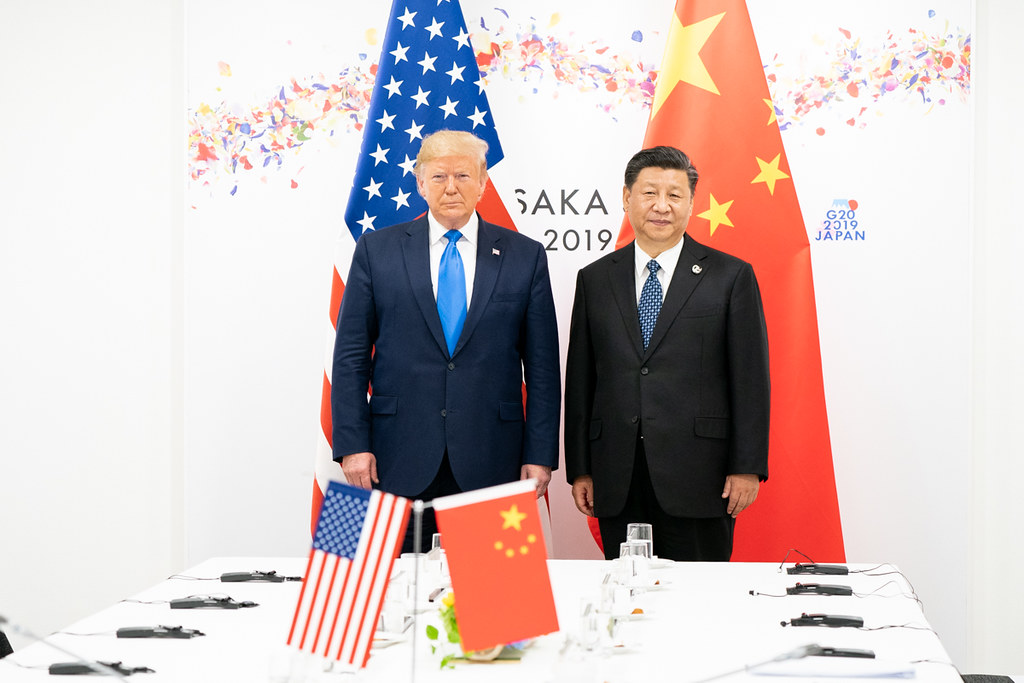
The Eleventh Review Conference (RevCon) of the Nuclear Nonproliferation Treaty (NPT) ended the way the last one did: no consensus, no outcome document, and no agreement. However, one idea didn’t fail. Instead, it gained ground.
At the heart of the Treaty is the “Grand Bargain:” Nuclear-Weapon States (NWS) pursue disarmament, while Non-Nuclear Weapons States (NNWS) forgo the bomb and concede nuclear energy safeguards. Central to the issue plaguing RevCon for the last 16 years is that progress on that bargain has stalled.
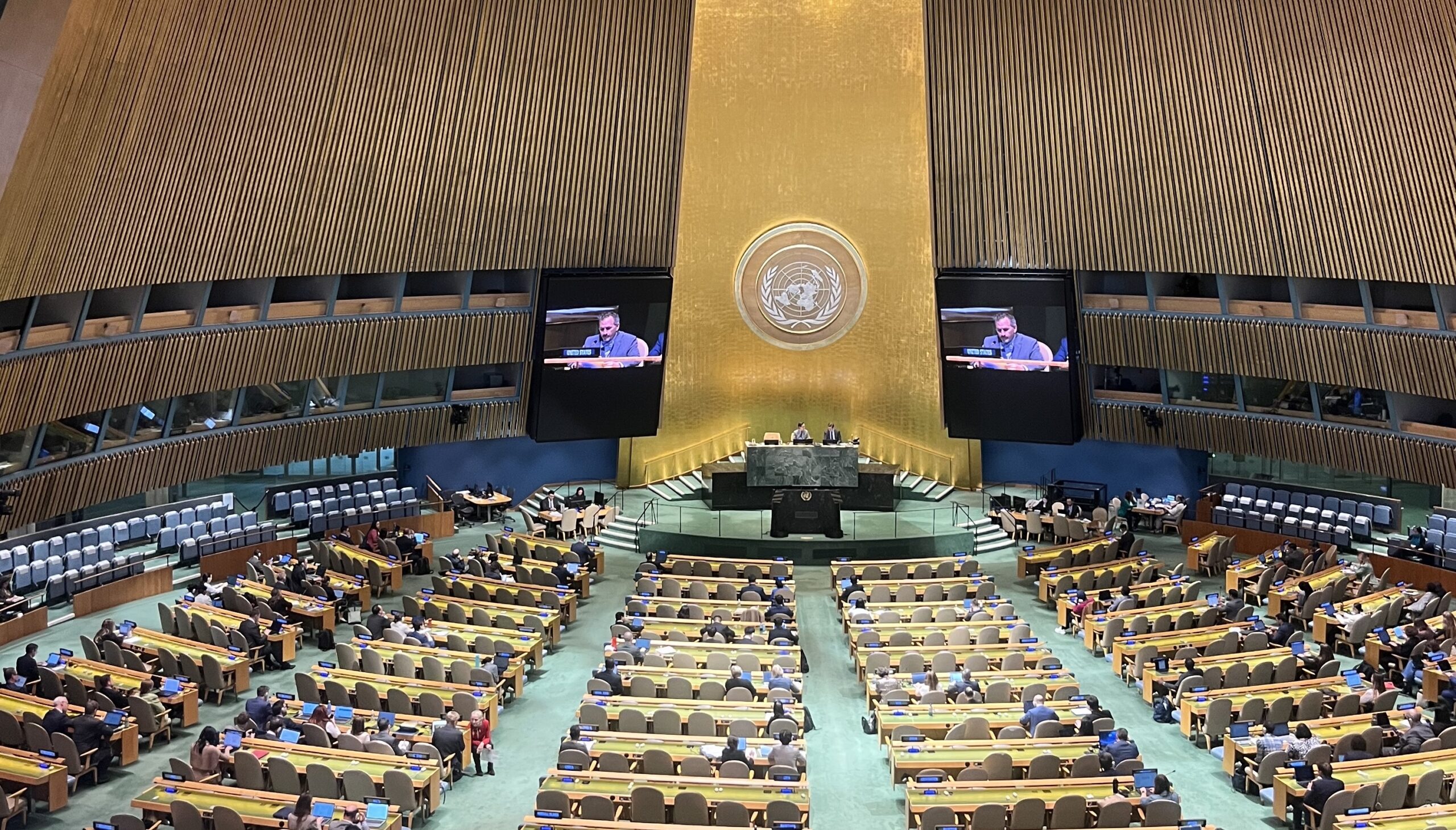
Despite the deadlock, delegates from 191 state parties, international organizations, and civil society experts gathered at the United Nations (UN) Headquarters in New York from April 29 to May 22 to reinforce the NPT’s purpose: averting nuclear war and promoting peaceful applications of nuclear technology. The Institute for Security and Technology’s (IST) Nuclear Policy team used the moment to advance nuclear risk reduction, championing resilient crisis communications between nuclear powers through the CATALINK Initiative. For our team, the working papers, joint statements, and expert interventions clearly signaled that risk reduction and crisis communication channels are drawing strong, growing interest from state parties as mechanisms for preventing and managing nuclear crises.
A Regime Under Pressure
The Review Conference generally convenes every five years to assess the implementation of the NPT’s three core pillars: nonproliferation, nuclear disarmament, and peaceful uses of nuclear energy. RevCon is the defining mechanism of multilateral nuclear diplomacy, and the conference’s consensus document is the primary way that State parties reaffirm their commitments to the Treaty’s three pillars. Without this consensus, it can be difficult to maintain the Treaty’s legitimacy and political will for the nonproliferation regime more broadly.
The structural integrity of the nonproliferation and disarmament regime is under immense pressure. Iran’s nuclear hedging, coupled with U.S. and Israeli military strikes on its nuclear program, raises questions about the Treaty’s third pillar—whether a state can be trusted with access to nuclear technology at all. In the second pillar, the expiration of the New START treaty without a successor, coupled with continuing modernization of nuclear weapons programs worldwide and even arsenal expansion in some cases, undermine any path to total nuclear disarmament. Further complicating consensus-building efforts, the war between Russia and Ukraine remains a persistent sticking point.
State parties’ statements were riddled with pointed accusations, call-outs, and fundamental disagreements over how to interpret the NPT’s core pillars. In the end, state parties failed to reach consensus on the outcome document. The failure is a blow to the non-proliferation order, and signals that Cold War-style great-power strategic competition is back in the driver’s seat. With the Grand Bargain stalled, unilateral, bilateral, and multilateral risk reduction efforts have gained traction in forums like the UN as a viable alternative.
Risk Reduction is on the Table
Risk reduction has become the rare policy area drawing support across the board, from NWS to the NNWS that once dismissed it. In the NPT context, mechanisms like missile launch notifications, enhanced data sharing, and direct leader-to-leader crisis communication are common recommendations. While risk reduction is not a substitute for disarmament, it is a way to build transparency and prevent accidents, miscalculations, and inadvertent escalation.
For example, a group of states including the United Kingdom, the United States, Australia, Japan, Finland, Brazil, and Thailand specifically called for prioritizing risk reduction measures, such as “including transparency and confidence building measures, notification and data exchange arrangements, enhanced leader-to-leader and military-to-military contact, and the establishment and maintenance of crisis-proof communication lines.” Mexico went a step further, naming crisis communication mechanisms as one of its top four priorities in the general debate. These statements serve as evidence that the push for risk reduction is not confined to European middle powers, but a broader coalition of state parties with personal stakes in seeing its success and further implementation.
That coalition crystalized in a landmark joint statement organized by Switzerland and supported by 50 countries, which explains that “[a] rich tradition of risk reduction measures – ranging from crisis communication channels, notification mechanisms, doctrinal transparency dialogues, negative security assurances, to formal arms control agreements – has helped prevent nuclear conflict for decades.” Even the draft outcome document that failed to reach consensus agreed on this much, citing “dialogue on doctrines, crisis communications, [and] military-to-military engagement” as essential to reducing miscalculation. In other words, the appetite for risk reduction is real and spans blocs. What’s missing, however, is the push to convert it from talking points into negotiations, technical cooperation, and an implementation plan.
The Future of Risk Reduction in the Nonproliferation Order
Civil society organizations like IST exist to keep that push alive between conferences. IST’s CATALINK Initiative aims to fill a critical gap by generating innovative solutions to the challenges of adopting risk reduction measures. CATALINK—a blueprint for a multilateral crisis communications channels between leaders of nuclear-armed states—uses open-source, collaborative technology to help build trust and transparency between adversaries. The political moment for a multilateral crisis channel may feel far off, but the world needs the blueprint ready before it arrives.
Momentum from this RevCon should carry into the UN First Committee on Disarmament meetings this October and the next NPT Preparatory Committee in 2027. The large coalition that endorsed crisis communications at RevCon should push to make it a standing agenda item, one that can survive the gap between PrepComs rather than resetting each time. In the interim, the P5 should disclose the status of current bilateral hotlines, identify epistemic and technical gaps, and commit to timelines for addressing them. NNWS, meanwhile, should continue to coordinate joint statements and share best practices on open-source, transparent technologies.
Some have contended that this RevCon had little impact. But in my view, it achieved something the last one did not: it showed that consensus is still possible. For those of us who work in nuclear risk reduction, that is the wake-up call. The political will exists; now, we must continue to push forward on the work to build the resilient, transparent tools the international community will need when the moment comes.