Skip to content
Sign Up for Our Newsletter
About
Close About
Open About
About the Institute for Security and Technology
Our Team
Board Of Directors
Careers
Contact Us
Featured Events
Cyber Policy Awards
Critical Effect DC
Projects
Close Projects
Open Projects
AI and NC3
Pioneering action-oriented efforts to explore how advanced AI capabilities will be integrated into nuclear command, control, and communications
AI Antitrust and National Security
Exploring how to more effectively account for national security considerations in AI antitrust cases while respecting precedent, scope, and the core principles of antitrust law
AI Risk Reduction Initiative
Assessing the emerging risks and opportunities of AI foundation models and developing risk reduction strategies
AI Chip Export Control Initiative
Safeguarding U.S. national competitiveness by closing critical compliance and enforcement gaps
AI Risk Barometer
Measuring national security professionals’ perceptions of AI futures through a technically-informed survey
CATALINK
Preventing the onset or escalation of conflict by building a resilient global communications system
Energy FIRST
Powering U.S. and allied security & prosperity through a resilient energy future
Ransomware Task Force (RTF)
Combating the ransomware threat with a cross-sector approach
Religious Voices and Responsible AI
Engaging religious communities on safe and beneficial AI
SL5 Task Force
Strengthening AI security through a multistakeholder approach
UnDisruptable27
Driving more resilient lifeline critical infrastructure for our communities
All Projects
» Explore all of IST's projects, past and current
Focus Areas
Future of Digital Security
Geopolitics of Technology
Innovation and Catastrophic Risk
Events
Insights
Contact
Search
Donate
Archive
national security
Blog
IST Statement on President Biden’s National Security Memorandum on Critical Infrastructure Security and Resilience
The Institute for Security and Technology (IST) commends the Biden-Harris Administration for this week releasing its National Security Memorandum (NSM) 22 on Critical Infrastructure Security and Resilience. IST offers the following observations and reflections on NSM-22.
critical infrastructure
,
cybersecurity
,
national security
,
NSM-22
May 1, 2024
Event
June 22, 2021 11:00 am
A Better Future: Empowering Women In Technology and National Security
Women make immense contributions and provide daily leadership within national security and technology across the public, private and civil society sectors. However, there is still work to be done to ensure that women are empowered, have a seat at the decision-making table, and are provided opportunities for upward mobility. On June 22, IST welcomed speakers who have been leading efforts to empower women and increase diversity at the intersection of these fields.
national security
,
women in tech
June 22, 2021
Event
April 29, 2021 1:00 pm
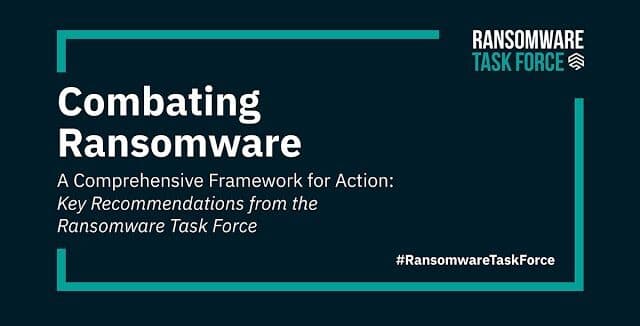
Ransomware Task Force (RTF) Unveils Comprehensive Framework To Combat Ransomware
Ransomware is one of society’s most pervasive threats and poses a critical risk to both national and global security. This destructive cybercrime, which results in staggering financial losses and puts human life at risk, will need commitment from every level of government and private industry to mitigate this evolving threat. On April 29, 2021, the Institute for Security and Technology (IST) — in partnership with a broad coalition of experts in industry, government, law enforcement, civil society, and international organizations who have joined IST’s Ransomware Task Force (RTF) — delivered a comprehensive framework to combat...
deter
,
disrupt
,
national security
,
prepare
,
Ransomware
,
respond
April 29, 2021
Event
December 2, 2020 2:30 pm
Biden Administration Cyber Agenda
As the world prepares for the incoming Biden/Harris White House, it is expected that the new U.S. administration will make cybersecurity a top-tier national security priority. On December 2, 2020, IST hosted technology and policy experts to discuss the Biden administration’s expected leadership, projected cyber strategies, and the implications for both domestic and international politics.
5G
,
China
,
cybersecurity
,
election technology
,
malware
,
national security
December 2, 2020
Report
An Examination of the US NC3 Industrial and Innovation Base
Colonel Elvert Gardner examines the U.S. industrial and innovation base, identifying key factors that may militate against innovation and against timely and efficient supply in the US industrial base.
Aquisition
,
cybersecurity
,
Department of Defense
,
DOD
,
human capital
,
industrial base
,
innovation
,
modernization
,
National Defense Authorization Act
,
national security
,
nuclear
,
stability
,
supply chain
,
United States
June 20, 2019
Report
Israel’s NC3 Profile: Opaque Nuclear Governance
In this essay, Avner Cohen traces and exposes Israel’s two most fundamental principles of the Israeli NC3 thinking: first, insisting on a strict physical and organizational separation between nuclear and non-nuclear assets, and second, its two-tier governance architecture.
architecture
,
Israel
,
Middle East
,
national security
,
NC3
,
NPT
,
nuclear
,
nuclear program
,
stability
October 10, 2019
AAR
,
Report
AI and the Military: Forever Altering Strategic Stability
IST and the Center for Global Security Research in 2018 convened workshops to explore the role of AI in 21st century security context. Should we be concerned about an “AI arms race”? What are the risks of unintended consequences and strategic surprise driven by AI?
arms race
,
artificial intelligence
,
drone
,
electromagnetic pulse
,
machine learning
,
national security
,
strategic stability
February 13, 2019
Previous
Page
1
Page
2
Next
Search
Search
MENU
HOME PAGE
About
FAQ
The CATALINK Brief
Insights
Events
Analysis
Podcasts
Why crisis communications?
Our Team
GET IN TOUCH
Email:
[email protected]
Send us a message:
Contact

JOIN THE CATALINK MAILING LIST
First Name
Last Name
Organization
Email
Subscribe