Skip to content
Sign Up for Our Newsletter
About
Close About
Open About
About the Institute for Security and Technology
Our Team
Board Of Directors
Careers
Contact Us
Featured Events
Cyber Policy Awards
Critical Effect DC
Projects
Close Projects
Open Projects
AI and NC3
Pioneering action-oriented efforts to explore how advanced AI capabilities will be integrated into nuclear command, control, and communications
AI Antitrust and National Security
Exploring how to more effectively account for national security considerations in AI antitrust cases while respecting precedent, scope, and the core principles of antitrust law
AI Risk Reduction Initiative
Assessing the emerging risks and opportunities of AI foundation models and developing risk reduction strategies
AI Chip Export Control Initiative
Safeguarding U.S. national competitiveness by closing critical compliance and enforcement gaps
AI Risk Barometer
Measuring national security professionals’ perceptions of AI futures through a technically-informed survey
CATALINK
Preventing the onset or escalation of conflict by building a resilient global communications system
Energy FIRST
Powering U.S. and allied security & prosperity through a resilient energy future
Ransomware Task Force (RTF)
Combating the ransomware threat with a cross-sector approach
Religious Voices and Responsible AI
Engaging religious communities on safe and beneficial AI
SL5 Task Force
Strengthening AI security through a multistakeholder approach
UnDisruptable27
Driving more resilient lifeline critical infrastructure for our communities
All Projects
» Explore all of IST's projects, past and current
Focus Areas
Future of Digital Security
Geopolitics of Technology
Innovation and Catastrophic Risk
Events
Insights
Contact
Search
Donate
Archive
surveillance
Blog
Decrypting Iran’s AI-Enhanced Operations in Cyberspace
Iran has long used unconventional tactics and weapons to wage asymmetric warfare. Now, amid recent uprisings, Iran has begun to incorporate AI into its domestic surveillance efforts. What does this mean for Tehran’s future cyberspace and information operations?
artificial intelligence
,
information operations
,
Iran
,
surveillance
September 26, 2024
Event
October 19, 2022 11:00 am
Securing Data Flows: The Importance of an EU-U.S. Agreement on Data Transfers
In a conversation moderated by IST’s Megan Stifel, David Kris, founder at Culper Partners LLC, Anitha Ibrahim, Senior Manager for Cybersecurity & Data Protection Policy at Amazon Web Services, and Peter Swire, professor in the School of Cybersecurity and Privacy at the Georgia Institute of Technology, unpacked the new Executive Order on Enhancing Safeguards for United States Signals Intelligence Activities and its impact on EU-U.S. data flows.
EO
,
European Court of Justice
,
surveillance
,
transatlantic data flows
October 19, 2022
Report
Future Digital Threats to Democracy – Trends and Drivers
Based on a comprehensive literature review and conversations with subject matter experts, Alexa Wehsener, Vera Zakem, and M. Nina Miller identified nine trends that are likely to pose digital threats to democracy in the future.
apathy
,
attention
,
cognition
,
democracy
,
digital authoritarianism
,
geopolitics
,
ideology
,
information environment
,
privacy
,
surveillance
,
technology
May 5, 2021
AAR
,
Report
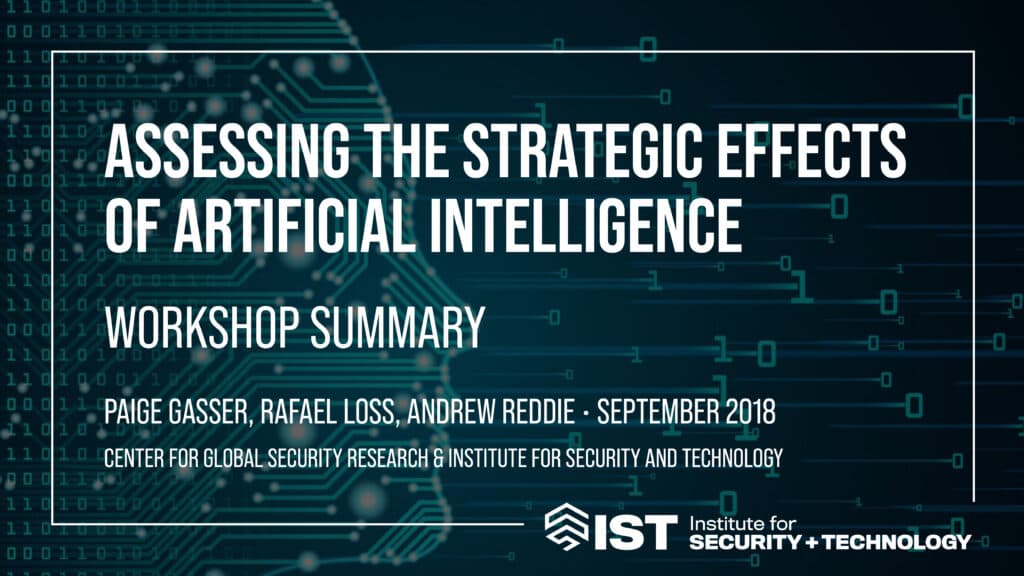
Assessing the Strategic Effects of Artificial Intelligence
On September 20-21, 2018, the Center for Global Security Research (CGSR) at Lawrence Livermore National Laboratory (LLNL), in collaboration with IST, hosted a workshop to examine the implications of advances in artificial intelligence (AI) on international security and strategic stability.
artificial intelligence
,
decision-making
,
deterrence
,
instability
,
modernization
,
nuclear war
,
quantum
,
stability
,
surveillance
September 20, 2018
Report
Ruling with a Silicon Fist
While the rise of digital authoritarianism cuts across different regime types and implicates companies developing cutting-edge technologies, a common element across these efforts is surveillance and control. The international sale and government contracting of these new and powerful tools drive us toward an uncertain, potentially less democratic future.
cyber soverignty
,
deep fake
,
facial recognition
,
firewall
,
information
,
surveillance
June 24, 2020
Search
Search
MENU
HOME PAGE
About
FAQ
The CATALINK Brief
Insights
Events
Analysis
Podcasts
Why crisis communications?
Our Team
GET IN TOUCH
Email:
[email protected]
Send us a message:
Contact
JOIN THE CATALINK MAILING LIST
First Name
Last Name
Organization
Email
Subscribe