Skip to content
Sign Up for Our Newsletter
About
Close About
Open About
About the Institute for Security and Technology
Our Team
Board Of Directors
Careers
Contact Us
Featured Events
Cyber Policy Awards
Critical Effect DC
Projects
Close Projects
Open Projects
AI and NC3
Pioneering action-oriented efforts to explore how advanced AI capabilities will be integrated into nuclear command, control, and communications
AI Antitrust and National Security
Exploring how to more effectively account for national security considerations in AI antitrust cases while respecting precedent, scope, and the core principles of antitrust law
AI Risk Reduction Initiative
Assessing the emerging risks and opportunities of AI foundation models and developing risk reduction strategies
AI Chip Export Control Initiative
Safeguarding U.S. national competitiveness by closing critical compliance and enforcement gaps
AI Risk Barometer
Measuring national security professionals’ perceptions of AI futures through a technically-informed survey
CATALINK
Preventing the onset or escalation of conflict by building a resilient global communications system
Energy FIRST
Powering U.S. and allied security & prosperity through a resilient energy future
Ransomware Task Force (RTF)
Combating the ransomware threat with a cross-sector approach
Religious Voices and Responsible AI
Engaging religious communities on safe and beneficial AI
SL5 Task Force
Strengthening AI security through a multistakeholder approach
UnDisruptable27
Driving more resilient lifeline critical infrastructure for our communities
All Projects
» Explore all of IST's projects, past and current
Focus Areas
Future of Digital Security
Geopolitics of Technology
Innovation and Catastrophic Risk
Events
Insights
Contact
Search
Donate
Archive
nuclear war
In the News
,
Op-ed
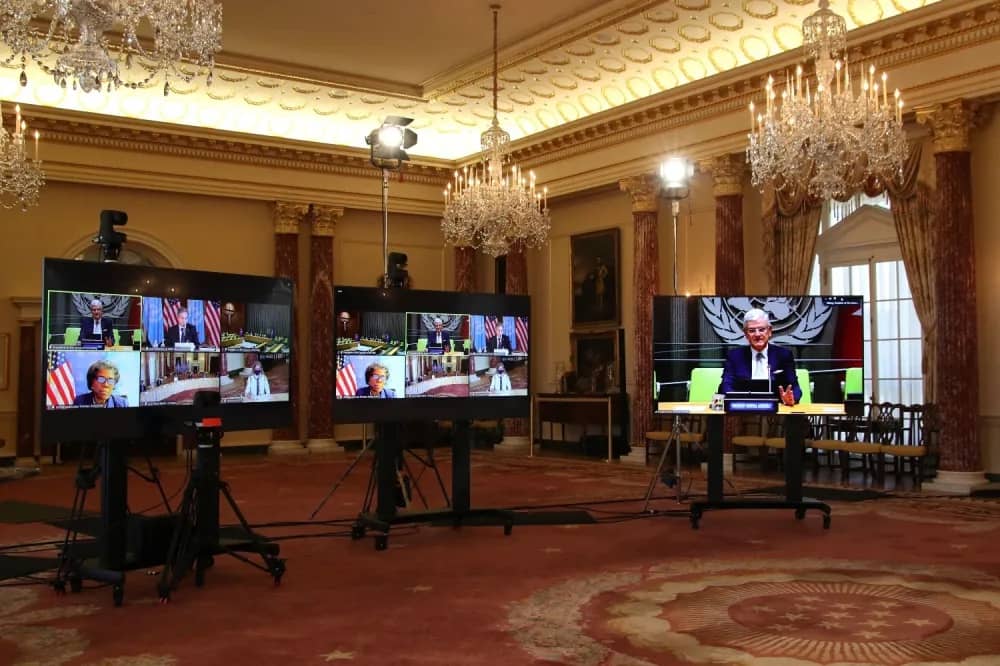
Zoom Won’t Stop A Nuclear War
In an article for Foreign Policy, Sahil Shah and Leah Walker make the case that although the red telephone is gone, a new generation of nuclear hotlines is sorely needed to manage international crises.
CATALINK
,
crisis communications
,
India
,
Innovation and Catastrophic Risk
,
nuclear hotlines
,
nuclear war
,
nuclear weapons
,
Pakistan
,
Soviet Union
April 19, 2021
Podcast
Targeting Communications and Escalation
This week's episode of The Fourth Leg features the return of one of the “NC3 originals,” Paul Bracken from Yale University.
crisis communications
,
nuclear command
,
nuclear communications
,
nuclear escalation
,
nuclear war
May 28, 2020
Podcast
An Altogether Different Set of Challenges
Philip Reiner and Peter Hayes are joined by Feroz Hassan Khan for a conversation on the nuclear command, control, and communications of Pakistan.
delegation
,
NC3
,
NC3 architecture
,
nuclear deterrent
,
nuclear war
,
Pakistan
September 26, 2019
Podcast
Questioning Unitary Command: Nuclear Launch Authority and the N-Person Problem
In this segment, Philip Reiner and Peter Hayes are joined by Dr. Alex Wellerstein, who sketches a framework for thinking about how concentrated nuclear use authority should be at the top.
NC3
,
nuclear command
,
nuclear control
,
nuclear use authority
,
nuclear war
,
nuclear weapons states
August 8, 2019
Podcast
Deterred by the Uncertainties
In this episode, guest Fiona Cunningham joins hosts Philip Reiner and Peter Hayes to describe the origins of China’s NC3 system and its primary role in supporting China’s land-based missile force.
China
,
early warning systems
,
missile
,
NC3
,
nuclear command
,
nuclear war
,
submarines
July 29, 2019
Podcast
Is the Enemy in the System?
Philip Reiner and Peter Hayes sit down with Dr. Jon Lindsay, who makes the case that the cybersecurity of nuclear command, control, and communications is a pressing concern.
cyber
,
cybersecurity
,
NC3
,
nuclear command
,
nuclear war
,
offensive cyber
,
risk
June 20, 2019
Podcast
Grand Tactics and the Thin Skin of Civilization
In the first episode of The Fourth Leg, Philip Reiner and Peter Hayes sit down with Dr. Paul Bracken for an overview of NC3 tactics and global stability.
C3I
,
entanglement
,
global stability
,
inadvertent escalation
,
NC3
,
nuclear command
,
nuclear war
May 13, 2019
AAR
,
Report
Assessing the Strategic Effects of Artificial Intelligence
On September 20-21, 2018, the Center for Global Security Research (CGSR) at Lawrence Livermore National Laboratory (LLNL), in collaboration with IST, hosted a workshop to examine the implications of advances in artificial intelligence (AI) on international security and strategic stability.
artificial intelligence
,
decision-making
,
deterrence
,
instability
,
modernization
,
nuclear war
,
quantum
,
stability
,
surveillance
September 20, 2018
Search
Search
MENU
HOME PAGE
About CATALINK
CATALINK Frequently Asked Questions
The CATALINK Brief
Insights
Events
Analysis
Podcasts
Why crisis communications?
Our Team
GET IN TOUCH
Email:
[email protected]
Send us a message:
Contact
JOIN THE CATALINK MAILING LIST
First Name
Last Name
Organization
Email
Subscribe